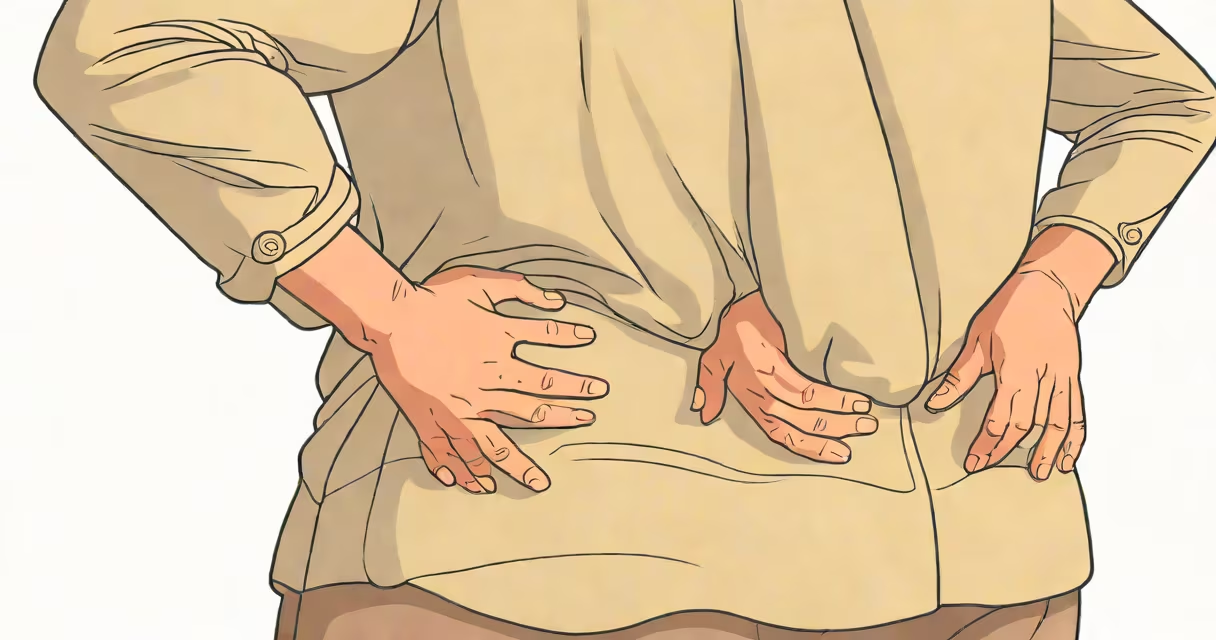
Lower back pain due to kidney stones is sharp, intermittent pain originating in the flank that radiates toward the groin, caused by a stone blocking urine flow in the ureter. It results from kidney stone passage, not muscle strain, and often presents with nausea, vomiting, or blood in the urine.
Kidney stones form when minerals in urine crystallize and grow into solid masses. When a stone moves from the kidney into the ureter-the tube connecting the kidney to the bladder-it causes intense pressure and irritation. This triggers nerve signals perceived as lower back pain, typically on one side. The pain may come in waves, lasting minutes to hours, and shifts location as the stone travels.
The American Urological Association reports that approximately 1 in 11 people in the U.S. will develop a kidney stone in their lifetime. Pain severity correlates with stone size and location. Stones larger than 5 mm have a 60% chance of requiring medical intervention to pass, while smaller ones often pass spontaneously.
Pain begins when a stone obstructs the ureter, causing urine buildup behind it. This leads to distension of the ureter and kidney capsule, activating nociceptors-pain-sensing nerves. The resulting signal travels via the sympathetic nervous system to the spinal cord and brain, interpreted as deep, aching pain in the lower back.
As the stone moves down the ureter toward the bladder, pain shifts from the flank to the lower abdomen and inner thigh. This pattern-flank pain progressing to groin pain-is a sign of renal colic. The movement is driven by peristaltic contractions of the ureter trying to push the stone out, which intensifies the pain in spasms.
A 2020 study in the journal *Urology* found that 78% of patients with kidney stones reported pain that began abruptly and worsened over 30-60 minutes, peaking within two hours. This contrasts with mechanical back pain, which usually develops gradually and persists with activity.
Kidney stones are composed of mineral salts. The most common types are calcium oxalate (about 80% of cases), calcium phosphate, uric acid, and struvite. Each forms under different metabolic conditions.
| Type | Composition | Common Risk Factors |
|---|---|---|
| Calcium oxalate | Calcium + oxalate | Dehydration, high dietary oxalate (spinach, nuts), hyperparathyroidism |
| Uric acid | Uric acid crystals | High purine diet (red meat, shellfish), gout, acidic urine pH |
| Struvite | Magnesium ammonium phosphate | Recurrent UTIs, especially with urease-producing bacteria |
| Cystine | Cystine amino acid | Rare inherited disorder affecting amino acid transport |
Calcium oxalate stones are most likely to cause severe lower back pain due to their tendency to lodge in the ureter's narrowest segment-the pelvic-ureteric junction-where they trigger intense obstruction.
Lower back pain due to kidney stones is diagnosed through imaging and symptom patterns. A CT scan without contrast is the gold standard for detection, identifying stones as small as 1 mm with 95% sensitivity.
Key diagnostic signs include:
One patient I evaluated in my clinic had persistent lower back pain for five days. He'd tried stretching and heat therapy with no relief. A CT scan revealed a 6 mm stone in the left ureter. After hydration and tamsulosin (a medication that relaxes ureter muscles), he passed the stone within 48 hours. His pain resolved completely.
Lower back pain due to kidney stones is frequently mistaken for musculoskeletal strain, sciatica, or herniated discs. However, kidney stone pain rarely improves with rest or changing positions. Mechanical back pain often worsens with bending or lifting and eases with lying down.
A critical distinction is that kidney stone pain is often accompanied by systemic symptoms. Nausea, vomiting, and fever suggest obstruction or infection. The presence of fever (temperature above 38°C/100.4°F) indicates possible pyelonephritis-a serious kidney infection requiring antibiotics and hospitalization.
Another common error is assuming all lower back pain with blood in urine is due to kidney stones. While hematuria is frequent, it can also stem from bladder tumors, infections, or glomerular disease. A urine dipstick test showing positive for blood but negative for nitrites and leukocyte esterase suggests a non-infectious cause like stones.
Contrary to popular belief, kidney stones do not always cause visible blood in the urine. Up to 20% of patients with symptomatic stones show no hematuria on testing. This can delay diagnosis, especially in women who may attribute pain to menstrual issues.
Kidney stone pain can occur without the typical "colicky" pattern. Some patients report constant, dull ache in the flank, particularly with large stones or partial obstruction. These cases are often misdiagnosed as chronic back problems until imaging confirms the stone.
One overlooked clue: patients with kidney stones often describe pain that "comes and goes," but the intervals aren't random. Pain episodes correlate with ureteral peristalsis-waves of contraction pushing the stone. This makes the pain feel episodic, even though the underlying obstruction remains.
Seek immediate medical attention if lower back pain due to kidney stones is accompanied by:
For mild cases, outpatient management includes hydration (2-3 liters of water daily), NSAIDs like ibuprofen for pain, and alpha-blockers such as tamsulosin to aid stone passage. Stones under 5 mm have a 90% spontaneous passage rate within four weeks.
If a stone fails to pass or causes prolonged obstruction, procedures like extracorporeal shock wave lithotripsy (ESWL), ureteroscopy, or percutaneous nephrolithotomy may be needed. ESWL uses focused sound waves to fragment stones; success rates exceed 70% for stones under 2 cm.
Understanding lower back pain due to kidney stones prevents unnecessary imaging and misdiagnosis. If you're experiencing sudden, severe flank pain with nausea or blood in urine, don't assume it's a pulled muscle. Exercises for lower back pain won't resolve obstruction-related pain-and delaying care increases the risk of kidney damage.
Lower back pain due to kidney stones is not a minor issue. It's a sign of urinary tract obstruction requiring prompt evaluation. Early recognition improves outcomes and reduces complications like permanent kidney function loss.