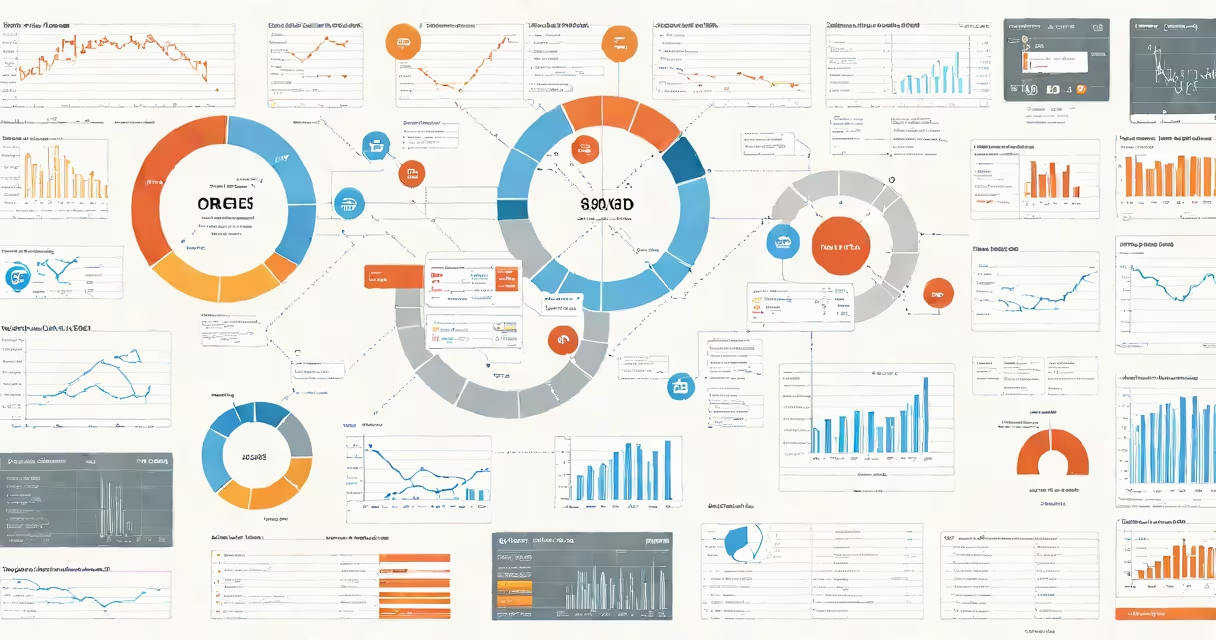
Oracle ERP software is a cloud-based set of integrated business applications that centralizes finance, human resources, supply chain, procurement, and reporting for large organizations. It enables real-time decision-making across departments using a unified data model and automated workflows.
Unlike legacy systems that store data in silos, Oracle ERP software connects processes across finance, payroll, inventory, and customer service through a single database. This integration reduces manual entry errors, speeds up month-end close cycles, and provides executives with consistent KPIs across regions and subsidiaries.
Deployed via Oracle Cloud Infrastructure, the software runs on a multitenant architecture that supports scalability, security compliance, and automatic updates. Organizations access it through web browsers or mobile apps without installing local servers.
The system operates on a modular design where each business function-finance, HR, supply chain-is a distinct but interconnected module. When a sales order is processed, the system automatically updates accounts receivable, triggers inventory deduction, schedules delivery, and records labor hours if production is involved.
Data flows between modules through predefined business rules. For example, when an employee submits a travel expense report, the system validates against company policy, checks budget availability, routes it for approval, and posts the journal entry to the general ledger-all within minutes.
Behind the scenes, Oracle ERP uses a relational database schema optimized for complex queries. It leverages machine learning to flag anomalies such as duplicate invoices or unusual spending patterns. These alerts appear in dashboards accessible to finance managers and auditors.
Oracle ERP software includes several core modules tailored to specific business functions. The most widely adopted are:
| Module | Purpose | Use Case Example |
|---|---|---|
| Financials | General ledger, accounts payable/receivable, fixed assets | Automated month-end close for a multinational retailer with 12 subsidiaries |
| Supply Chain Management | Procurement, inventory, order fulfillment, logistics | Tracking raw material shipments from Asia to U.S. factories using real-time GPS data |
| Human Capital Management (HCM) | Payroll, benefits, talent acquisition, performance reviews | Onboarding 500 new hires across 15 countries with localized tax and labor law settings |
| Project Management | Budgeting, time tracking, billing, resource allocation | Managing a $20M construction project with subcontractor payments tied to milestone completion |
Each module supports role-based access control. A warehouse supervisor sees inventory levels and shipment status but cannot modify pricing or approve vendor contracts. This separation ensures internal controls are maintained.
Organizations can enable additional modules like revenue management, asset maintenance, or advanced analytics based on their operational complexity. The system scales from mid-sized firms to Fortune 500 companies with thousands of users.
Oracle ERP software is delivered exclusively as a cloud service. There is no on-premise version available. All updates, patches, and backups are managed by Oracle, reducing IT overhead for customers.
It integrates with external systems using APIs, middleware, and prebuilt connectors. For example, a company using Salesforce CRM can sync customer data, order history, and service tickets with Oracle's financial and supply chain modules. This eliminates data duplication and improves cross-functional coordination.
Integration with legacy systems often requires a middleware layer like Oracle Integration Cloud. A manufacturing firm migrated from an old SAP system by exporting data in CSV format, transforming it using Oracle's data mapping tools, and importing it into Oracle ERP with validation checks applied.
Many assume Oracle ERP software is only for large enterprises. While it excels in complex environments, mid-market companies with 50-500 employees also adopt it. A U.S.-based medical device distributor implemented Oracle ERP to manage FDA-compliant batch tracking and reduce audit preparation time from 6 weeks to under 3 days.
Another misunderstanding is that it replaces all existing software. In reality, it coexists with specialized tools. A retail chain may continue using a custom point-of-sale system while syncing sales data hourly to Oracle's financials module.
Some confuse Oracle ERP with generic ERP platforms. Unlike basic systems that offer limited automation, Oracle ERP includes embedded AI features such as predictive cash flow forecasting and anomaly detection in transactions. According to Gartner, Oracle's AI-driven fraud detection reduced false positives by 40% compared to traditional rule-based systems.
A European pharmaceutical manufacturer faced challenges with delayed financial reporting due to fragmented data across 12 regional offices. They had separate spreadsheets for payroll, purchase orders, and inventory counts.
After migrating to Oracle ERP software, they standardized accounting codes, set up automated intercompany reconciliations, and configured daily data syncs from field devices. Within six months, the finance team reduced month-end close time from 14 days to 4 days.
They also enabled Oracle's Advanced Analytics module to track R&D spend by project. This revealed inefficiencies in clinical trial funding, leading to a 12% reduction in non-critical research budgets without impacting innovation timelines.
Enterprises using Oracle ERP software report average improvements of 30% in process efficiency and 25% faster decision-making, according to a 2023 survey by IDC. The study analyzed 147 companies across healthcare, manufacturing, and distribution sectors.
Security is built into the platform. Oracle complies with ISO 27001, SOC 1/2, and GDPR standards. Data encryption occurs both in transit and at rest. Multi-factor authentication is required for administrative access.
As businesses grow, the ability to scale without rebuilding infrastructure becomes critical. Oracle ERP software supports changing scaling-adding new users or processing more transactions during peak periods-without downtime.
When evaluating options, consider that Oracle ERP software is not a one-size-fits-all solution. Success depends on proper configuration, change management, and ongoing training. A company that skipped user onboarding saw adoption rates drop below 50% in the first quarter.
Oracle ERP software delivers operational visibility, regulatory compliance, and strategic agility. It's not just a tool-it's a foundation for continuous improvement across finance, people, and operations.