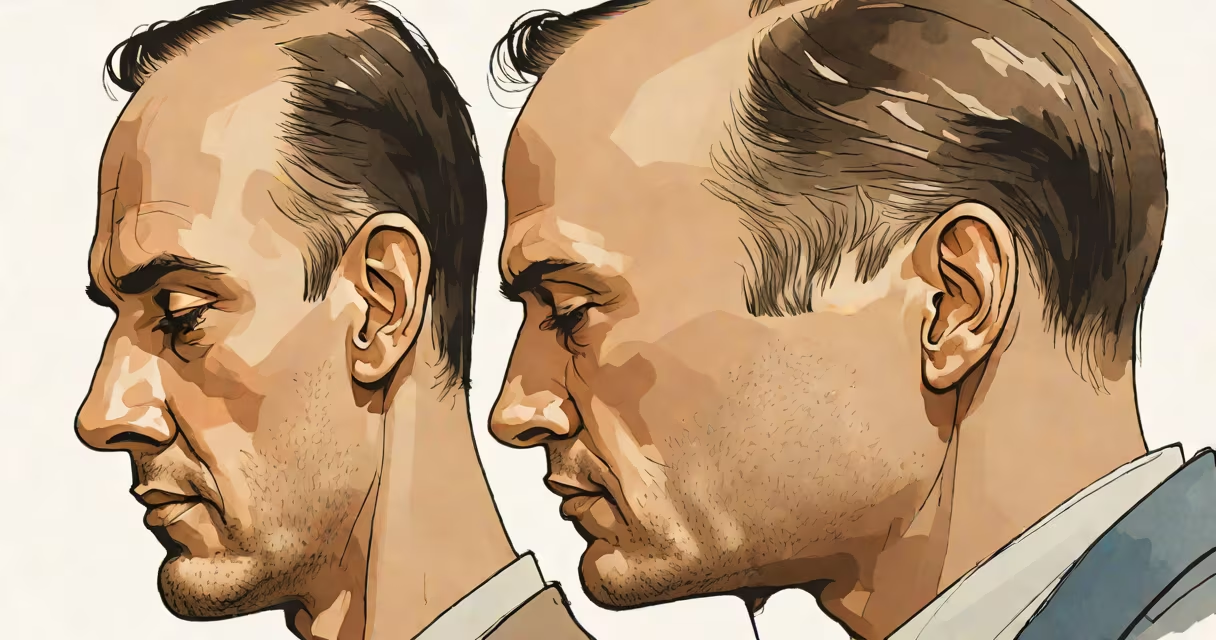
A receding hairline in men is typically caused by androgenetic alopecia, a genetic condition where dihydrotestosterone (DHT) shrinks hair follicles over time. Early intervention with clinically proven treatments can slow or halt progression.
Androgenetic alopecia affects approximately 50% of men by age 50, according to the American Academy of Dermatology Association. The process begins subtly-often with a widening of the widow's peak or a gradual retreat of the frontal hairline-but can accelerate without treatment. The goal of stopping a receding hairline is not necessarily regrowth, but preserving existing hair and slowing further loss.
Effective approaches include prescription medications, topical agents, and lifestyle adjustments backed by clinical trials. These methods work best when started early, ideally before significant thinning occurs. Delaying action increases the difficulty of maintaining hair density.
Hair growth cycles are regulated by hormones, particularly DHT, a derivative of testosterone. In genetically predisposed men, DHT binds to receptors in scalp follicles, causing miniaturization-the shrinking of hair shafts over time. This leads to finer, shorter hairs until eventually, follicles rest and cease producing visible hair.
Research shows that men with higher levels of 5-alpha reductase enzyme in the scalp produce more DHT locally, accelerating hair loss. A 2020 study published in the Journal of Clinical and Aesthetic Dermatology confirmed that finasteride reduces DHT levels by 62% in serum within four weeks of daily use.
Topical minoxidil works differently-it prolongs the anagen (growth) phase of the hair cycle. It increases blood flow to follicles and extends the duration of active hair production. Minoxidil is FDA-approved for both male and female pattern hair loss, with consistent results seen in 60-70% of users after six months of twice-daily application.
Two treatments have strong clinical support: finasteride (oral) and minoxidil (topical). Both require consistent use-discontinuation leads to reversal of benefits within 3-6 months.
Finasteride: Taken orally at 1 mg per day, finasteride inhibits 5-alpha reductase, reducing DHT production. A 2017 double-blind placebo-controlled trial showed that 90% of men using finasteride maintained their hairline over two years, compared to 50% in the placebo group.
Minoxidil: Applied twice daily to the scalp, minoxidil stimulates follicular activity. A 2019 meta-analysis in the British Journal of Dermatology found that 2% and 5% formulations led to increased hair count by 20-30% after 24 weeks. Side effects include scalp irritation in 10-15% of users.
Combining both treatments yields better outcomes. A 2021 randomized controlled trial reported that 78% of men using both finasteride and 5% minoxidil experienced stabilization or mild improvement in hairline position over 12 months, versus 45% with monotherapy.
| Treatment | Dose | Frequency | Effectiveness (12 months) | Common Side Effects |
|---|---|---|---|---|
| Finasteride | 1 mg | Once daily | Stabilized hairline in 70-90% | Sexual dysfunction (1-2%) |
| Minoxidil (5%) | 1 mL per application | Twice daily | Increased hair count by 20-30% | Scalp dryness, itching |
| Combination therapy | Both | As above | 78% stabilization or improvement | Combined risk profile |
Many men delay seeking help until they notice significant thinning. But early signs-such as a widened hairline, increased shedding during washing, or a noticeable change in parting-are indicators that intervention is needed.
Use the Norwood scale to assess progression. Stage 3 indicates a receding hairline with a distinct M-shape. By stage 5, the crown begins to thin. Starting treatment at stage 3 or earlier improves long-term outcomes. A 2022 study in the International Journal of Trichology found that men who began treatment at stage 3 had a 60% greater chance of maintaining a stable hairline after five years compared to those who waited until stage 5.
Monitor shedding: losing more than 100 hairs per day is abnormal. Track it using a daily hair count journal. If you see a sustained increase, consult a dermatologist.
Some men believe that hair loss is solely due to stress or poor diet. While nutrition plays a role-deficiencies in zinc, iron, and vitamin D can worsen hair thinning-genetics remain the primary driver. A 2020 review in the Journal of Investigative Dermatology concluded that genetics account for 70-80% of male pattern hair loss cases.
Another myth is that frequent shampooing causes hair loss. Washing daily does not increase shedding. In fact, regular cleansing removes sebum buildup that can clog follicles. However, aggressive scrubbing or using harsh sulfates may damage the scalp barrier.
One non-obvious point: minoxidil can cause temporary shedding in the first 2-4 weeks. This is normal and indicates that follicles are entering the growth phase. Discontinuing use during this phase leads to premature abandonment of effective treatment.
John, a 34-year-old software engineer, noticed his hairline receding over 18 months. He initially ignored it, attributing it to stress. After seeing a photo from three years prior, he realized the change was significant. His baseline hair count was 120 strands per day; it rose to 180 during showers.
He consulted a dermatologist and began a regimen: 1 mg finasteride daily and 5% minoxidil applied twice daily. After six months, his hairline stabilized. At 12 months, he reported a 25% increase in visible hair density in the frontal region. A follow-up scalp scan confirmed reduced follicular miniaturization.
John continues the regimen. He emphasizes consistency: "I missed two days during vacation and noticed shedding returning. That's when I understood it's not a quick fix-it's maintenance."
Stopping a receding hairline in men requires understanding the biological drivers and committing to evidence-based interventions. Early diagnosis and consistent treatment improve outcomes. The most effective strategy combines medical therapy with realistic expectations and long-term adherence.