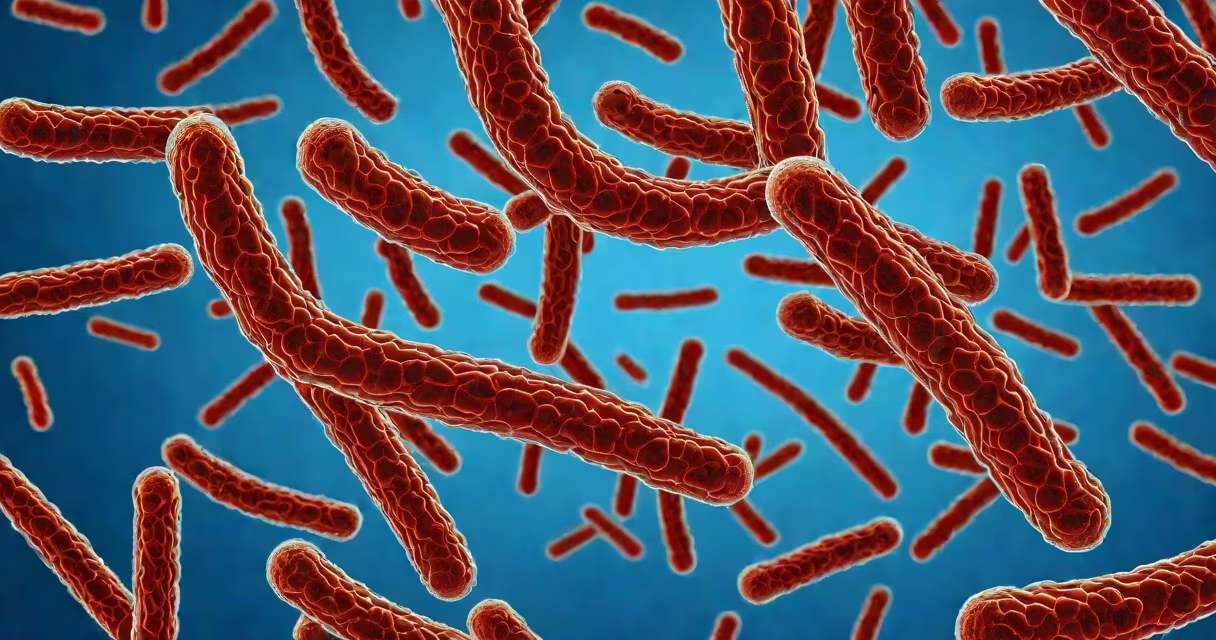
Tuberculosis caused by bacteria is an infectious disease primarily affecting the lungs, triggered by the bacterium Mycobacterium tuberculosis. It spreads through airborne droplets when an infected person coughs, sneezes, or talks. The infection can remain dormant for years before becoming active.
Mycobacterium tuberculosis is a slow-growing, acid-fast bacillus that resists many common disinfectants and antibiotics. It survives in low-oxygen environments, such as granulomas in lung tissue, which allows it to persist for decades without symptoms. According to the World Health Organization (WHO), around 10 million people developed active TB in 2022, with 1.3 million deaths reported globally.
The disease is not transmitted through touch, food, or water. Transmission requires prolonged close contact-typically within 1 meter-for at least 8 hours in poorly ventilated spaces. A single untreated person can infect 10-15 others annually under such conditions.
When someone with active pulmonary TB coughs, they release tiny droplets containing M. tuberculosis into the air. These droplets can linger for hours in enclosed spaces. Inhaling just a few of these particles can lead to infection.
Not everyone exposed develops active disease. The immune system often contains the bacteria in latent TB infection, where the person shows no symptoms and cannot transmit the disease. However, about 5-10% of those with latent TB will progress to active disease over their lifetime, especially if immunity weakens due to HIV, malnutrition, or immunosuppressive therapy.
A real-world example: In a 2019 study published in *The Lancet Infectious Diseases*, researchers tracked a cluster of TB cases in a homeless shelter in New York City. Over 30 individuals were diagnosed within six months. Genetic sequencing confirmed all cases stemmed from a single index patient, highlighting how quickly TB can spread in crowded, poorly ventilated environments.
While pulmonary TB is the most common form, M. tuberculosis can affect other organs. The table below outlines the primary clinical presentations:
| Type | Target Organ | Prevalence | Key Risk Factors |
|---|---|---|---|
| Pulmonary TB | Lungs | ~80% | Close contact, poor ventilation, HIV co-infection |
| Extrapulmonary TB | Lymph nodes, brain, kidneys, spine | ~20% | Immunocompromised status, prior TB history |
| Miliary TB | Multiple organs via bloodstream | <1% | Severe immunosuppression, rapid dissemination |
Extrapulmonary TB accounts for a significant portion of cases in children and people living with HIV. For example, tuberculous meningitis-the most severe form-occurs in 1-2% of all TB cases but carries a mortality rate of 20-50% without treatment.
One non-obvious fact: TB caused by bacteria can mimic other diseases. In regions with high HIV prevalence, TB may present as weight loss, night sweats, and fever without cough-leading to delayed diagnosis. A 2021 WHO report noted that misdiagnosis rates in sub-Saharan Africa reached 35% due to symptom overlap with malaria and HIV-related illnesses.
Many assume TB is a disease of the past or only affects the poor. This is incorrect. While poverty increases risk, TB affects all socioeconomic groups. In 2022, 30% of global TB cases occurred in high-income countries, including the United States and Germany.
Another myth: TB is easily cured with a single antibiotic. In reality, standard treatment requires four drugs-isoniazid, rifampicin, pyrazinamide, and ethambutol-taken daily for at least six months. Failure to complete the course leads to drug-resistant strains.
I once observed a case in a rural clinic in Uganda where a patient stopped taking medication after two weeks because symptoms improved. Within three months, he developed multidrug-resistant TB (MDR-TB), requiring second-line drugs that cost $10,000 per year and have severe side effects. This highlights why adherence is critical-and why public health programs emphasize direct observation of treatment (DOT).
Diagnosing TB caused by bacteria begins with symptom screening: persistent cough (>2 weeks), hemoptysis, unexplained weight loss, and fever. A chest X-ray may show infiltrates or cavitation. Confirmation requires sputum testing using smear microscopy, culture, or molecular assays like Xpert MTB/RIF.
Xpert MTB/RIF detects both M. tuberculosis and resistance to rifampicin in under two hours. It is recommended by the WHO for initial testing in all suspected cases. A positive result triggers immediate treatment initiation, reducing time to cure by up to 50% compared to traditional methods.
For active pulmonary TB, the standard regimen includes daily doses of four drugs for two months, followed by two drugs (isoniazid and rifampicin) for four more months. Treatment success rates exceed 85% when patients adhere fully. Failure to complete therapy increases the risk of relapse and the emergence of drug-resistant strains.
Drug-resistant TB is a growing concern. Extensively drug-resistant TB (XDR-TB) is resistant to isoniazid, rifampicin, fluoroquinolones, and at least one injectable agent. Cases are rare but fatal in 60% of cases without proper care. The CDC reports that XDR-TB was detected in 1.5% of global TB cases in 2023.
Vaccination with Bacillus Calmette-Guérin (BCG) reduces childhood TB severity but offers limited protection against adult pulmonary disease. BCG is still used in high-burden countries, though its effectiveness varies by region and strain.
Effective prevention relies on early detection and isolation. Contact tracing identifies exposed individuals and prevents further spread. In settings like prisons or refugee camps, where overcrowding is common, routine screening reduces transmission by up to 40%, according to a 2020 study in *PLOS Medicine*.
Public health efforts focus on improving access to diagnostics and treatment. In India, the National TB Elimination Program uses mobile clinics and digital tools to reach remote populations. Since 2018, case detection has increased by 30%, and treatment success rates now exceed 90%.