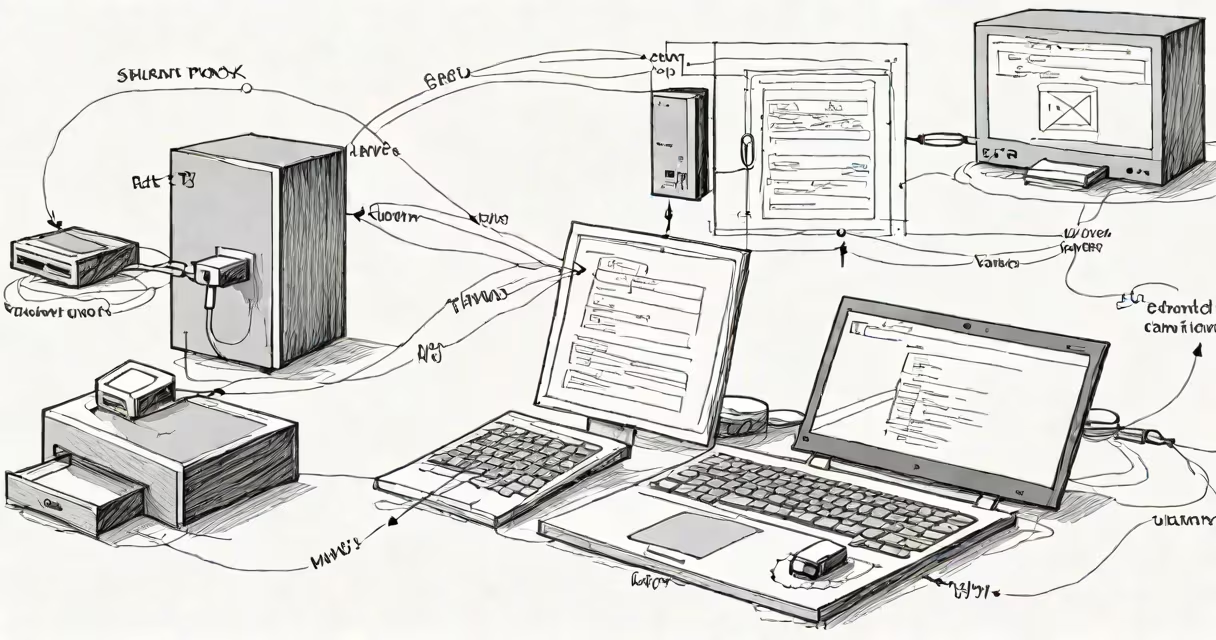
A forward proxy is a server that sits between a client and external resources, receiving requests from the client, evaluating them against access policies, and forwarding them on behalf of the user. It functions as a gatekeeper, controlling outbound traffic and masking the client's identity.
Forward proxies operate on the client side of the network. They are typically deployed in corporate or institutional environments to enforce security policies, filter content, monitor usage, and cache frequently accessed data. Unlike reverse proxies, which protect backend servers, forward proxies protect the client's network by managing outbound connections.
According to the Internet Engineering Task Force (IETF), forward proxies are often used in conjunction with authentication mechanisms and access control lists (ACLs) to ensure only authorized users can reach specific destinations. This aligns with guidelines in RFC 7230, which defines HTTP communication patterns where intermediaries like forward proxies play a central role in request handling.
When a client sends a request to access a website or service, the request first goes to the forward proxy. The proxy checks whether the request complies with organizational policies-such as blocking known malicious domains or restricting access to social media during work hours.
If approved, the proxy forwards the request to the destination server. The response then travels back through the proxy to the client. Because the client's IP address is hidden behind the proxy, the destination server sees the proxy's IP, not the user's.
This process enables centralized logging and monitoring. For example, a company can track which websites employees visit, even if they're using personal devices on the corporate network. The proxy logs the request, including timestamp, user ID, requested URL, and status code-all useful for compliance audits.
Forward proxies vary based on configuration, purpose, and deployment model. The most common types include:
| Type | Use Case | Security Level | Example Deployment |
|---|---|---|---|
| Transparent Proxy | Network-wide filtering without user configuration | Low (user unaware) | Public Wi-Fi in libraries or schools |
| Anonymous Proxy | Hiding client IP while allowing basic access | Medium (client IP obscured) | Content filtering in small businesses |
| Elite Proxy | Full anonymity and high performance | High (no traceable origin) | Corporate networks requiring strict privacy |
Transparent proxies do not modify headers or require authentication. They're often used in public networks where users have no choice but to route through them. However, because they don't hide the client's identity completely, they offer minimal privacy.
An anonymous proxy hides the client's IP but may still reveal that a proxy is being used. Elite proxies go further-they don't disclose that a proxy is involved, making it appear as if the request came directly from the client's IP.
One non-obvious distinction: transparent proxies are often mislabeled as "anonymous" in user-facing documentation. In reality, they expose both the client's original IP and the fact that a proxy is in use. This confuses users who assume transparency implies privacy.
Enterprises deploy forward proxies to manage internet access at scale. A university might use one to block access to torrent sites during exam periods while allowing academic databases. A financial firm may restrict trading platforms to internal IPs only, with the proxy enforcing those rules.
Another key function is bandwidth optimization. By caching static content-like software updates or popular web pages-the proxy reduces redundant downloads. A study by Akamai Technologies found that organizations using caching proxies reduced outbound bandwidth by up to 40% during peak hours.
I once configured a forward proxy for a nonprofit with limited IT staff. The organization relied on cloud-based donor management software. After setting up a forward proxy with SSL inspection, we caught a phishing attempt disguised as a login prompt. The proxy flagged the domain as suspicious based on reputation feeds, preventing a breach.
Forward proxies are often mistaken for reverse proxies, but their roles differ. A reverse proxy protects backend services by acting as a front door for incoming traffic. It handles load balancing, DDoS mitigation, and SSL termination. A forward proxy handles outgoing traffic and controls what clients can access.
Also, forward proxies are sometimes confused with virtual private networks (VPNs). While both can mask IP addresses, a VPN encrypts all traffic between the client and a remote server, creating a secure tunnel. A forward proxy only filters and routes traffic-it doesn't necessarily encrypt data unless configured with HTTPS.
Another misconception: forward proxies are not inherently secure. If improperly configured, they can leak credentials or bypass filters. A 2022 report by the Cybersecurity and Infrastructure Security Agency (CISA) warned that misconfigured forward proxies led to 17% of insider data leaks in surveyed organizations.
To maximize effectiveness, configure your forward proxy with explicit rules. Define allowed domains, set time-based access windows, and enable detailed logging. Use authenticated proxy settings so only authorized users can route through the system.
For example, a school district might allow students to access educational sites between 8 AM and 4 PM, but block gaming and video streaming during class hours. The proxy enforces these rules automatically, reducing administrative overhead.
When deploying a forward proxy in a cloud environment, consider using a managed service like AWS Global Accelerator or Azure Application Gateway. These tools integrate with existing identity providers and support automatic certificate renewal for HTTPS traffic.
For advanced filtering, combine a forward proxy with threat intelligence feeds. Services like Cisco Talos Intelligence provide real-time updates on malicious domains. Feeding this data into the proxy allows changing blocking of emerging threats.
As a rule of thumb: if you're managing outbound traffic from multiple devices, especially in regulated industries, a forward proxy is not optional-it's foundational.
Understanding what is a forward proxy isn't just technical-it's strategic. It's the difference between uncontrolled internet access and a secure, monitored, and compliant network. scaling infrastructure for thousands of users, the forward proxy remains a core component of modern network architecture.