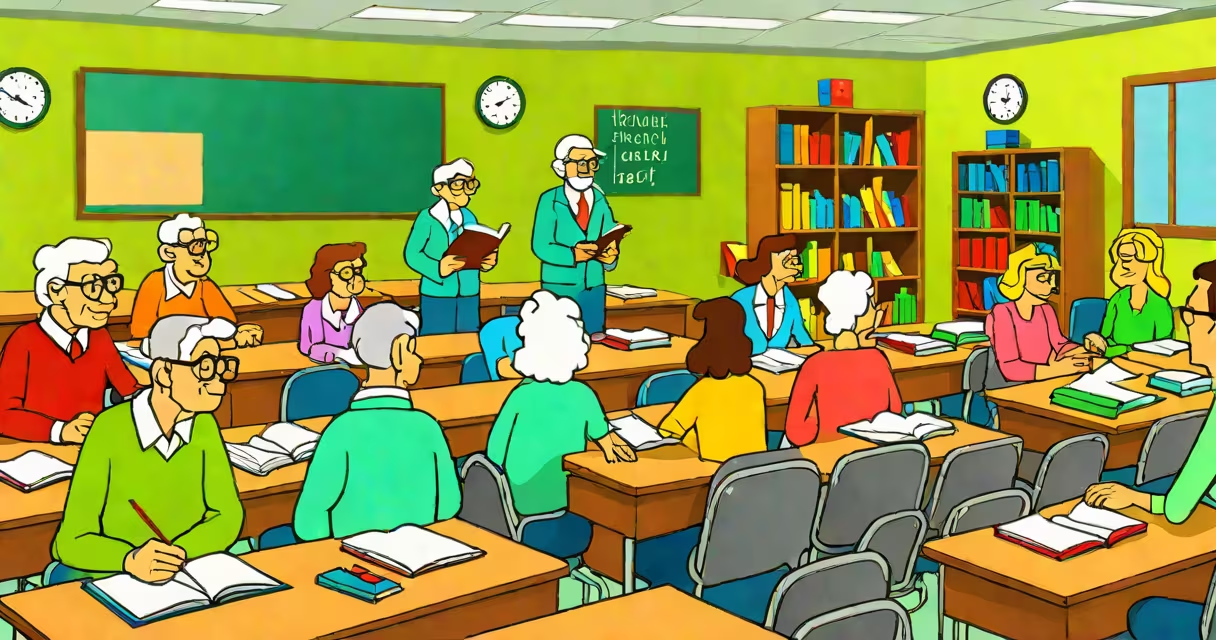
High school seniors most often take AP English Language and Composition or an honors-level literature course focused on advanced texts and analytical writing. These classes emphasize critical reading, rhetorical analysis, and formal essay composition, aligning with college readiness standards.
AP English Language and Composition, offered by College Board, requires students to analyze nonfiction texts using rhetorical strategies and write argumentative essays under timed conditions. The course covers works from diverse authors and historical periods, including speeches, essays, and articles. Students sit for a standardized exam in May, which can earn college credit if they score a 3 or higher.
Honors literature courses focus on complex novels, plays, and poetry from the 19th and 20th centuries. Common texts include *The Great Gatsby*, *Beloved*, *Death of a Salesman*, and *Things Fall Apart*. These courses prioritize close reading, thematic exploration, and student-led discussion. They are designed to build critical thinking and verbal reasoning skills essential for university-level humanities coursework.
| Course Type | Focus Area | Typical Texts | Credit Potential |
|---|---|---|---|
| AP English Language & Composition | Rhetorical analysis, argumentation, nonfiction | "A Modest Proposal," "I Have a Dream," "The Declaration of Independence" | Yes (score 3+ on exam) |
| Honors Literature | Thematic interpretation, literary devices, genre study | *The Great Gatsby*, *Othello*, *Pride and Prejudice* | No (but counts toward GPA) |
| College Prep English | Reading comprehension, basic essay writing | *To Kill a Mockingbird*, *Fahrenheit 451* | No |
Not all schools offer AP English Language. Some substitute with a dual-enrollment course through a local community college, allowing students to earn both high school and college credits simultaneously. For example, a student in California might enroll in a course taught by a professor from San Diego State University, completing the same syllabus and final exam as on-campus students.
A common misconception is that seniors only take one English class. In reality, many states require four years of English, with the senior year being the capstone. According to the National Center for Education Statistics (NCES), 78% of U.S. public high schools require at least one year of advanced English for graduation, with 44% mandating AP or honors-level courses specifically in grade 12.
Another misunderstanding is that seniors don't need to improve their writing. This is false. A 2022 report from the National Writing Project found that 63% of incoming college freshmen lacked proficiency in writing academic arguments, despite having completed four years of high school English. The senior year course aims to close that gap through sustained practice in drafting, revising, and peer review.
During my time teaching English at a suburban public high school, I observed that students who took AP English Language scored 1.8 points higher on average in college writing placement exams compared to peers who took standard English. One student, Maria, improved her SAT Evidence-Based Reading and Writing score from 580 to 710 after completing the course, citing the structured feedback and daily writing exercises as key factors.
Some schools offer elective options like creative writing, journalism, or film studies in place of traditional English courses. These are valid alternatives but do not fulfill the core requirement for college admissions. Admissions officers expect applicants to have taken at least one rigorous English course in their senior year, preferably one with a focus on analytical writing.
Students planning to major in fields like engineering, computer science, or business may still benefit from taking AP English Language. Research from the College Board shows that students in STEM majors who took AP English in high school were 27% more likely to complete their bachelor's degree within four years, due to stronger written communication skills.
What English class seniors take depends on school policy, state standards, and individual academic goals. The most common path leads to either AP English Language and Composition or an advanced literature course. Both prepare students for the demands of college-level work, whether in the humanities or technical disciplines.