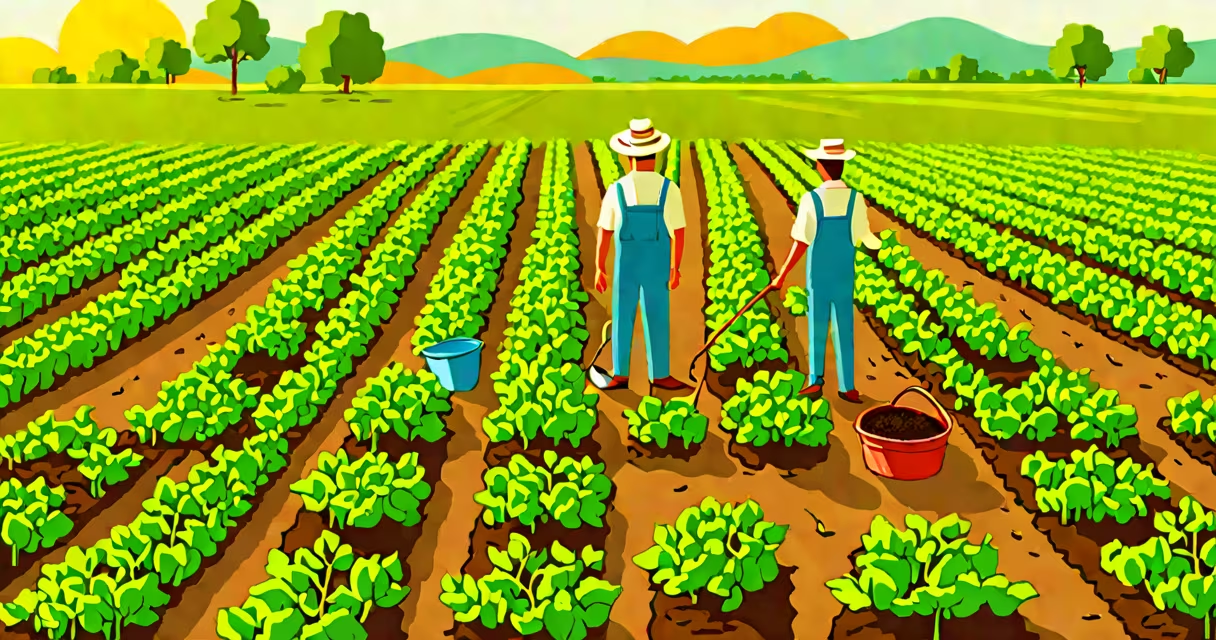
Sustainably grown describes food produced through agricultural practices that maintain ecological balance, preserve natural resources, and support long-term environmental and economic viability. These methods avoid depleting soil, water, or biodiversity while ensuring fair labor conditions and animal welfare.
The term applies to both plant-based and animal-based foods. A tomato labeled "sustainably grown" means it was cultivated using crop rotation, minimal synthetic inputs, and water conservation techniques. For livestock, it implies access to pasture, humane treatment, and feed sourced responsibly.
According to the U.S. Department of Agriculture (USDA), sustainable agriculture integrates environmental health, economic profitability, and social well-being. This structure guides federal programs and certification standards, including the USDA Organic label, which requires adherence to specific sustainability criteria.
Sustainable growing relies on closed-loop systems that mimic natural processes. Instead of relying on synthetic fertilizers, farmers use compost, cover crops, and nitrogen-fixing plants to enrich soil. These methods reduce runoff, prevent erosion, and increase carbon sequestration in the ground.
Water management is another core component. Drip irrigation systems, rainwater harvesting, and drought-resistant crop varieties minimize freshwater use. In California's Central Valley, almond growers have reduced water consumption by 20% since 2015 through precision irrigation and soil moisture sensors.
Integrated pest management (IPM) replaces broad-spectrum pesticides with targeted biological controls. Ladybugs, pheromone traps, and resistant crop varieties reduce insect damage without harming pollinators or contaminating groundwater.
While no single standard defines all sustainably grown operations, several recognized models exist. The table below outlines major approaches and their distinguishing features.
| Type | Core Principles | Example Application |
|---|---|---|
| Organic Farming | No synthetic pesticides or fertilizers; certified by USDA | A 50-acre apple orchard in Washington state uses neem oil and compost instead of chemical sprays |
| Regenerative Agriculture | Focuses on rebuilding soil health and increasing biodiversity | Cattle ranchers in Texas rotate pastures and plant native grasses to restore degraded land |
| Agroecology | Combines traditional knowledge with ecological science | Smallholder farms in Kenya grow beans and maize together to improve nutrient cycling and reduce pests |
Each model prioritizes resilience over yield maximization. Regenerative farms often see lower short-term output but higher long-term stability. A 2022 study published in *Nature Sustainability* found that regenerative fields stored 30% more carbon in soil than conventional ones after five years.
Sustainably grown food appears in supermarkets, farmers' markets, and restaurant menus. Major retailers like Whole Foods and Kroger require suppliers to meet sustainability benchmarks. Walmart's Project Gigaton aims to reduce emissions across its supply chain by 1 billion metric tons by 2030, with sourcing policies favoring sustainably grown ingredients.
Consumers choose sustainably grown products for health, ethics, and environmental reasons. A 2023 NielsenIQ survey showed 68% of U.S. shoppers consider sustainability when buying produce. Demand drives innovation: vertical farms in urban centers now grow leafy greens using 95% less water than field farming.
Producers adopt these methods to comply with regulations, access premium markets, and reduce long-term costs. Reduced pesticide use lowers healthcare expenses for farm workers. Healthy soils increase yields over time, offsetting initial investment in cover cropping and equipment.
"Sustainably grown" does not automatically mean "organic." Some farms use organic practices but lack formal certification due to cost or complexity. Conversely, a product labeled "natural" may not meet sustainability standards-it only indicates minimal processing.
Another mistake is equating sustainability with low yield. While some sustainable farms produce less per acre initially, they often outperform conventional systems over decades. A 2021 meta-analysis in *Science Advances* analyzed 70 studies and found that diversified, low-input farms had equal or higher long-term yields than high-input ones.
One non-obvious fact: sustainability includes labor equity. The Fair Trade label requires fair wages, safe working conditions, and community development funds. A coffee cooperative in Guatemala reported a 40% rise in worker retention after adopting Fair Trade standards, directly linking ethical treatment to operational continuity.
In 2020, a 120-acre tomato farm in Florida switched from conventional to sustainably grown practices. They replaced synthetic nitrogen fertilizer with legume cover crops and installed drip irrigation. Soil tests showed a 35% improvement in organic matter content within two years.
They partnered with a local co-op to distribute produce regionally, reducing transport emissions. Over three seasons, they cut water use by 40%, reduced pesticide applications by 90%, and maintained consistent yields. Their tomatoes now carry a "sustainably grown" badge on packaging.
This farm's success demonstrates that sustainability is measurable and scalable. It's not idealism-it's practical adaptation to climate change, resource limits, and consumer demand.
When you see "sustainably grown," look beyond the label. Check if the producer discloses water usage, soil health metrics, or labor practices. Transparency matters. As the Environmental Protection Agency notes, sustainable agriculture is not a single method-it's a continuous process of improvement.
Understanding what sustainably grown means helps consumers make informed choices. It's not about perfection-it's about progress toward food systems that work for people and the planet.