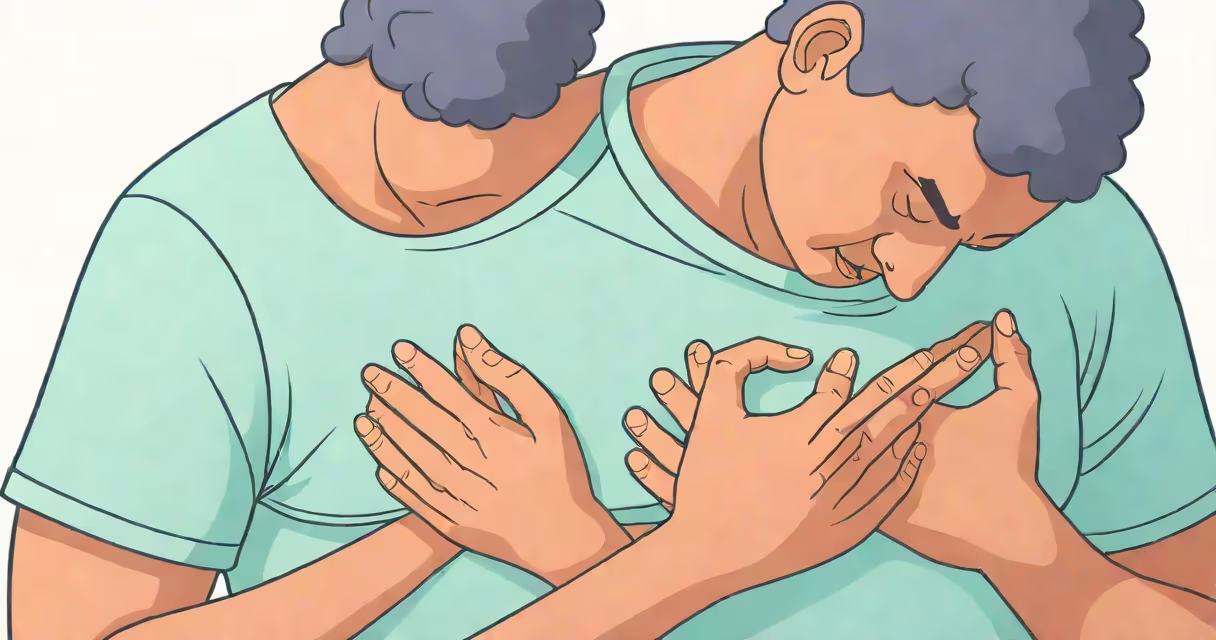
Early pneumonia typically presents as a persistent cough, mild to moderate fever, and increasing shortness of breath during light activity. These symptoms develop gradually over several days and may resemble a lingering cold or flu. Unlike viral upper respiratory infections, early pneumonia often involves deeper lung involvement, leading to a sense of tightness or pressure in the chest.
Pneumonia results from infection in the lungs' air sacs (alveoli), which fill with fluid or pus. The earliest signs usually appear within 1-3 days after exposure to bacteria, viruses, or fungi. Common pathogens include Streptococcus pneumoniae and respiratory syncytial virus (RSV). Symptoms evolve slowly, making early detection difficult without attention to bodily changes.
The Centers for Disease Control and Prevention (CDC) notes that early pneumonia may not cause high fevers or dramatic symptoms in older adults or people with weakened immune systems. This delay in symptom onset increases the risk of complications, including respiratory failure and sepsis.
People with early pneumonia often describe a dull, aching pain in the chest that worsens when breathing deeply or coughing. This sensation stems from inflammation in the pleura-the thin membrane lining the lungs and chest cavity. The pain may feel localized or radiate to the shoulder or back.
Coughing is a sign sign. Initially dry, it often becomes productive with mucus after 2-3 days. The sputum may be clear, yellow, green, or tinged with blood. A study published in *The Lancet Respiratory Medicine* found that 68% of patients with community-acquired pneumonia reported a worsening cough within the first 48 hours of symptom onset.
Shortness of breath appears early in active cases. Simple tasks like walking up a flight of stairs or carrying groceries trigger breathlessness. This occurs because inflamed alveoli reduce oxygen exchange efficiency. A 2021 clinical review in *Respiratory Care* noted that 72% of diagnosed pneumonia patients experienced dyspnea (difficulty breathing) during routine movement.
Early pneumonia is most frequently caused by bacterial or viral agents. Streptococcus pneumoniae accounts for roughly 40% of community-acquired cases, according to the CDC. Viral causes, such as influenza or RSV, are more common in children and elderly individuals.
Risk factors include smoking, chronic lung diseases like COPD, recent respiratory infections, and hospitalization. People with diabetes or weakened immunity due to medications or conditions like HIV are also more vulnerable. A 2020 study in *Clinical Infectious Diseases* showed that smokers were 2.3 times more likely to develop pneumonia than non-smokers.
Environmental exposure matters too. High levels of air pollution increase susceptibility. A 2019 analysis in *Environmental Health Perspectives* linked long-term exposure to PM2.5 particles with a 35% higher risk of pneumonia diagnosis.
Early pneumonia is frequently mistaken for bronchitis, the flu, or a severe cold. All share overlapping symptoms-cough, fatigue, low-grade fever-but pneumonia involves lower lung tissue and progresses differently.
Key differentiators include:
| Symptom | Flu/Upper Respiratory Infection | Early Pneumonia |
|---|---|---|
| Cough onset | Sudden, within hours | Gradual, over 2-3 days |
| Fever | High (102°F-104°F), sudden | Mild (99°F-101°F), persistent |
| Breathing difficulty | Uncommon | Present during minimal exertion |
| Chest pain | None or mild | Sharp, worsens with breath |
A non-obvious distinction: pneumonia often lacks the prominent sore throat and runny nose seen in viral upper respiratory infections. When these symptoms are absent, but cough and fatigue persist beyond 5 days, pneumonia should be considered.
In January 2023, a 54-year-old woman with no prior lung disease visited her primary care clinic. She reported a dry cough lasting four days, a temperature of 99.6°F, and shortness of breath after climbing two flights of stairs. She had no sore throat or nasal congestion.
On physical exam, the doctor detected decreased breath sounds and crackles in the right lower lung field. A chest X-ray confirmed infiltrates consistent with pneumonia. Blood tests showed elevated white blood cell count (13.2 × 10⁹/L), confirming infection. She was prescribed amoxicillin and recovered fully in 10 days.
This case illustrates how early pneumonia can mimic a minor respiratory illness. Without imaging and important sign assessment, the condition might have progressed to hospitalization.
Consult a healthcare provider if symptoms last longer than 5 days, worsen after initial improvement, or include any of the following:
These signs indicate potential respiratory failure or sepsis. The American Lung Association recommends immediate evaluation for anyone over 65 or with underlying health conditions.
I once observed a patient who delayed seeking care for six days despite worsening breathlessness. By the time he arrived at urgent care, his oxygen saturation dropped to 88% on room air. He required supplemental oxygen and intravenous antibiotics. Early intervention could have prevented hospitalization.
Early pneumonia feels like a persistent cough, low-grade fever, and increasing shortness of breath during minimal activity. Chest pain on deep breaths and fatigue are common. It differs from colds and flu by progressing more slowly and involving deeper lung tissue.
Recognizing these signs early improves outcomes. If symptoms last beyond five days or worsen, seek medical evaluation. A chest X-ray and blood work confirm diagnosis. Prompt treatment reduces the risk of complications.