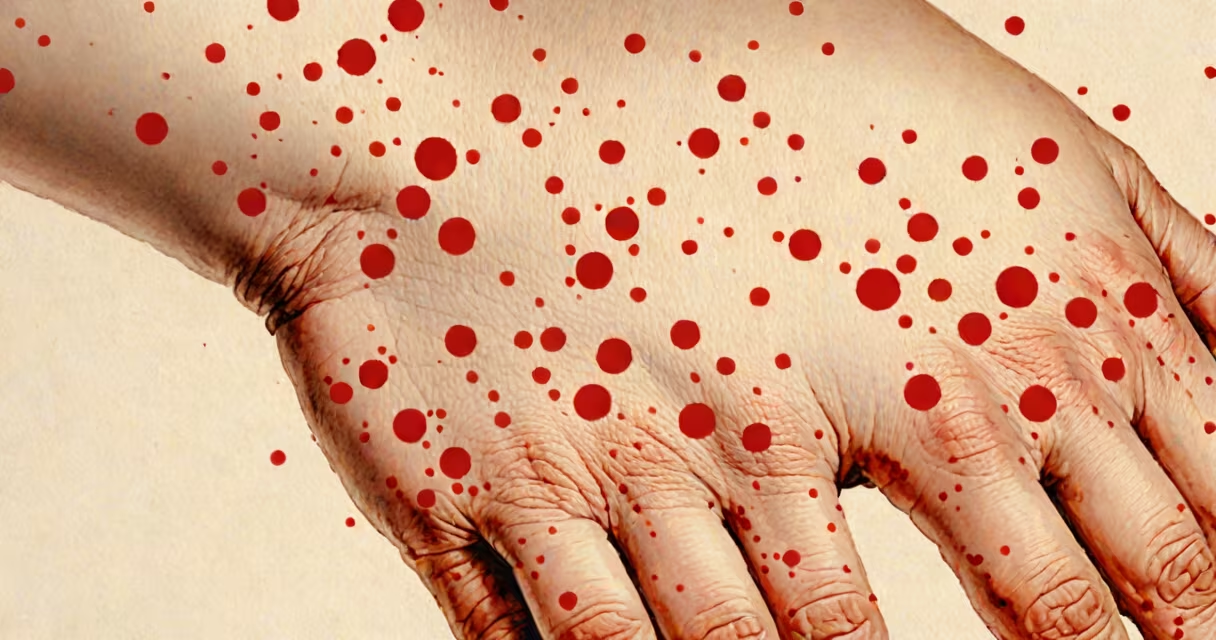
Small red spots on skin are often benign and caused by minor irritation, allergic reactions, or harmless vascular changes. They appear as pinpoint dots or slightly raised bumps and may occur anywhere on the body. While many resolve on their own, they can also signal infections, autoimmune conditions, or bleeding disorders.
These spots form when tiny blood vessels under the skin leak or dilate. The most common types include petechiae (pinpoint red or purple spots), purpura (larger flat areas of discoloration), and telangiectasia (visible capillaries). Their appearance varies based on cause, location, and whether they fade under pressure.
For example, petechiae from a viral illness like mononucleosis typically appear in clusters on the legs or arms and don't blanch when pressed. In contrast, insect bites produce small red spots with a central punctum and surrounding redness. Understanding the context-timing, associated symptoms, and physical features-is essential to determining significance.
Red spots arise from microvascular leakage or dilation. When capillaries rupture beneath the skin's surface, blood seeps into the tissue, creating visible discoloration. This process is called hemorrhage. The color depends on hemoglobin breakdown: fresh blood appears red, then turns brown or yellow as it resolves.
Some spots result from inflammation rather than bleeding. Contact dermatitis from poison ivy or nickel exposure triggers immune responses that increase blood flow and cause red, itchy papules. These spots often develop within hours of contact and may blister or crust.
A key diagnostic clue is the "blanch test." Press a clear glass against the spot. If it fades or disappears, it's likely due to blood vessel dilation or inflammation. If it remains visible, it's hemorrhagic-indicating potential clotting issues or infection. This simple test helps distinguish petechiae from other rashes.
Small red spots fall into several categories based on origin. The most frequent causes include allergic reactions, infections, and vascular abnormalities.
| Type | Appearance | Common Triggers | Typical Location |
|---|---|---|---|
| Petechiae | Pinpoint, non-blanching red or purple dots | Viral infections, medications, thrombocytopenia | Arms, legs, trunk, mucous membranes |
| Allergic rash | Flat or slightly raised, pink to red, may itch | Foods, drugs, latex, environmental allergens | Exposure sites or widespread |
| Acne or folliculitis | Small red bumps with central pore or pus | Bacterial overgrowth, blocked follicles | Face, chest, back |
| Ringworm (tinea corporis) | Red, ring-shaped patches with clearer center | Fungal infection, moist environments | Trunk, limbs, scalp |
One non-obvious distinction: petechiae from meningococcemia can progress rapidly and are often accompanied by fever, confusion, and muscle pain. A study published in the Journal of the American Academy of Dermatology notes that over 80% of patients with this condition show petechiae within 24 hours of symptom onset. Early recognition is critical-delayed treatment increases mortality risk.
Another overlooked cause is medication-induced vasculitis. Drugs like NSAIDs, antibiotics, and anticonvulsants can trigger immune-mediated damage to small blood vessels. These spots often appear symmetrically on the lower legs and may be painful or burn. If you've started a new prescription and developed red spots, consult a provider promptly.
Most small red spots are harmless and resolve within days. However, certain patterns demand evaluation. Seek care if spots:
I once observed a patient with petechiae on her legs and abdomen who had no known trauma. Blood tests revealed low platelets-diagnosed as immune thrombocytopenic purpura (ITP). Without testing, this could have been misdiagnosed as a viral rash. Early diagnosis prevented severe bleeding complications.
According to the American Academy of Dermatology Association, red spots accompanied by systemic symptoms like high fever or neurological changes require immediate assessment. Conditions such as Rocky Mountain spotted fever or Kawasaki disease present with rash and fever but are treatable when caught early.
Small red spots are often confused with other skin findings. Petechiae differ from bruises (ecchymoses) in size and mechanism. Bruises are larger, result from blunt trauma, and change color over time. Petechiae are smaller than 2 mm and stem from internal bleeding.
They're also distinct from purpura, which are larger than 3 mm and may indicate more serious coagulation issues. Purpura can be a sign of leukemia or vasculitis. If spots grow or persist beyond two weeks, further evaluation is needed.
Another common mix-up is confusing red spots with insect bites versus fungal infections. Fungal rashes like tinea usually have a defined border and central clearing. Insect bites tend to be singular or grouped in clusters and often itch intensely. A single red spot with a central punctum and surrounding redness suggests a bite; a spreading ring with scaling suggests fungus.
Small red spots on skin are rarely dangerous on their own. But when combined with systemic symptoms, rapid spread, or failure to blanch, they may reflect underlying health issues requiring prompt attention. Always consider timing, pattern, and associated symptoms when assessing skin changes.