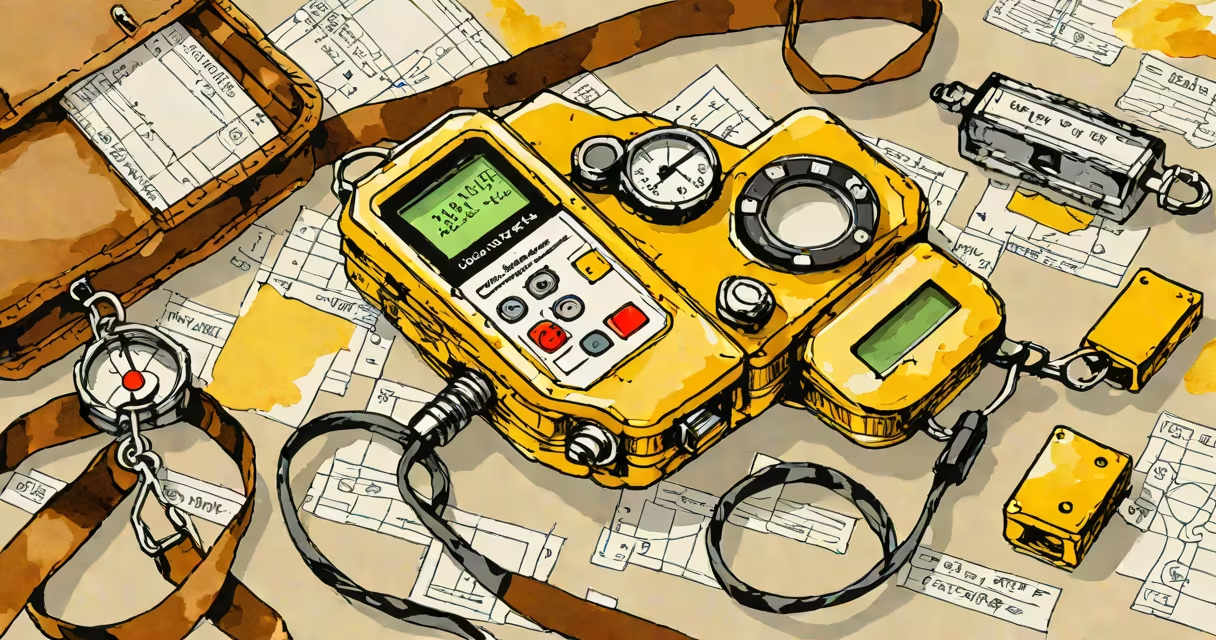
A dosimeter measures the cumulative dose of ionizing radiation a person receives over time, serving as a personal safety monitor in environments where radiation exposure is a risk. It ensures compliance with regulatory limits and helps prevent long-term health effects from prolonged exposure.
Dosimeters are essential tools in fields such as medicine, nuclear energy, industrial radiography, and emergency response. They provide real-time data that supports timely decisions to protect workers and the public. Without them, exposure levels would go untracked, increasing the risk of radiation-related illness.
The core function of a dosimeter is not to detect immediate danger but to record total accumulated exposure. This allows for retrospective analysis and verification against legal safety thresholds set by agencies like the U.S. Nuclear Regulatory Commission (NRC) and the International Atomic Energy Agency (IAEA).
Dosimeters operate by detecting ionizing radiation-such as alpha, beta, gamma, or neutron particles-that can damage biological tissue. When radiation passes through the device, it alters materials inside, creating measurable changes. These changes are then converted into a numerical dose value, typically reported in millisieverts (mSv) or rem.
Most personal dosimeters use passive sensors. For example, film badges contain photographic film that darkens when exposed to radiation. Thermoluminescent dosimeters (TLDs) use crystals that store energy from radiation and release it as light when heated-measuring the intensity of the exposure. Electronic personal dosimeters (EPDs) offer real-time readings and alarms when preset thresholds are exceeded.
For instance, a technician working near a medical imaging machine wears a TLD badge. After a month, the badge is sent to a lab. The crystal's light emission is analyzed, and the result shows the worker received 1.2 mSv of exposure-well below the annual limit of 50 mSv for occupational workers set by the NRC.
Different dosimeter types suit different environments and needs. Film badges are low-cost and widely used in routine monitoring, though they require processing and don't give instant feedback. TLDs offer higher accuracy and can be reused, making them ideal for long-term tracking.
EPDs are more advanced. They include microprocessors, displays, and audible alerts. If a worker enters a high-radiation zone, the EPD sounds an alarm, allowing immediate evacuation. These devices are common in nuclear power plants and during disaster recovery operations.
| Type | Measurement Method | Real-Time Feedback? | Best For |
|---|---|---|---|
| Film Badge | Darkening of photographic film | No | Routine monitoring, low budget |
| TLD (Thermoluminescent) | Light emitted when heated | No | Accurate long-term tracking |
| EPD (Electronic Personal Dosimeter) | Electrical signal from sensor | Yes | High-risk zones, real-time alerts |
Some dosimeters are designed specifically for neutron radiation, which is harder to detect. These use lithium fluoride or boron trifluoride detectors. Neutron dosimetry is critical in nuclear reactors and particle accelerators, where standard gamma detectors may miss significant exposure risks.
Regulatory bodies mandate dosimeter use in workplaces with radiation sources. The NRC requires that any worker receiving more than 10% of the annual dose limit (5 mSv) must wear a dosimeter. This applies to radiologists, nuclear plant operators, airport security screeners using X-ray machines, and researchers handling radioactive isotopes.
In hospitals, dosimeters track exposure during procedures like CT scans and fluoroscopy. A study published in *Health Physics* found that 68% of interventional radiologists exceeded their annual dose limit over five years without consistent dosimeter use-highlighting the necessity of regular monitoring.
During the Fukushima Daiichi nuclear disaster in 2011, dosimeters were important for tracking emergency responders' exposure. Workers wore EPDs that recorded doses in real time, enabling supervisors to rotate personnel before reaching unsafe levels. Data from these devices helped shape updated safety protocols for future emergencies.
Many confuse dosimeters with Geiger counters. A Geiger counter detects radiation in real time and indicates current levels, often with a clicking sound. It's useful for identifying contamination hotspots but doesn't track cumulative exposure. A dosimeter, by contrast, records total dose over days or weeks-making it suitable for compliance reporting.
Another misconception is that dosimeters protect the wearer. They do not shield against radiation. Instead, they inform users of exposure so protective actions can be taken. The device itself offers no physical barrier; it's purely a measurement tool.
There's also confusion around whether dosimeters need calibration. Yes-they must be recalibrated annually by accredited labs. A 2020 report by the National Institute of Standards and Technology (NIST) found that 12% of improperly maintained dosimeters produced errors exceeding 25%, leading to underreporting of exposure.
I once observed a team of maintenance workers at a decommissioned reactor site wearing EPDs. One worker triggered an alarm during a routine inspection. The device showed a sudden spike in dose rate. The team evacuated immediately. Later, it was discovered a sealed source had been disturbed during cleaning. The dosimeter prevented potential overexposure.
This incident underscored that the purpose of a dosimeter isn't just compliance-it's life-saving. It turns invisible threats into actionable data.
The purpose of a dosimeter is to safeguard human health by quantifying ionizing radiation exposure over time. It enables accountability, informs safety practices, and supports regulatory adherence. Without it, workers in high-risk environments would lack the evidence needed to prevent harm.