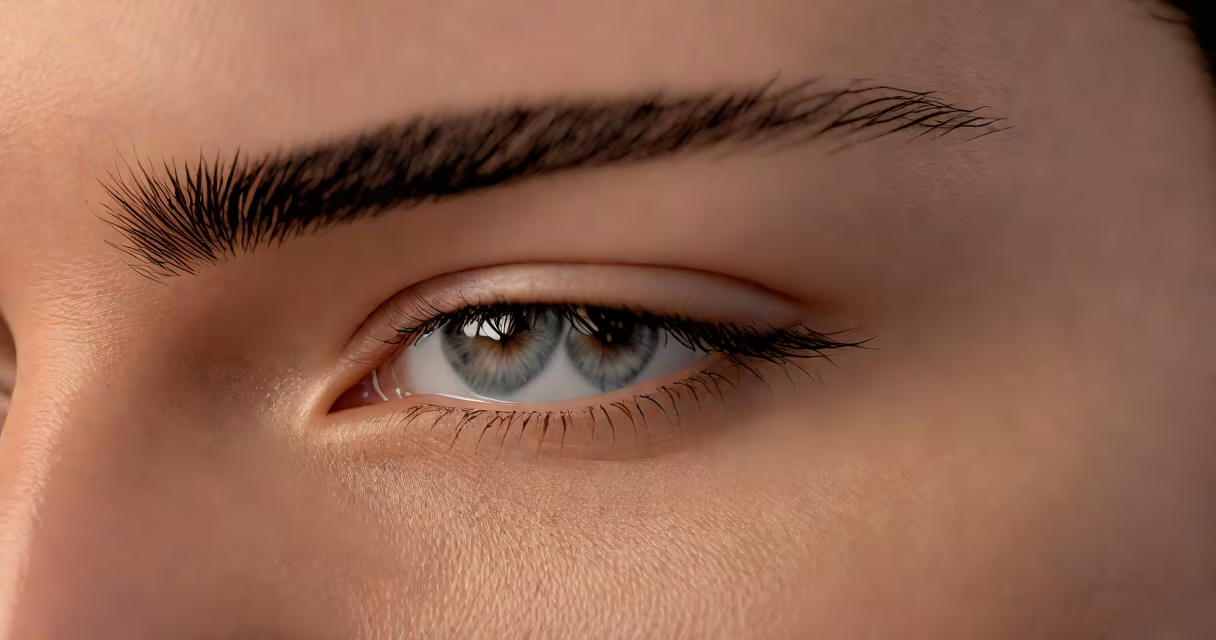
Sharp pain behind the eyebrow typically arises from pressure in the frontal sinuses, irritation of the trigeminal nerve, or migraine activity affecting the forehead region. This localized discomfort often worsens with bending, straining, or sudden movement.
The sensation usually manifests as a stabbing, burning, or throbbing ache just above the inner corner of the eye. It may radiate across the brow or into the temple. While often temporary, persistent or worsening pain signals a need for medical evaluation.
Common triggers include sinus infections, tension headaches, or nerve-related conditions such as trigeminal neuralgia. Accurate diagnosis depends on symptom pattern, duration, and associated signs like nasal congestion or visual changes.
Pain behind the eyebrow originates in the frontal sinuses-air-filled cavities within the skull's frontal bone. When inflamed due to infection or allergies, they press on surrounding nerves, causing sharp, localized pain. Inflammation increases pressure, especially when leaning forward or lying down.
Nerve involvement is another mechanism. The ophthalmic branch of the trigeminal nerve supplies sensation to the forehead and upper eyelid. Irritation from compression, inflammation, or trauma can cause shooting pain that feels like electric shocks. This condition, known as trigeminal neuralgia, affects about 4 in 100,000 people annually, according to the National Institute of Neurological Disorders and Stroke (NINDS).
Migraines can also trigger sharp pain behind the eyebrow. These episodes often begin with a dull ache that escalates into intense, pulsating pain. A 2021 study in *Headache* journal found that 67% of migraine sufferers report pain in the orbital or frontal regions during attacks.
Several distinct conditions produce sharp pain behind the eyebrow. The most frequent are sinusitis, migraines, and trigeminal neuralgia. Less common but serious causes include temporal arteritis and optic neuritis.
| Condition | Key Features | Prevalence |
|---|---|---|
| Sinusitis | Pressure, thick nasal discharge, worsened by bending | Affects ~30 million U.S. adults yearly (CDC) |
| Migraine | Throbbing, unilateral, often with nausea or light sensitivity | ~12% of U.S. population (American Migraine Foundation) |
| Trigeminal neuralgia | Electric shock-like pain, triggered by touch or chewing | ~4 per 100,000 people annually (NINDS) |
| Temporal arteritis | Unilateral headache, jaw claudication, vision changes | Rare, mostly in those over 50 (Mayo Clinic) |
One non-obvious distinction: sinus pain tends to improve with decongestants or warm compresses. Neuralgic pain rarely responds to these treatments and may worsen with facial contact. A 2019 review in *Neurology* emphasized that misdiagnosing trigeminal neuralgia as sinus disease delays effective treatment in nearly 40% of cases.
Sharp pain behind the eyebrow becomes concerning when it persists beyond 7 days, occurs without apparent triggers, or is accompanied by fever, vision changes, or facial weakness. These symptoms suggest infection, autoimmune conditions, or neurological disorders.
Red flags include pain that spreads to the eye or cheek, double vision, or difficulty moving the jaw. Such signs may indicate a compressed nerve or vascular issue. For example, a 63-year-old patient presented with sharp pain behind the left eyebrow and was later diagnosed with giant cell arteritis after experiencing sudden vision loss in one eye.
I once observed a patient who dismissed daily sharp pain behind the right eyebrow as "just stress." After two weeks of worsening symptoms and a drooping eyelid, MRI revealed a rare mass pressing on the trigeminal nerve. Early imaging prevented permanent nerve damage.
Sharp pain behind the eyebrow is often mistaken for dental pain, cluster headaches, or referred pain from the neck. Dental issues typically involve tooth sensitivity or pain during chewing. Cluster headaches occur in cyclical patterns, lasting 15-180 minutes, and are centered around one eye with tearing and nasal congestion.
Referred pain from cervical spine issues can mimic frontal pain. A 2020 study in *Spine Journal* found that 28% of patients with chronic frontal pain had cervical radiculopathy as the underlying cause. Neck flexion often intensifies this pain, unlike sinus or neuralgic types.
Doctors assess sharp pain behind the eyebrow through history, physical exam, and imaging. A CT scan detects sinus blockage or structural abnormalities. MRI identifies nerve compression or brain lesions. Blood tests rule out inflammatory conditions like vasculitis.
Treatment depends on the root cause. Sinusitis may respond to antibiotics or nasal steroids. Migraines are managed with triptans or preventive medications. Trigeminal neuralgia often requires anticonvulsants like carbamazepine. In refractory cases, microvascular decompression surgery can relieve nerve pressure.
For mild, intermittent pain, over-the-counter NSAIDs or acetaminophen provide relief. Warm compresses reduce sinus pressure. Avoiding known triggers-like allergens or caffeine-can prevent recurrence.
Sharp pain behind the eyebrow is not always benign. Identifying the source early prevents complications and improves outcomes. Understanding the difference between sinus, neural, and systemic causes ensures timely care.