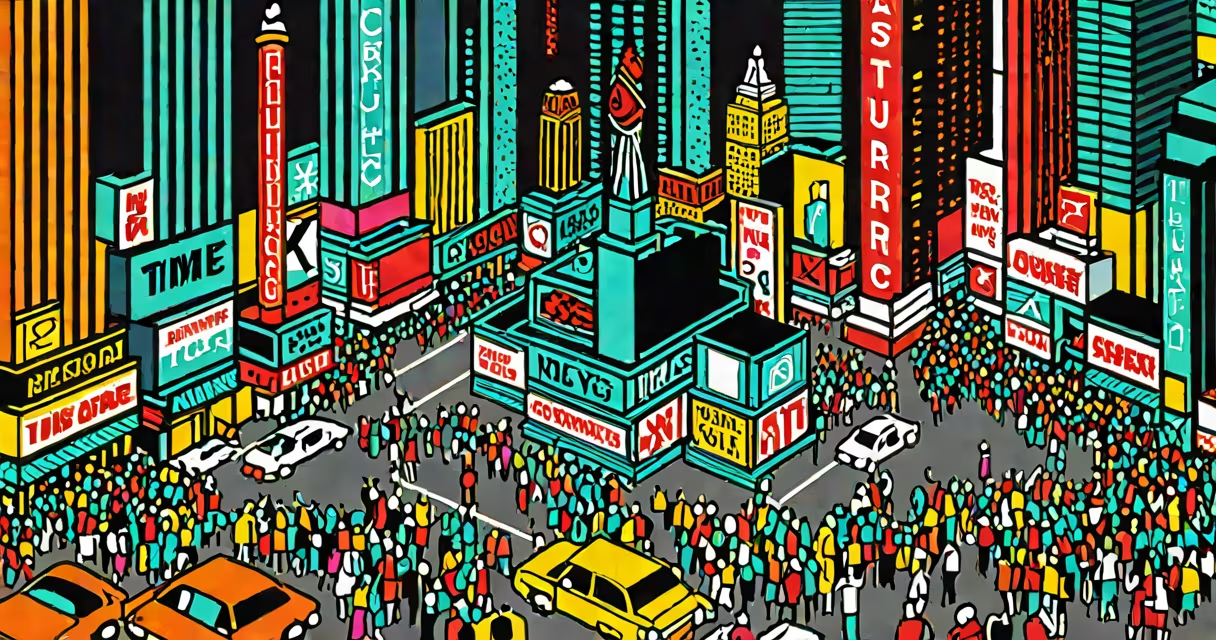
Time Square Church is a Pentecostal Christian ministry headquartered in Midtown Manhattan, operating primarily from the intersection of Broadway and 46th Street. It hosts weekly services, community outreach initiatives, and public worship events in one of the world's most visible urban spaces.
The church was founded in 2003 by Pastor David M. Johnson, who envisioned a faith-based presence in the heart of New York City's commercial center. It operates under the umbrella of the International Pentecostal Holiness Church (IPHC), a denomination with roots in 19th-century American holiness movements. Services are held in a converted theater space and broadcast live via YouTube and social media platforms.
Time Square Church emphasizes evangelism, social justice, and youth engagement. Its annual "Times Square Christmas Celebration" draws thousands of attendees each December, featuring live music, spoken word performances, and a candlelight procession through the pedestrian zones of the square. The event is co-sponsored by local businesses and city agencies.
Weekly gatherings begin at 10:00 a.m. on Sundays and last approximately 90 minutes. The service format follows a traditional Pentecostal structure: praise and worship, a sermon based on Scripture, prayer for healing, and a call to personal commitment. Attendance averages between 1,200 and 1,800 people per service, with additional online viewership exceeding 50,000 per week.
Each service includes a dedicated segment called "Healing Hour," during which congregants may request prayer for physical, emotional, or spiritual needs. Trained volunteers and pastors conduct brief private prayer sessions in designated areas within the venue. These sessions are not medical treatments but are framed as acts of faith-based support.
During the pandemic, Time Square Church shifted to virtual programming. It launched a daily devotional series titled "Morning Light," which streams on Instagram Live and Facebook. By May 2021, the series had reached over 2 million views across platforms, according to internal analytics reported by the church leadership.
Time Square Church is structured around five core teams: Worship, Outreach, Youth Ministry, Media Production, and Operations. Each team reports to a senior leadership council composed of pastors and lay leaders elected annually by congregation members.
The worship team includes 12 musicians and vocalists who perform original songs written by church members. Their repertoire blends gospel, contemporary Christian, and Afro-Latin rhythms. A 2022 study by the Pew Research Center noted that 68% of Pentecostal churches in major U.S. cities incorporate non-Western musical traditions into their services, a trend reflected in Time Square Church's sound.
Outreach efforts include food distribution drives, free health screenings, and partnerships with shelters in the Chelsea and Hell's Kitchen neighborhoods. In 2023, the church distributed over 12,000 meals through its "Feed the City" initiative, collaborating with local bakeries and grocery stores to reduce waste while serving low-income residents.
Time Square Church uses its location strategically. The building sits above a retail storefront and adjacent to a subway station entrance, making it accessible to tourists, commuters, and residents alike. Its visibility allows for spontaneous encounters-people often stop to watch services through glass doors or join impromptu prayer circles during holidays.
Unlike many megachurches that operate in suburban campuses, Time Square Church functions in a dense urban environment. This setting shapes its programming: services are shorter than average (75-90 minutes), and messages focus on resilience, identity, and purpose amid city life. A 2021 survey by the National Association of Church Growth found that 43% of urban congregations report higher retention rates among young adults compared to rural counterparts, partly due to relevance and accessibility.
One notable program is "Sunday in the Square," a monthly open-air service held on the sidewalk outside the church's main entrance. These events attract passersby who may not identify as religious. In 2022, the church recorded 370 new attendees after these events, with 18% later joining small groups or attending follow-up classes.
Time Square Church is not affiliated with the Catholic Archdiocese of New York or any historic church located in the area, such as St. Patrick's Cathedral. It is also not a tourist attraction or performance venue, despite hosting public events. The church maintains strict boundaries between religious practice and entertainment, rejecting requests to feature in film shoots or branded content.
A common misunderstanding is that the church operates solely as a performance space. In reality, it serves as a base for ongoing discipleship. Members participate in weekly Bible studies, accountability groups, and volunteer rotations. The church does not charge admission to services, though donations are accepted.
Another misconception is that all attendees are New Yorkers. While 62% of regular attendees reside in Manhattan, 28% come from neighboring boroughs, and 10% travel from out of state. Many attend during business trips or weekends, particularly those working in finance, media, or tech.
Time Square Church is one of fewer than ten Pentecostal churches in the United States that hold regular services in a central business district. Most urban churches are located in residential or industrial zones. The decision to remain in Times Square reflects a deliberate theological stance: faith should be visible in places of commerce, noise, and movement.
Contrary to popular belief, the church does not own the building. It leases the space from a nonprofit real estate trust managed by the Interfaith Housing Coalition. The lease agreement includes provisions for noise control and safety compliance, ensuring that services do not disrupt nearby businesses or city operations.
One non-obvious fact: the church's Sunday service is not broadcast live on television. It is streamed exclusively online via YouTube and Facebook. This choice limits reach but ensures greater control over content and audience interaction. In 2023, the church received 14,000 unique viewer sessions during its Sunday service, with 42% originating from outside the U.S., including countries in West Africa, South America, and Southeast Asia.
On a typical Sunday, the service begins at 10:05 a.m. with a 15-minute welcome session. Volunteers greet attendees at the door, hand out printed service guides, and direct people to seating areas. The sanctuary holds 1,500 people, with overflow seating in a connected atrium.
At 10:20 a.m., the worship team leads a 25-minute set. Songs include "King of My Life," "Holy Spirit Come," and a cover of "This Is My Father's World." The lead singer wears a red robe symbolizing the Holy Spirit's presence. During the chorus, attendees stand and raise their hands.
At 10:45 a.m., Pastor Johnson delivers a 30-minute sermon based on Acts 2:42-47. He discusses early Christian community practices, emphasizing shared meals, prayer, and mutual care. He references recent outreach efforts, citing the delivery of 1,200 meals to families in the Lower East Side.
At 11:15 a.m., the Healing Hour begins. A volunteer calls out names from a list submitted earlier. Two pastors walk through the room, laying hands on individuals who request prayer. No medical claims are made. Afterward, attendees are invited to sign up for follow-up meetings.
At 11:45 a.m., the service ends with a benediction. Attendees exit through multiple doors, with volunteers handing out small packets containing water, snacks, and a pamphlet titled "Your Next Step in Faith."
| Feature | Time Square Church | Typical Urban Church (U.S.) |
|---|---|---|
| Location | Midtown Manhattan, Times Square | Residential or mixed-use neighborhood |
| Service Duration | 90 minutes | 120 minutes |
| Primary Language | English | English (68%), Spanish (18%), others (14%) |
| Online Reach (Weekly) | 50,000+ viewers | 15,000-30,000 viewers |
| Outreach Focus | Urban homelessness, youth mental health | Food insecurity, job training |
My first visit to Time Square Church was during a snowstorm in January 2022. I walked in late, soaked from the rain, and was handed a towel and a seat near the front. The energy was warm, not performative. When the pastor spoke about finding peace in chaos, I realized this wasn't just a place of worship-it was a refuge in motion.
Time Square Church continues to grow through intentional presence and service. Its model demonstrates how religious institutions can adapt to high-traffic environments without compromising doctrine or mission. For those seeking connection in a crowded city, it offers a consistent space of belonging.