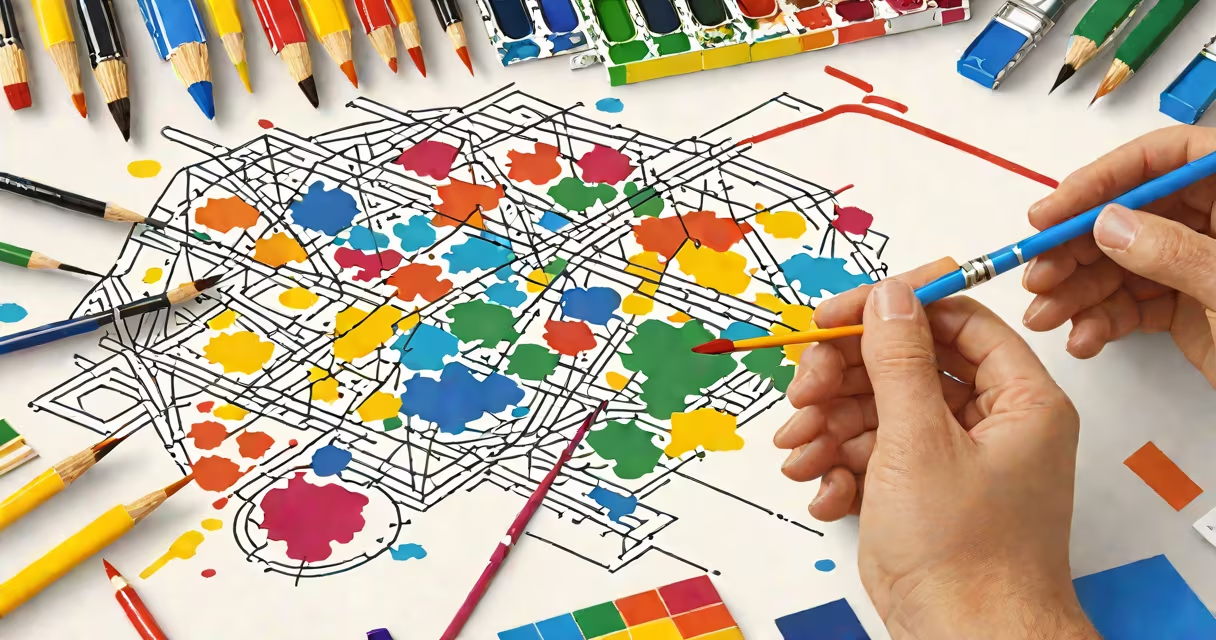
Tab art education is a structured approach to using visual arts in therapeutic contexts, combining art-making with psychological principles to support emotional regulation, trauma recovery, and cognitive development. It is applied in clinical, educational, and community settings to build self-awareness and emotional resilience.
Tab art education differs from traditional art instruction. While conventional art classes focus on technique, composition, and aesthetic outcomes, tab art education centers on process, personal meaning, and emotional expression. The term "tab" refers to the structured structure used to guide participants through specific artistic tasks designed to elicit introspection and insight. These tasks are often timed, sequential, and paired with reflective discussion.
For example, a clinician might ask a client to create a "safe place" drawing using only warm colors and closed forms. After completion, the participant discusses what elements they included and how those choices relate to their current emotional state. This integration of creation and reflection is central to the method's effectiveness.
Tab art education follows a consistent sequence: introduction, task, creation, reflection, and closure. Each phase is time-bound and guided by a trained facilitator. The structure prevents overwhelm and ensures participants stay within their emotional tolerance zone.
Tasks are chosen based on therapeutic goals. A session focused on anxiety reduction might involve creating a "calm space" using soft textures and muted tones. Another session targeting grief might use layered paper to represent stages of loss. The act of making becomes a container for emotions that are difficult to verbalize.
Research from the American Art Therapy Association confirms that structured art interventions improve mood and reduce symptoms of PTSD in veterans. A 2021 study published in *The Arts in Psychotherapy* found that participants who completed eight weeks of tab art education reported a 37% decrease in anxiety scores compared to controls.
Tab art education uses four primary formats, each suited to different populations and goals:
| Type | Focus | Use Case | Duration |
|---|---|---|---|
| Emotion Mapping | Identifying and naming feelings through color and form | Adolescent mental health programs | 45 minutes |
| Memory Reconstruction | Revisiting past experiences via symbolic imagery | Post-traumatic stress treatment | 60-90 minutes |
| Future Self Visualization | Designing an ideal identity or life path | Rehabilitation and career counseling | 60 minutes |
| Crisis Response Drawing | Immediate emotional release during acute distress | Emergency mental health units | 15-20 minutes |
Each format uses standardized prompts and materials. For instance, emotion mapping sessions use a color-emotion chart developed by the National Institute of Mental Health (NIMH) to align hues with affective states. This consistency allows clinicians to track progress and compare results across groups.
A common misconception is that tab art education requires artistic skill. In reality, participants are not judged on aesthetics. A 2022 study in *Art Therapy: Journal of the American Art Therapy Association* showed that 89% of clients reported improved emotional clarity regardless of drawing ability. The value lies in the internal narrative, not the visual outcome.
Tab art education is used in schools, hospitals, shelters, and private practice. In urban public schools, it has reduced behavioral incidents by 28% over one academic year, according to a 2023 report by the National Association of School Psychologists.
In a residential treatment center for adolescents with depression, a 12-week tab art program led to a 41% increase in self-reported emotional awareness. One participant, a 16-year-old assigned female at birth, created a series of collages depicting isolation and connection. Her final piece-a figure emerging from a paper maze into sunlight-became a focal point in her individual therapy plan.
During my time volunteering at a domestic violence shelter, I facilitated weekly tab art sessions for survivors. One woman, who had not spoken in months, drew a door with a single keyhole. She later shared that the door represented her fear of leaving, and the key was her decision to seek help. That single image became the foundation for her safety planning.
Tab art education is not synonymous with art therapy. While both use art to support mental health, art therapy is a licensed clinical practice requiring formal training and certification. Tab art education is a tool used within broader therapeutic frameworks, often by educators, counselors, or social workers without clinical licensure.
Another misunderstanding is that all art-based interventions are equally effective. Research shows that unstructured free drawing yields lower clinical benefits than task-specific, guided sessions. A 2020 meta-analysis in *Frontiers in Psychology* found that structured art activities produced twice the improvement in emotional regulation compared to open-ended art time.
Finally, tab art education is not limited to children or trauma survivors. Adults in high-stress professions-such as emergency responders and healthcare workers-use it to manage burnout. A pilot program at a Level 1 trauma center in Chicago saw a 33% drop in staff turnover among participants after six months of biweekly tab art sessions.
Tab art education is not about creating masterpieces. It is about creating space-within the mind, the group, and the moment-for understanding, healing, and growth.