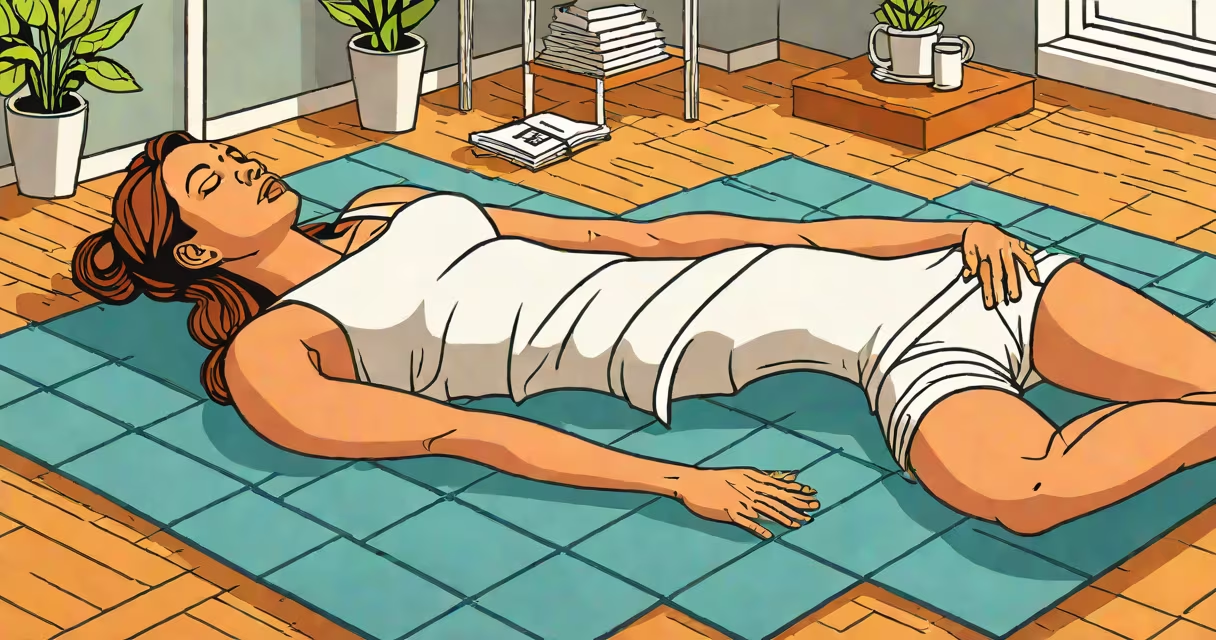
Stress relief muscle relaxation is a technique that reduces physical tension by consciously contracting and then releasing specific muscle groups, helping the body transition from fight-or-flight mode to calm. It's used to ease anxiety, improve sleep, and lower chronic stress markers like cortisol.
This method relies on somatic awareness-the ability to notice bodily sensations-and uses deliberate muscle engagement followed by passive release. The process interrupts the cycle of mental and physical stress by creating a physiological pause. Research from the National Institutes of Health shows that regular practice lowers blood pressure and heart rate within 10 minutes of session completion.
Unlike passive relaxation methods such as meditation or listening to music, stress relief muscle relaxation requires active participation. You don't just sit still-you perform small, controlled movements. This makes it effective for people who struggle with mental stillness but can focus on physical tasks.
The core mechanism involves two phases: contraction and release. During contraction, you tense a muscle group for five seconds, then relax it completely for 30 seconds. This trains the nervous system to distinguish between tension and relaxation states.
For example, clench your fists tightly for five seconds. Focus on the tightness in your forearms and hands. Then release suddenly and notice the warmth and heaviness that follows. This contrast heightens sensory feedback, reinforcing the sensation of release.
Neuroscience confirms this works. A 2021 study published in *Frontiers in Psychology* found that participants using this method showed increased activity in the parasympathetic nervous system-responsible for rest and digestion-within two weeks of daily practice. This shift correlates with reduced perceived stress and improved emotional regulation.
Several structured approaches fall under the umbrella of stress relief muscle relaxation. The most widely studied is progressive muscle relaxation (PMR), developed in the 1930s by Dr. Edmund Jacobson. It systematically moves through major muscle groups-from feet to forehead-using the contraction-release sequence.
| Method | Duration | Best For | Source |
|---|---|---|---|
| Progressive Muscle Relaxation (PMR) | 10-20 minutes | Anxiety reduction, insomnia, chronic pain | NIMH, 2020 |
| Body Scan Meditation | 15-30 minutes | Mind-body connection, trauma recovery | Harvard Medical School, 2019 |
| Isometric Holds (e.g., wall sits) | 3-5 minutes per group | Physical endurance, focus training | Journal of Strength and Conditioning, 2022 |
While PMR is the gold standard, shorter versions exist. One variation uses only four muscle groups: jaw, shoulders, hands, and feet. These are often practiced during commutes or before bed.
A lesser-known but effective variant is "reverse PMR," where you start with relaxation and gradually introduce tension. This version is useful for people with hypermobility or chronic fatigue who find contraction painful. It builds tolerance slowly.
Stress relief muscle relaxation is used clinically in cognitive behavioral therapy (CBT) programs for generalized anxiety disorder. The American Psychological Association recommends it as a first-line non-pharmacological intervention for mild to moderate anxiety.
Hospitals and rehabilitation centers use it to manage pain after surgery. A 2023 study at Johns Hopkins found patients who performed 10 minutes of PMR daily reported 37% less post-op discomfort compared to controls. They also required fewer opioid doses.
Workplaces have adopted it during lunch breaks. Google's internal wellness program includes guided 5-minute sessions. Employees report better focus and fewer afternoon energy crashes.
One common mistake is skipping the release phase. People tense muscles but fail to notice the difference when relaxing. Without contrast, the brain doesn't register the change. This undermines the entire purpose.
Stress relief muscle relaxation is frequently mistaken for yoga or stretching. While both reduce tension, they differ in intent and mechanism. Yoga focuses on alignment and breath coordination. Stretching improves flexibility. Stress relief muscle relaxation targets neuromuscular control.
Another confusion arises with mindfulness meditation. Both involve attention to the body, but meditation emphasizes observing thoughts without judgment. Stress relief muscle relaxation demands action-specifically, tensing and releasing.
There's also a myth that it only works for people with high baseline tension. In reality, it helps anyone experiencing mental fatigue. Even individuals with low-stress lifestyles benefit from the reset it provides. One participant in a University of Michigan trial reported improved concentration after just three days of daily 5-minute sessions.
Consider Sarah, a software developer working remotely. She spends 10 hours a day in front of screens. Her shoulders ache, her neck stiffens, and she wakes up tired despite sleeping eight hours.
After three days, Sarah notices she's less reactive to emails. Her morning headaches decrease. After two weeks, her doctor notes a 12-point drop in resting heart rate.
Stress relief muscle relaxation is not a quick fix. It's a trainable skill that improves with consistency. Practicing for just five minutes daily produces measurable changes in physical and mental well-being. The technique works because it grounds the mind in the body, breaking cycles of rumination and hypervigilance.