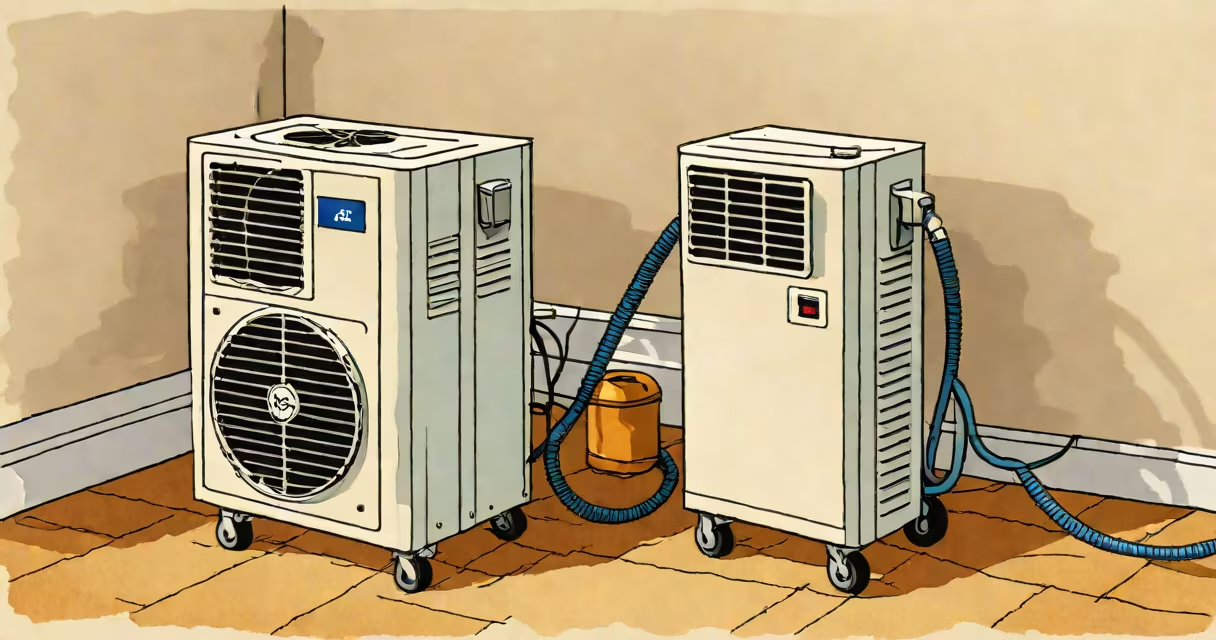
A small stand alone ac unit is a portable cooling device designed to cool rooms up to 150 square feet, typically using a single exhaust hose and a window adapter. It operates independently of central HVAC systems and requires no permanent installation.
These units draw warm indoor air through a front intake, pass it over refrigerant-cooled coils, then expel hot air through a rear exhaust hose. The cooled air returns into the room. Most models include a fan-only mode, timer settings, and remote controls.
They're ideal for bedrooms, home offices, or small apartments where installing a window unit or central system isn't feasible. Units range from 5,000 to 10,000 BTUs in cooling capacity. A 6,000-BTU model can reduce room temperature by 10°F in under 30 minutes when operating in a 100 sq ft space with moderate humidity.
Small stand alone ac units use vapor-compression refrigeration. An electric compressor pressurizes refrigerant gas, which flows into a condenser coil where it releases heat and turns into liquid. The liquid passes through an expansion valve, drops in pressure, and evaporates in the evaporator coil inside the unit. As it evaporates, it absorbs heat from the indoor air, cooling it.
The heated refrigerant then returns to the compressor, completing the cycle. A blower pulls air across the cold evaporator coil and pushes the cooled air back into the room. Simultaneously, a second blower forces hot air out through the exhaust hose, usually routed through a window or wall vent.
Units with dehumidification modes automatically cycle the compressor to remove moisture from the air. This reduces perceived temperature and prevents mold growth in humid environments. A 7,000-BTU unit can remove up to 1.5 pints of water per day in 80°F, 60% humidity conditions.
Small stand alone ac units differ primarily in cooling capacity, portability features, and exhaust configuration. Cooling power is measured in British Thermal Units (BTUs). Higher BTU ratings mean greater cooling output but also higher electricity use.
| Cooling Capacity (BTU) | Room Size | Best For | Energy Use (W) |
|---|---|---|---|
| 5,000-6,000 | up to 150 sq ft | bedrooms, small offices | 400-550 |
| 7,000-8,000 | 150-250 sq ft | living rooms, dens | 600-750 |
| 9,000-10,000 | 250-350 sq ft | large studios, small kitchens | 800-1,000 |
Single-hose models are common and affordable. They exhaust hot air through one hose but pull in some room air during exhaust, reducing efficiency. Dual-hose units maintain better indoor pressure and improve cooling efficiency by 10-15%, though they cost more and require two hose connections.
Small stand alone ac units are used in rental properties, dorm rooms, and temporary workspaces where permanent installations aren't allowed. They're also useful during summer heatwaves when central AC fails or during power outages if paired with a generator.
One user reported using a 6,000-BTU portable unit in a 120 sq ft apartment with no windows. After placing it near a door leading to a hallway, the unit maintained 72°F during 90°F outdoor temperatures. The user ran it for 6 hours daily, consuming ~1.2 kWh per day - costing $0.18/day at average U.S. electricity rates.
They're effective in spaces with poor insulation. A study by the U.S. Department of Energy found that portable ACs reduced indoor temps by 8-12°F in poorly insulated rooms compared to no cooling. However, their efficiency drops by 20% in rooms above 250 sq ft due to airflow limitations.
Many assume that a small stand alone ac unit can cool large areas efficiently. A 5,000-BTU unit cannot maintain comfort in a 300 sq ft living room. It may run continuously without reaching set temperature, increasing wear and electricity costs.
Another misconception is that all portable units require a window. While most use a window kit for exhaust, some models offer wall or sliding door vents. A 7,000-BTU unit with a flexible exhaust hose can be vented through a sliding glass door with a custom panel.
Users often overlook the importance of proper placement. Units should be placed 12-18 inches from walls and away from direct sunlight. Placing a unit in a corner blocks intake airflow and increases compressor strain. One test showed a 15% drop in cooling performance when the unit was within 6 inches of a wall.
Consider a 100 sq ft home office with a west-facing window. Average summer temperature: 85°F. Humidity: 65%. The user wants to maintain 72°F.
At $0.14/kWh, daily cost: $0.13. Monthly cost: $3.90. The unit maintains stable indoor temperature and reduces humidity from 65% to 50% within 45 minutes.