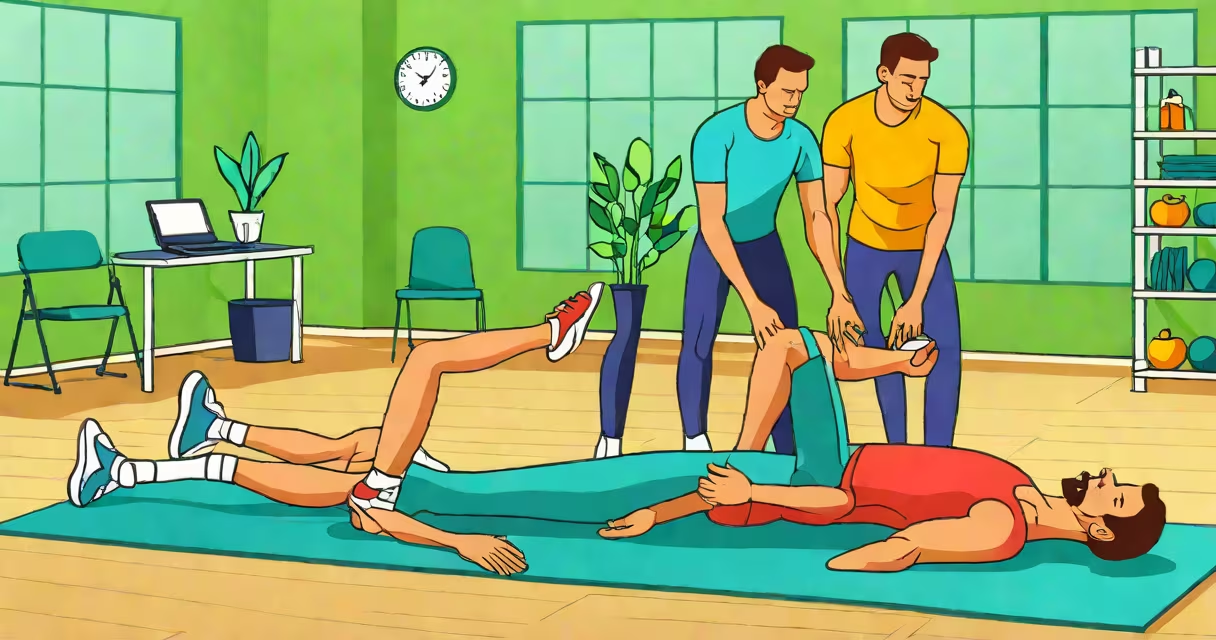
Physical therapy for adductor strain is a structured rehabilitation program that uses targeted exercises, manual techniques, and movement retraining to restore strength, flexibility, and function in the inner thigh muscles after a strain injury. It addresses pain, swelling, and impaired movement caused by overstretching or tearing of the adductor group-primarily the adductor longus, brevis, and magnus.
Adductor strains commonly occur during sudden directional changes, sprinting, or kicking motions in sports like soccer, hockey, and football. A grade 1 strain involves mild muscle fiber damage with minimal loss of function; grade 2 includes partial tearing and significant pain; grade 3 is a complete rupture requiring surgical intervention in rare cases. Physical therapy begins early in the recovery process to prevent chronic instability and reinjury.
According to the American Physical Therapy Association (APTA), early mobilization under professional guidance reduces recovery time by 30-40% compared to rest-only approaches. The goal is not just symptom relief but restoring neuromuscular control and sport-specific performance.
Therapists assess the extent of the strain through palpation, resisted muscle testing, and functional movement screens. They identify biomechanical imbalances such as hip internal rotation deficits, core weakness, or altered gait patterns that may have contributed to the injury.
Treatment follows a phased progression. Phase 1 focuses on reducing inflammation and protecting the injured tissue. Modalities include ice, compression, and gentle isometric contractions (e.g., pressing the heel into the floor while lying down). This phase lasts 3-7 days depending on pain levels.
Phase 2 introduces controlled range-of-motion exercises and progressive loading. Patients perform seated adduction with resistance bands, standing side-to-side lunges, and heel slides. These build tolerance to load without compromising healing tissue. Research from the Journal of Orthopaedic & Sports Physical Therapy shows that patients who begin isotonic strengthening within 10 days of injury return to sport 2.3 weeks faster than those delayed.
Physical therapy for adductor strain combines several evidence-based methods:
| Intervention Type | Common Techniques | When Used |
|---|---|---|
| Manual Therapy | Soft tissue mobilization, joint mobilizations, myofascial release | Early phase to reduce muscle tension and improve gliding |
| Exercise Therapy | Isometrics, changing stabilization, eccentric loading | Phases 2-4; tailored to injury severity |
| Functional Training | Single-leg balance drills, agility ladder work, sport-specific drills | Late recovery; prepares for return to activity |
| Pain Management | Modalities like ultrasound or TENS, education on load management | Throughout treatment; especially during flare-ups |
A non-obvious distinction: many patients assume they need surgery for a "torn" adductor. But most adductor strains heal with conservative care. Only 1-2% of cases require surgical repair due to avulsion fractures or complete tendon detachment, according to the Journal of Athletic Training.
One common mistake is jumping into high-intensity training too soon. A study published in the British Journal of Sports Medicine found that athletes who resumed full training before achieving 90% of pre-injury strength had a 67% reinjury rate within six months.
A 28-year-old recreational soccer player sustained a grade 2 adductor strain during a match. He reported sharp pain during cutting maneuvers and difficulty walking uphill. MRI confirmed a partial tear in the adductor longus.
He began physical therapy within 48 hours. Initial sessions focused on pain modulation using cryotherapy and isometric holds. By week 2, he performed seated adduction with a light resistance band (2 kg), progressing to standing side steps with a 5-pound weight vest.
By week 6, he completed a functional assessment: single-leg hop distance was 92% of the uninjured side, and he passed the Y-Balance Test with a composite score of 105%. He returned to non-contact soccer drills at week 8 and full participation at week 10.
This timeline aligns with clinical guidelines from the APTA's Musculoskeletal Section, which recommend a minimum of 8 weeks for moderate adductor strains before resuming competitive play.
Physical therapy for adductor strain is often mistaken for generic stretching or self-treatment. Stretching alone cannot rebuild strength or correct movement patterns. A 2021 study in the Scandinavian Journal of Medicine & Science in Sports showed that patients who relied solely on static stretching had twice the risk of recurrence compared to those in formal PT programs.
Another confusion: people equate groin pain with a single muscle injury. In reality, symptoms may stem from referred pain from the hip joint, pelvic floor dysfunction, or lumbar spine issues. A thorough differential diagnosis is essential. For example, a patient with persistent groin pain despite normal adductor imaging may actually have a labral tear, which requires different treatment.
I observed this firsthand while working with a collegiate runner whose groin pain persisted after three weeks of home exercises. A physical therapist identified reduced hip abduction strength and poor pelvic control during running. After correcting gait mechanics and adding core activation drills, the pain resolved in four sessions.
Seek physical therapy if pain persists beyond 7 days, worsens with activity, or limits daily tasks like climbing stairs or getting out of a car. Immediate evaluation is needed if there's bruising, swelling, or inability to bear weight.
For individuals with recurrent adductor strains, a complete biomechanical screening can reveal underlying causes such as leg-length discrepancy, foot pronation, or muscle imbalances. Addressing these factors reduces future injury risk.
Physical therapy for adductor strain is not a one-size-fits-all solution. Success depends on accurate diagnosis, individualized programming, and adherence to a phased recovery plan. With proper care, most patients regain full function within 6-10 weeks.