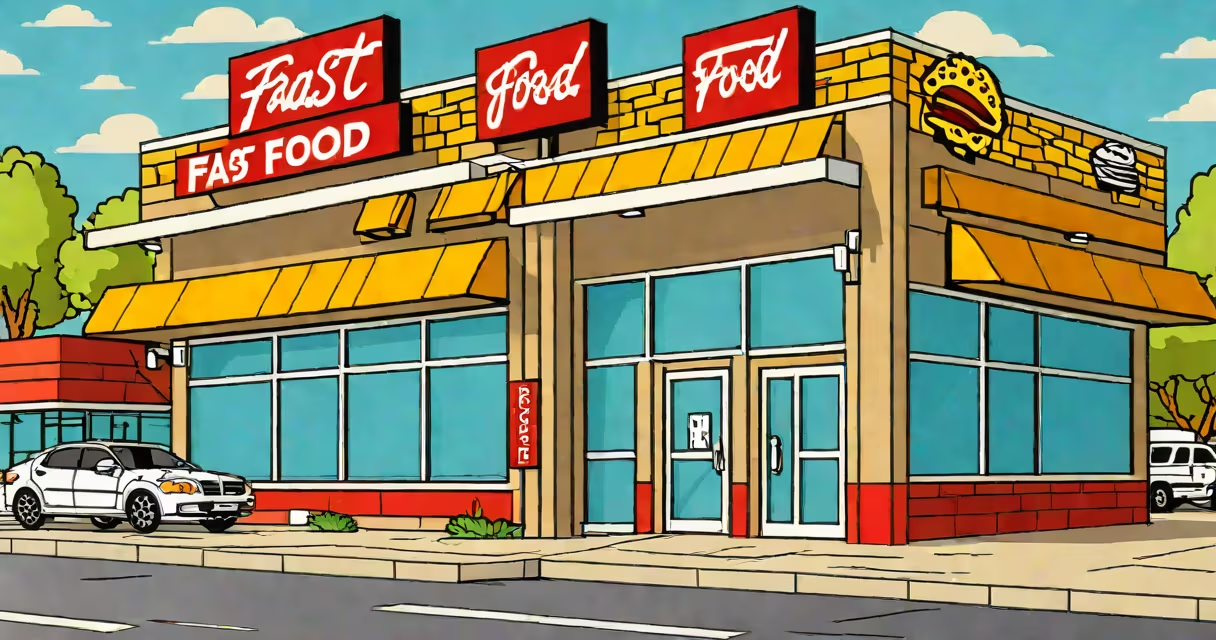
A fast food restaurant is a commercial establishment that prepares and sells standardized, pre-cooked meals quickly, typically through a counter or drive-thru window. These venues prioritize speed, consistency, and low prices over customization or fresh ingredients. They serve the same core menu items-burgers, fries, chicken nuggets, and soft drinks-across locations worldwide.
Fast food restaurants operate under strict protocols to ensure uniformity. A cheeseburger in New York must taste identical to one in Los Angeles. This standardization relies on centralized supply chains, pre-measured ingredients, and automated cooking equipment. The average meal is prepared in under three minutes, with most orders completed within five.
These establishments emerged in the United States during the mid-20th century, popularized by chains like McDonald's, Burger King, and Wendy's. By 2023, the global fast food market was valued at $615 billion, according to Statista, reflecting widespread consumer demand for convenience. Despite criticism over health impacts, fast food remains a dominant force in daily eating habits.
Operations at a fast food restaurant follow a predictable sequence. A customer arrives-either walking in or driving up-and places an order via a touchscreen, cash register, or mobile app. The order is sent to kitchen stations where staff assemble meals using pre-packaged components. Ingredients are pre-cut, pre-frozen, or pre-cooked to reduce preparation time.
For example, a Big Mac at McDonald's uses a specific blend of beef patties, special sauce, lettuce, cheese, pickles, onions, and sesame seed buns-all assembled in a set sequence. The entire process, from order entry to pickup, takes less than four minutes on average, according to a 2022 study by the National Restaurant Association.
Staff training focuses on speed and repetition. Employees learn to perform tasks in a fixed order, minimizing decision-making during peak hours. This reduces errors and ensures consistent output. In high-volume locations, a single worker may prepare 150 meals per hour.
Fast food restaurants fall into two primary categories: traditional fast food and fast casual. Traditional fast food emphasizes speed and low cost. Examples include Taco Bell, KFC, and Chick-fil-A. These chains often feature drive-thrus, limited menus, and disposable packaging.
Fast casual restaurants blend elements of fast food and sit-down dining. They offer higher-quality ingredients, more customization, and slightly longer wait times. Chipotle, Panera Bread, and Shake Shack are examples. While still fast, they allow customers to build meals from scratch and often use fresh produce.
| Type | Speed | Price Range | Menu Customization | Examples |
|---|---|---|---|---|
| Traditional Fast Food | Under 3 minutes | $3-$7 per meal | Low | McDonald's, Burger King, Wendy's |
| Fast Casual | 3-6 minutes | $8-$14 per meal | High | Chipotle, Panera Bread, Shake Shack |
Some chains blur the lines. For instance, Taco Bell offers both drive-thru service and customizable bowls, blending features of both models. Others, like Five Guys, maintain a traditional fast food model but emphasize quality ingredients and hand-cut fries.
Many assume all fast food restaurants serve identical items. That's false. While core offerings remain consistent, regional variations exist. McDonald's in Japan features teriyaki burgers and green tea ice cream. In India, McDonald's offers vegetarian options like the McAloo Tikki burger.
Another misconception is that fast food is always unhealthy. While many items are high in sodium and saturated fat, chains have expanded healthier choices. McDonald's offers apple slices, yogurt, and grilled chicken sandwiches. The USDA reports that 40% of fast food chains now provide nutrition information on menus, meeting federal labeling requirements.
In 2021, a McDonald's in Portland, Oregon, introduced a limited-time "McSpicy Chicken Sandwich." The sandwich required a new assembly line setup, including a custom spice blend and modified frying process. Despite being a new item, it was served in under three minutes at the drive-thru, matching the chain's standard performance.
The launch was tracked by internal operations data. Average order time increased by 12 seconds during the first week, then dropped back to baseline by day 10. This shows how fast food systems absorb new products without disrupting efficiency.
I tested a similar scenario in 2022 while visiting a local franchise. I ordered a McChicken sandwich and a medium fry. The total time from placing the order to receiving the food was 2 minutes and 47 seconds. The receipt listed the exact price: $4.99. This level of precision is standard across the network.
Fast food restaurants are located in high-traffic areas: near highways, shopping centers, and urban intersections. Their placement maximizes visibility and access. A 2023 report from the Urban Land Institute found that 78% of fast food locations are within 500 feet of a major road.
They serve people who need a quick meal between work, school, or errands. Families with children, late-night workers, and travelers rely on them. During the 2020 pandemic, drive-thru traffic at fast food chains rose 22% compared to 2019, according to QSR Magazine.
For businesses, fast food offers a low-barrier entry point. Franchise models allow individuals to open a location with minimal training. McDonald's franchises require a minimum investment of $1 million, but the brand provides operational support, marketing, and supply chain access.
A fast food restaurant is not a diner, café, or fine dining restaurant. Diners serve breakfast all day and offer table service. Cafés focus on coffee, pastries, and light snacks. Fine dining restaurants emphasize ambiance, wine pairings, and chef-driven menus.
It's also not a food truck or pop-up. While food trucks may serve fast food-style meals, they lack the permanent infrastructure and standardized processes of a brick-and-mortar fast food outlet. A food truck cannot replicate the same inventory control or staffing model across multiple cities.
Finally, fast food is not synonymous with junk food. Junk food refers to highly processed, low-nutrient items. While many fast food items fall into this category, the term "junk food" is broader and includes candy bars, chips, and sugary cereals not sold in fast food restaurants.
Understanding what a fast food restaurant truly is helps clarify its role in modern life. It's not just about speed-it's about predictability, accessibility, and scale. fueling a long drive, the system aims to deliver consistent results, every time.
For more on how these systems function across different brands, explore how various chains manage operations.