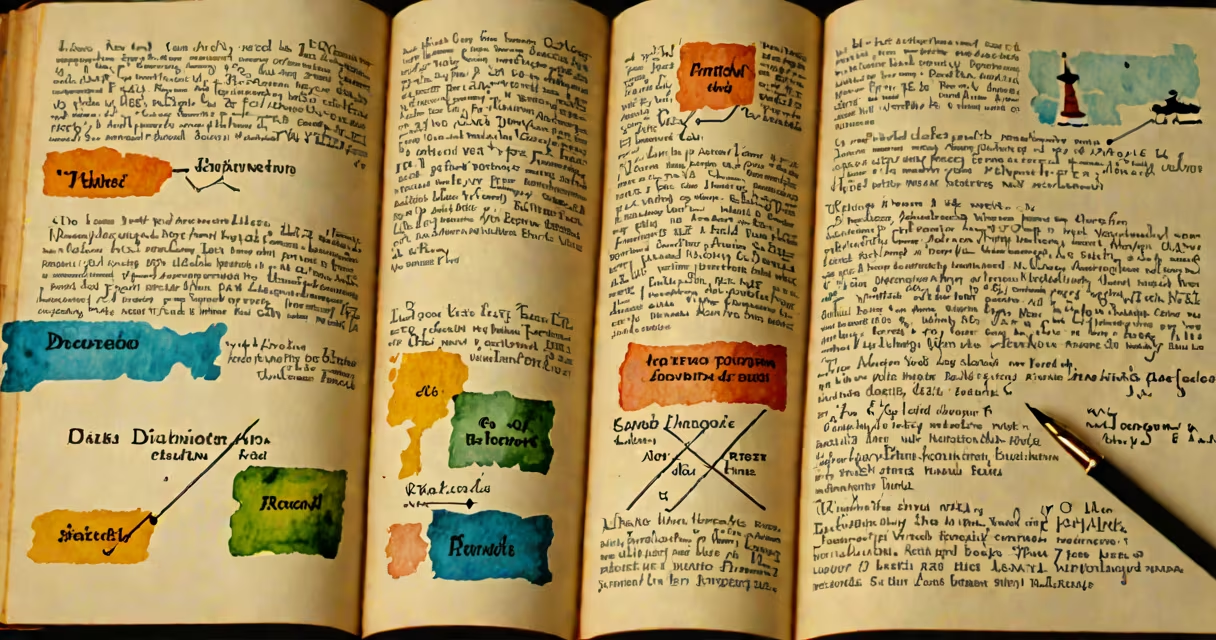
A dictionary entry organizes information about a word into distinct structural components: headword, pronunciation, part of speech, definition, etymology, and usage examples. These elements collectively enable precise understanding and consistent reference across contexts.
The headword is the primary form of the word listed in the dictionary. It appears in bold or capitalized letters at the beginning of the entry. For example, "run" is the headword in the entry for the verb meaning "to move quickly on foot." The headword may include variant spellings or forms, such as "run" and "ran," but only the base form is indexed alphabetically.
Pronunciation is typically shown using the International Phonetic Alphabet (IPA). For "run," the IPA transcription is /rʌn/. This notation allows users to hear the word mentally or verify correct articulation. Dictionaries often include audio files in digital versions, but print editions rely solely on phonetic symbols.
| Component | Function | Example (for "dormant") |
|---|---|---|
| Headword | Primary word form | dormant |
| Pronunciation | Sound representation | /ˈdɔːrmənt/ |
| Part of speech | Grammatical category | adjective |
| Definition | Meaning in context | not currently active or in use |
| Etymology | Origin and historical development | From Latin *dormire* ("to sleep"), via French *dormant* |
| Usage example | Illustration in sentence | The dormant volcano showed no signs of activity for centuries. |
The part of speech identifies how the word functions grammatically. It appears after the pronunciation and before the definition. Common labels include "noun," "verb," "adjective," "adverb," and "preposition." Some entries list multiple parts of speech when a word serves different roles. For instance, "light" can be a noun ("a beam of light") or an adjective ("a light burden").
Definitions describe the meaning of the word in plain language. They are ordered by frequency and relevance, with the most common sense first. The Oxford English Dictionary (OED) uses a strict hierarchy: core meaning, secondary meanings, and rare or obsolete senses. For "dormant," the primary definition is "not currently active," followed by less frequent uses like "in a state of suspended animation."
Etymology traces the origin and evolution of the word. It appears in parentheses or italics after the definition. For "dormant," the etymology shows derivation from Latin *dormire*, meaning "to sleep," and notes its adoption into Old French as *dormant*. This lineage explains why "dormant" relates to inactivity-sleep being the ultimate pause.
Usage examples demonstrate how the word functions in real language. They appear in quotation marks or italics, often with context. A single example suffices for common words, but rare or technical terms may include multiple instances. For "dormant," one example is: "The dormant economy began to revive after the pandemic." This illustrates both the word's meaning and its syntactic role as an adjective.
Some dictionaries include additional features like synonyms, antonyms, or regional variants. The American Heritage Dictionary adds "usage note" sections to flag controversial or informal uses. For example, "literally" is marked as sometimes misused in hyperbolic expressions, though it remains acceptable in formal writing.
One non-obvious distinction: the headword is not always the root form. In compound words, the dictionary may list the full expression rather than the stem. For example, "self-esteem" appears as a unit, not "self" or "esteem." This reflects how users actually encounter the term in reading and speech.
Another subtle point: pronunciation guides may differ between dialects. The Merriam-Webster dictionary provides both General American and British English pronunciations. For "schedule," /ˈskɛdʒuːl/ is used in U.S. English, while /ˈʃɛdjuːl/ is standard in British English. Users must select the appropriate version based on their regional context.
I once reviewed a 19th-century edition of the Oxford English Dictionary and was struck by how entries lacked standardized formatting. Definitions were often embedded in long passages, and pronunciation was described in words rather than symbols. The modern structure-clean, modular, and machine-readable-did not exist until the 20th century.
Digital dictionaries like Wordnik or Google's Dictionary API now display entries in structured JSON format. Each field corresponds to a traditional component: "headword," "pronunciation," "partOfSpeech," "definition," "etymology," and "example." This enables search engines and apps to parse and display entries consistently.
For instance, a query for "ephemeral" returns:
{
  "headword": "ephemeral",
  "pronunciation": "/ɪˈfɛmərəl/",
  "partOfSpeech": "adjective",
  "definition": "lasting for a very short time.",
  "etymology": "From Latin *ephemeros*, from Greek *ephēmeros*, 'lasting one day'.",
  "example": "The celebrity's fame was ephemeral."
}
This format ensures uniformity across platforms and supports automated tools like translation software and grammar checkers.
Understanding the parts of a dictionary entry improves accuracy in research, writing, and language learning. It prevents misinterpretation-such as confusing "principal" (leader) with "principle" (rule)-and clarifies nuances like "effect" (result) versus "affect" (influence).
When you consult a dictionary, you're not just looking up a word-you're accessing a structured system designed for clarity and precision. non-native speaker, recognizing these components enhances comprehension and reduces errors.