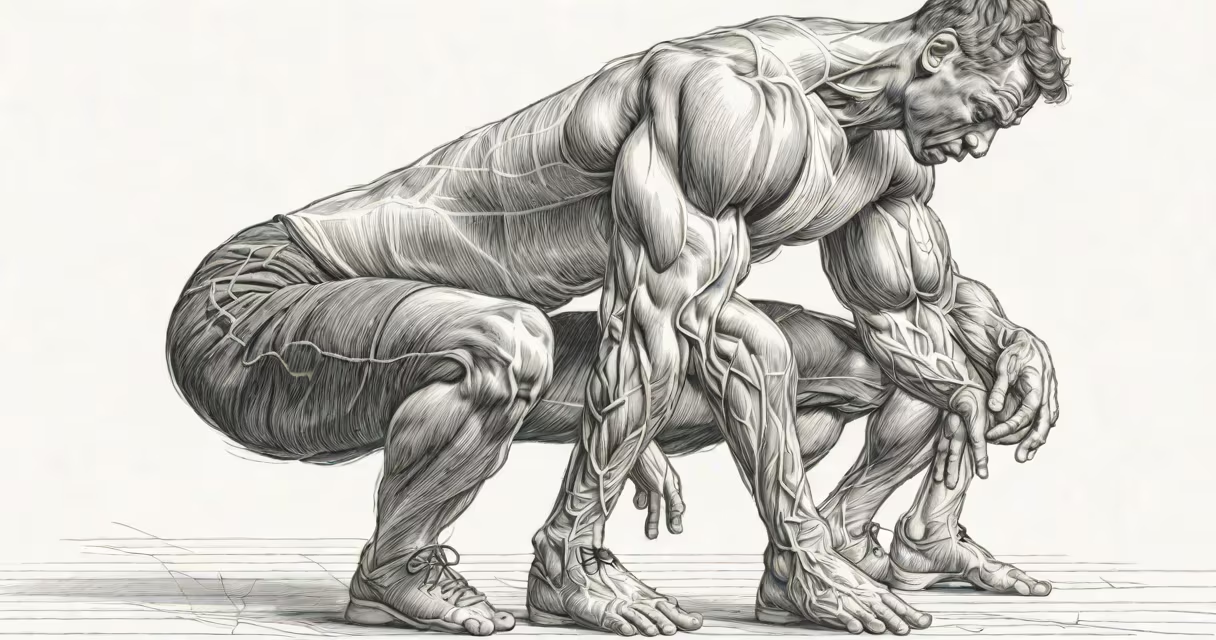
Pain after squats typically results from incorrect movement mechanics, overtraining, or muscle fatigue rather than structural damage. It commonly affects the lower back, knees, or quads, especially when form breaks down under load.
Squats are compound movements that engage multiple muscle groups: glutes, quads, hamstrings, core, and lower back. When executed properly, they build strength and stability. But when form deteriorates-especially under heavier loads-the body compensates, leading to strain in joints and muscles not designed to handle the stress.
For example, a 2022 study published in the Journal of Strength and Conditioning Research found that 68% of novice lifters exhibit excessive forward trunk lean during barbell back squats, increasing compressive forces on the lumbar spine. This misalignment correlates strongly with post-exercise lower back discomfort.
Pain after squats arises from mechanical stress exceeding tissue tolerance. This includes joint compression, muscle microtears, and altered neuromuscular control. The most frequent sites are the knees (patellofemoral pain), lower back (lumbar strain), and hips (hip flexor tightness).
Delayed onset muscle soreness (DOMS) typically peaks 24-72 hours after training. It's caused by eccentric loading-like lowering into a squat-where muscles lengthen under tension. DOMS is normal and indicates adaptation, not injury. However, sharp, localized pain during or immediately after squats signals potential form issues or joint irritation.
A real-world example: A 32-year-old recreational lifter reported persistent knee pain after front squats. Upon video analysis, his knees collapsed inward (valgus collapse) due to weak glute medius. Correcting hip stability through targeted activation drills eliminated pain within two weeks.
Not all pain after squats is the same. Distinguishing between normal soreness and warning signs prevents mismanagement.
| Type | Onset | Location | Characteristics | When to Act |
|---|---|---|---|---|
| DOMS | 24-72 hrs post-workout | Quads, glutes, hamstrings | Dull ache, improves with light movement | Normal; rest and recovery suffice |
| Knee valgus | During squat motion | Inner knee, patella | Sharp pain, instability, clicking | Correct form; strengthen glutes |
| Lumbar strain | At bottom of squat | Lower back, sacroiliac joint | Burning, sharp, radiates to hips | Stop lifting; assess posture and depth |
| Hamstring strain | During ascent | Back of thigh | Stabbing pain, swelling | Rest; avoid stretching until healed |
One non-obvious distinction: pain originating from the lower back during squats is rarely due to disc herniation. According to the American Academy of Orthopaedic Surgeons (AAOS), only 1-2% of low back pain cases stem from spinal disc issues. Most cases involve muscular imbalances or poor pelvic alignment.
I once observed a client perform 10 sets of high-rep goblet squats with rounded shoulders and anterior pelvic tilt. He reported burning in his lower back after each set. After correcting his torso position and cueing "chest up, ribs tucked," pain vanished in three sessions.
Three primary form mistakes lead to pain after squats:
These errors are often masked by heavy weights. A 2021 review in Sports Medicine noted that participants using 80% of their one-rep max were 3.4 times more likely to display form breakdown than those using 60% or less.
Recovery from mild soreness takes 3-5 days. Persistent pain beyond that window suggests an underlying issue. Red flags include:
If you experience any of these, consult a physical therapist or sports medicine provider. A trained professional can differentiate between muscular fatigue and joint pathology.
For instance, a 45-year-old woman had recurring knee pain after squats. Imaging revealed early-stage chondromalacia patellae-a softening of cartilage under the kneecap. She was advised to reduce squat depth and focus on isometric holds. After six weeks of modified training, she returned to full squatting without pain.