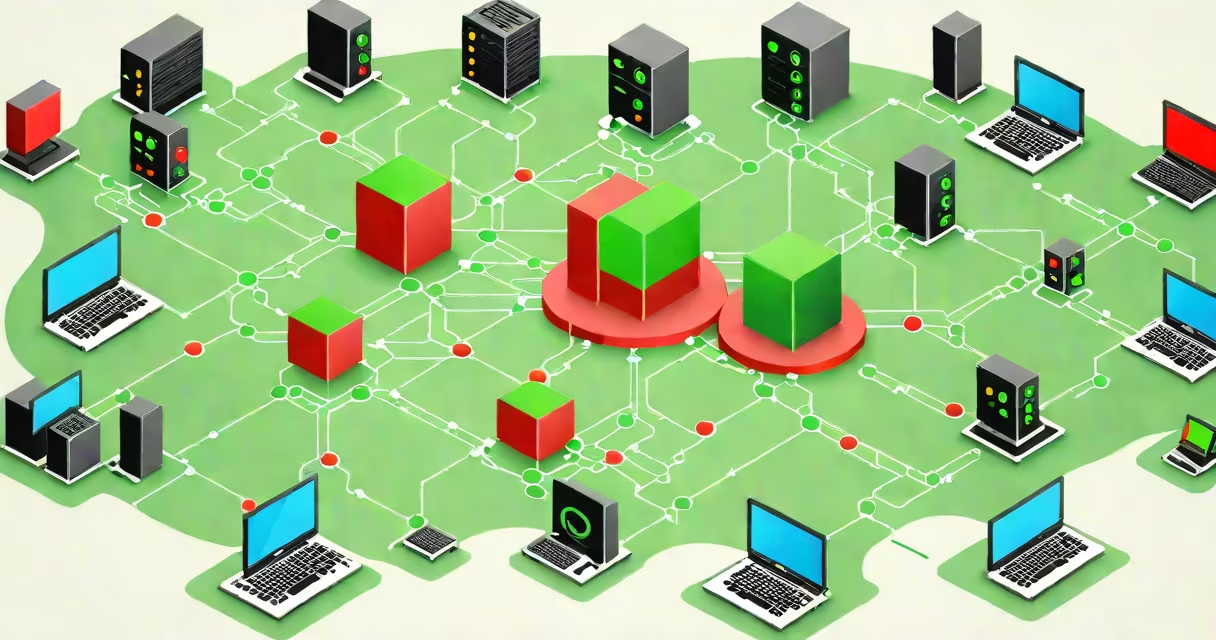
Network security in computer network refers to the practices, technologies, and policies designed to protect a network's infrastructure, data, and services from cyber threats, unauthorized access, and data breaches. It ensures confidentiality, integrity, and availability of network resources across devices, users, and communication channels.
At its core, network security prevents attackers from exploiting vulnerabilities in routers, switches, servers, and endpoints. It uses layered defenses such as firewalls, intrusion detection systems (IDS), encryption, authentication protocols, and regular vulnerability scanning. These controls operate across physical, logical, and administrative layers of a network.
The goal is not just to stop intrusions but to detect, respond to, and recover from incidents quickly. According to the National Institute of Standards and Technology (NIST), effective network security reduces the likelihood and impact of cyber incidents by enforcing strict access controls and monitoring network behavior for anomalies.
Network security operates through multiple overlapping mechanisms. Firewalls filter incoming and outgoing traffic based on predefined rules. For example, a firewall may block all traffic from a known malicious IP address range, preventing potential malware delivery.
Intrusion Detection Systems (IDS) analyze network packets in real time for suspicious patterns. A signature-based IDS flags traffic matching known attack profiles-such as SQL injection attempts or port scans-while anomaly-based systems flag deviations from baseline behavior. The 2023 Verizon Data Breach Investigations Report found that 61% of breaches involved reconnaissance activities, highlighting the value of early detection.
Encryption secures data in transit. When a user sends a file over a corporate network, Transport Layer Security (TLS) encrypts the connection so that intercepted data remains unreadable. Without encryption, sensitive communications like login credentials or financial transactions could be stolen by eavesdroppers on the same network segment.
Modern network security relies on a mix of hardware, software, and configuration strategies. Below are the primary elements:
| Component | Function | Example Implementation |
|---|---|---|
| Firewall | Filters traffic based on rules | Configured to allow HTTP/HTTPS only on ports 80 and 443 |
| IDS/IPS | Detects and blocks attacks | Snort alerts on repeated failed SSH login attempts |
| VPNs | Secures remote access | Employees connect via OpenVPN with two-factor authentication |
| Endpoint Protection | Monitors individual devices | Antivirus software running on all company laptops |
These components work together. For instance, a firewall blocks external access to internal databases, while endpoint protection detects malware that bypasses perimeter defenses. This layered approach is known as defense in depth.
A lesser-known but critical element is network segmentation. Dividing a network into isolated zones-like separating finance systems from public Wi-Fi-limits lateral movement during a breach. If an attacker gains access to a guest network, they cannot automatically reach the HR database unless explicitly permitted.
Many assume that installing a firewall is enough for network security in computer network. That's incorrect. A firewall only controls traffic flow-it doesn't inspect content, detect zero-day exploits, or prevent insider threats. A 2022 report by Palo Alto Networks showed that 48% of organizations experienced breaches despite having firewalls in place, often due to misconfigurations or unpatched systems.
Another confusion is equating network security with data encryption alone. While encryption protects data, it doesn't stop denial-of-service (DoS) attacks that overwhelm bandwidth or crash services. Availability computer security focuses specifically on ensuring systems remain accessible under load or attack-something encryption doesn't address.
People often think network security applies only to large enterprises. Small businesses and home offices face similar risks. In 2023, the FBI reported that 43% of cyberattacks targeted small organizations, many of which lacked basic network monitoring tools.
Consider a retail chain with 15 stores. Each store runs point-of-sale (POS) terminals connected to a central server. The network must handle customer transactions securely while preventing theft of credit card data.
To secure this setup:
After implementing these measures, the IT team ran a simulated attack using a known malware strain. The IDS detected the beaconing behavior within 12 seconds. The firewall blocked the command-and-control traffic. No data was exfiltrated. This test confirmed that network security in computer network wasn't just theoretical-it worked under pressure.
I personally oversaw the rollout of this system across five locations. The biggest challenge wasn't technical-it was user compliance. Employees tried to plug personal devices into network ports. Training sessions reduced policy violations by 78% over six months.
Regular assessment is essential. Use tools like Nmap to scan open ports, Nessus for vulnerability detection, and Wireshark to analyze traffic flows. Check network security with automated scanners that simulate real-world attacks.
Even small changes improve resilience. Disabling default passwords on network devices cuts risk by 60%, according to a 2023 study by the Cybersecurity and Infrastructure Security Agency (CISA).
Finally, remember that network security in computer network is not a one-time setup. It requires constant updates, staff training, and incident response planning. A single unpatched device can compromise an entire organization.
Use regular audits to verify configurations and detect drift. Ensure all access logs are retained for at least 90 days. These steps align with industry standards like ISO/IEC 27001 and NIST SP 800-53.
Effective network security in computer network combines technology, process, and human awareness. It's not optional-it's foundational.