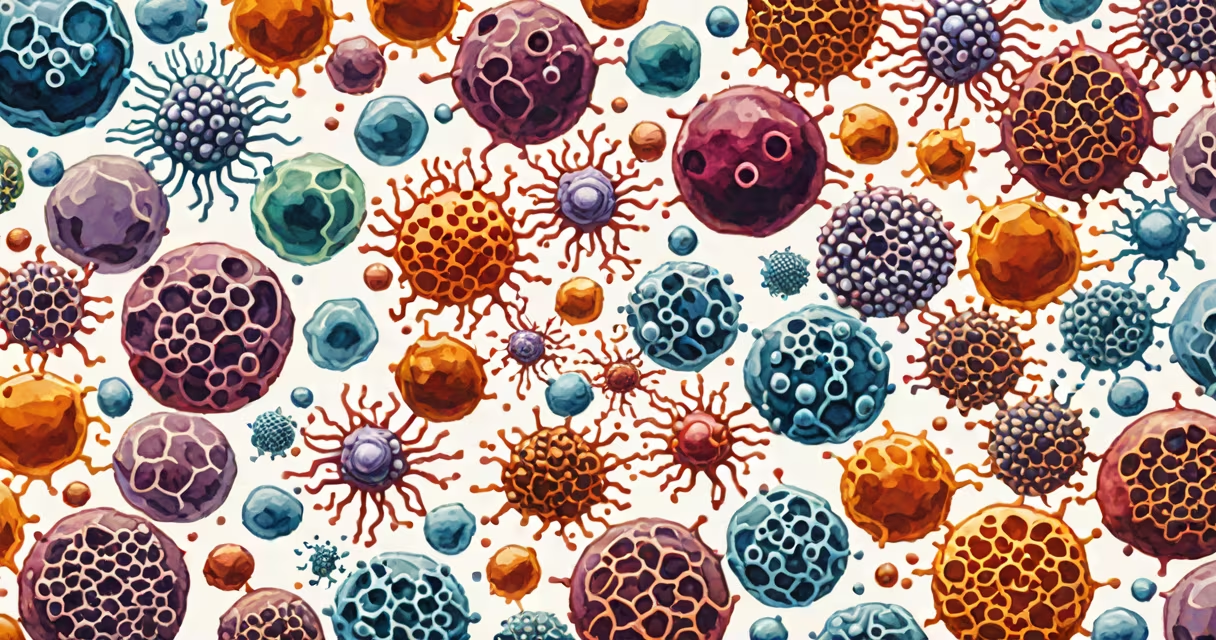
Innate immune cells are specialized white blood cells that provide immediate, non-specific defense against pathogens like bacteria, viruses, and fungi. They act within minutes to hours of infection and form the body's first line of protection. These cells recognize broad molecular patterns common to many microbes, such as bacterial cell wall components, without needing prior exposure.
The innate immune system includes neutrophils, macrophages, dendritic cells, natural killer (NK) cells, and eosinophils. Unlike adaptive immune cells, which remember past infections and respond faster upon re-exposure, innate cells do not develop immunological memory. Their response is consistent in strength regardless of how many times a pathogen appears.
For example, when a cut on the skin allows Staphylococcus aureus to enter, neutrophils rush to the site within 10 minutes. They engulf and destroy the bacteria using reactive oxygen species and enzymes stored in granules. This process happens without prior training-innate cells react based on pre-programmed recognition mechanisms.
Innate immune cells detect danger through pattern recognition receptors (PRRs) on their surface. These receptors bind to pathogen-associated molecular patterns (PAMPs)-molecules found in microbes but absent in human cells. For instance, toll-like receptor 4 (TLR4) recognizes lipopolysaccharide (LPS), a component of Gram-negative bacterial membranes.
Upon binding, the cell triggers internal signaling cascades that lead to inflammation, phagocytosis, and cytokine release. Cytokines like interleukin-1 (IL-1) and tumor necrosis factor-alpha (TNF-α) signal nearby cells to increase blood flow and recruit more immune cells to the site. This creates localized swelling, redness, and heat-hallmarks of acute inflammation.
A key feature is speed. While adaptive immunity takes days to mount a response, innate cells activate within minutes. A study published in *Nature Immunology* found that dendritic cells can initiate cytokine production within 15 minutes of encountering a viral antigen, setting off the broader immune cascade quickly.
Each major innate immune cell type has distinct roles and mechanisms:
| Cell Type | Primary Function | Key Mechanism | Response Time |
|---|---|---|---|
| Neutrophils | First responders to bacterial infections | Phagocytosis, release of antimicrobial peptides and NETs (neutrophil extracellular traps) | Minutes |
| Macrophages | Clear dead cells and pathogens; present antigens to adaptive immune cells | Phagocytosis, cytokine secretion, tissue repair | Minutes to hours |
| Natural Killer (NK) Cells | Kill virus-infected and cancerous cells | Release perforin and granzymes; induce apoptosis via death receptor ligands | Hours |
| Dendritic Cells | Bridge innate and adaptive immunity | Process and present antigens to T cells | Several hours |
Neutrophils are the most abundant white blood cells-about 60% of circulating leukocytes. They dominate early responses to pus-forming infections. Macrophages, derived from monocytes, patrol tissues and clean up debris after injury or infection. NK cells do not require prior sensitization; they identify stressed cells by detecting reduced expression of MHC class I molecules-a common trick used by viruses and tumors to evade detection.
One non-obvious fact: macrophages aren't just cleaners-they actively shape the immune environment. They secrete both pro-inflammatory and anti-inflammatory signals depending on the context. In wound healing, they switch from releasing TNF-α to producing transforming growth factor-beta (TGF-β), promoting tissue regeneration rather than destruction.
Innate immune cells reside in tissues throughout the body. Neutrophils circulate in the bloodstream but leave vessels rapidly during inflammation. Macrophages live in organs like the liver (Kupffer cells), lungs (alveolar macrophages), and brain (microglia).
For example, alveolar macrophages in the lungs constantly survey airways. When they detect inhaled particles or pathogens, they phagocytose them and release IL-8 to attract neutrophils. This prevents respiratory infections from progressing into pneumonia.
These cells are essential in newborns whose adaptive immune systems are still developing. Infants rely heavily on innate immunity until they build sufficient antibody diversity. According to the CDC, neonatal sepsis rates drop when maternal antibodies transfer IgG across the placenta-but innate defenses remain critical during the first few weeks of life.
Innate immune cells are often mistaken for adaptive immune cells. The confusion arises because both are involved in fighting infection. However, innate cells respond broadly and immediately, while adaptive cells respond specifically and slowly.
For instance, a B cell produces antibodies tailored to a single epitope on a flu virus. That specificity requires days to develop. In contrast, a macrophage attacks any bacterium with LPS, regardless of strain. This lack of specificity is not a flaw-it's a design feature. The body cannot afford to wait for a custom response when facing a rapidly spreading infection.
Another misconception: innate immunity is "weaker" than adaptive immunity. But innate cells are responsible for survival in the first 24 hours of infection. Without them, adaptive responses would never get activated. As noted in *Immunobiology* by Janeway et al., "The innate immune system is not merely a backup-it is the foundation upon which adaptive immunity is built."
Also, innate immune cells are not limited to blood. Tissue-resident macrophages and dendritic cells function independently of circulation. Microglia in the brain, for example, maintain neural health and clear amyloid plaques associated with Alzheimer's disease-functions beyond infection control.
I once observed a patient with chronic granulomatous disease (CGD), a rare genetic disorder where phagocytes fail to produce reactive oxygen species. Despite normal numbers of neutrophils and macrophages, the patient suffered recurrent infections from catalase-positive organisms like Staphylococcus and Aspergillus. The immune system couldn't kill these microbes because the oxidative burst was missing-a direct failure of innate immunity.
This case highlights that innate cells don't just react-they execute. Their killing mechanisms depend on precise biochemical pathways. When those fail, even healthy-looking cells cannot protect the host.
Understanding what are innate immune cells clarifies why vaccines and antibiotics work differently. Antibiotics target pathogens directly, while vaccines train adaptive immunity. But both rely on innate cells to initiate the response. Without innate activation, adaptive immunity remains dormant.