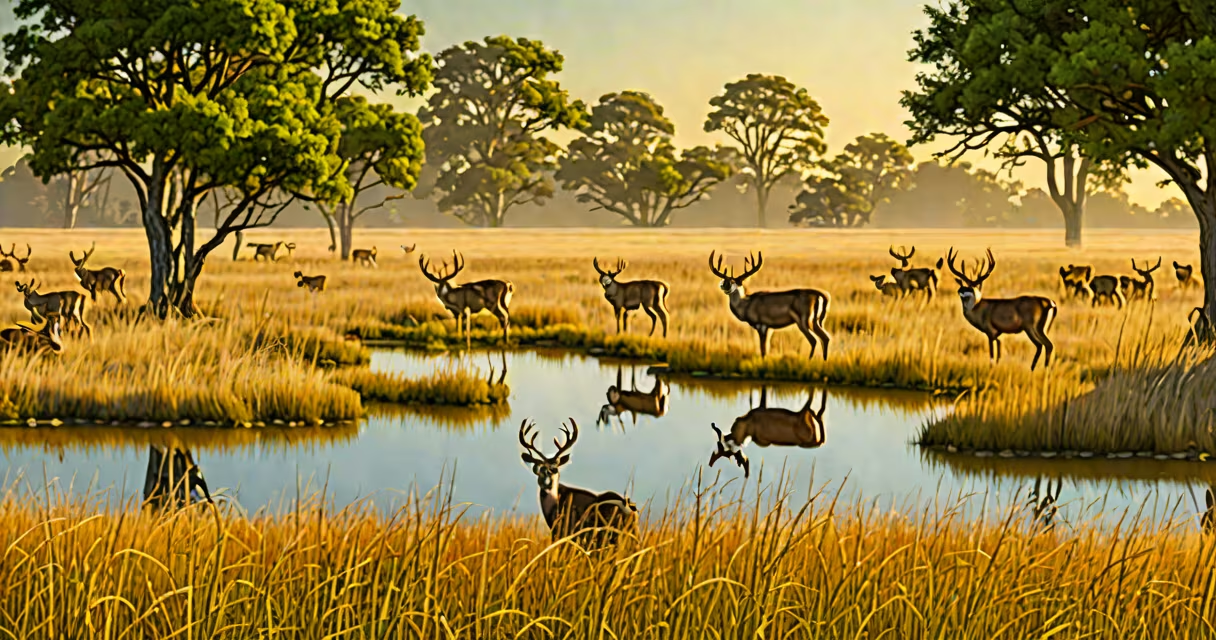
Limiting factors in population ecology are environmental conditions that restrict population growth, reduce population size, or prevent a species from reaching its full potential. These include resource scarcity, predation, disease, competition, and extreme weather. They define the upper boundary of population size within a given habitat.
Populations grow until they hit a ceiling set by available resources and environmental pressures. This ceiling is known as carrying capacity-the maximum number of individuals an environment can sustain indefinitely. Limiting factors act as brakes on growth, preventing populations from exceeding this threshold.
For example, a forest may support 500 deer if food, water, shelter, and space are sufficient. But if a drought reduces plant growth, the food supply drops. Deer die or fail to reproduce. The population declines until it stabilizes below the original number. The drought becomes a limiting factor.
Limiting factors operate through direct or indirect effects on survival and reproduction. They can be density-dependent-intensifying as population density increases-or density-independent-occurring regardless of population size.
Density-dependent factors include competition for food, territorial disputes, disease transmission, and predation. As a population grows, individuals compete more intensely for limited resources. This increases stress, lowers birth rates, and raises death rates. For instance, in a lake with high fish density, oxygen levels drop due to respiration and decomposition, leading to fish kills.
Density-independent factors affect populations uniformly, regardless of size. Wildfires, hurricanes, volcanic eruptions, and sudden temperature shifts fall into this category. A single wildfire can kill thousands of animals in a region, even if the population was previously low. These events are unpredictable and often catastrophic.
Limiting factors fall into two broad categories: biotic and abiotic. Biotic factors involve living components of an system. Abiotic factors are non-living physical and chemical elements.
| Type | Examples | Effect on Population |
|---|---|---|
| Biotic | Predators, parasites, disease, competition | Reduce survival and reproduction; intensify with population density |
| Abiotic | Temperature extremes, drought, flooding, pollution | Impact all individuals equally; independent of population size |
Some factors switch between categories based on context. For example, a disease outbreak may start as density-dependent-spreading faster in crowded conditions-but become density-independent if a new strain emerges and spreads widely regardless of host density.
A non-obvious distinction: not all limiting factors are negative. Some regulate populations in ways that maintain system stability. Predation keeps prey numbers in check, preventing overgrazing and habitat degradation. Without predators, herbivore populations can explode, leading to soil erosion and loss of biodiversity.
Many assume that food is the primary limiting factor. While it's critical, it's often not the most immediate constraint. Water availability can be more limiting in arid regions. In deserts, a lack of water prevents plant growth, which then limits herbivores and their predators.
Another error is equating limiting factors with extinction risk. A factor that limits population size doesn't necessarily drive a species to extinction. Populations adapt, migrate, or evolve resistance. The African elephant population declined due to poaching and habitat loss, but it did not go extinct because those were not the only limiting factors-some herds still persist in protected areas.
Ecologists emphasize that multiple limiting factors interact. A drought (abiotic) weakens plants, making them vulnerable to insects (biotic). The combined effect reduces food availability, increasing mortality among herbivores. This synergy is common in nature and hard to predict from studying one factor alone.
In the Serengeti system, wildebeest populations are regulated by a mix of limiting factors. During dry seasons, water becomes scarce-abiotic limitation. Herds move to find water, increasing competition and stress. Calves born during droughts have lower survival rates.
At the same time, lions and hyenas (biotic factors) hunt wildebeest, especially young or weak individuals. Disease outbreaks, such as anthrax, further reduce numbers. These factors combine to stabilize the wildebeest population around 1.5 million individuals-close to the area's carrying capacity.
Research from the University of Minnesota's Institute on the Environment confirms that in savanna ecosystems, drought and predation together account for over 60% of annual wildebeest mortality. The study tracked 2,000 tagged individuals from 2010 to 2018 using GPS collars and camera traps.
Another example: the reintroduction of wolves to Yellowstone National Park in 1995 altered the entire system. Wolves reduced elk numbers, which had overgrazed vegetation. As willow and aspen regrew, beavers returned, and stream banks stabilized. This cascade effect shows how removing a top predator-another limiting factor-can disrupt balance.
Understanding limiting factors helps conservationists manage endangered species. For instance, the black-footed ferret, once nearly extinct, is now recovering thanks to breeding programs and habitat restoration. Scientists identified disease (sylvatic plague) and prey scarcity (prairie dogs) as key limiting factors. Efforts focus on vaccinating ferrets and protecting prairie dog colonies.
When managing wildlife populations, agencies track indicators like birth rates, death rates, migration patterns, and habitat quality. Data from the U.S. Fish and Wildlife Service shows that populations with fewer than 500 individuals face higher extinction risk due to genetic drift and environmental fluctuations-both forms of limiting pressure.
I once observed a field study in northern Kenya where researchers monitored goat herds during a prolonged dry spell. Despite ample grazing land, the goats' milk production dropped by 40% due to dehydration. Water became the dominant limiting factor-even though feed was available. This taught me that identifying the actual bottleneck requires on-site monitoring, not assumptions.
Limiting factors in population ecology govern how large a population can grow in a specific environment. They include both biotic and abiotic influences that reduce survival, reproduction, or access to resources. These factors ensure ecosystems remain stable over time.