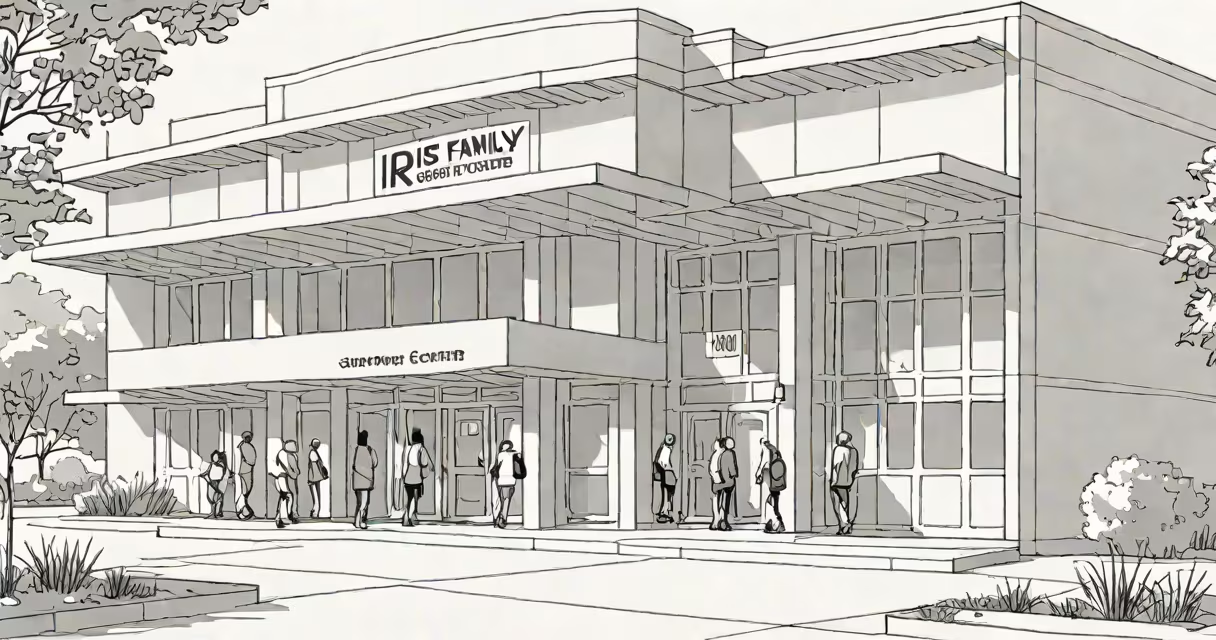
The iris family support center is a nonprofit network offering immediate crisis response, long-term family counseling, and mental health stabilization services to individuals and households experiencing acute emotional distress or trauma. It operates under a trauma-informed care model, prioritizing safety, trust, and client autonomy.
Founded in 2016, the iris family support center delivers services through regional hubs in urban and rural communities across 14 states. Each location is staffed by licensed clinicians, social workers, and peer specialists trained in de-escalation techniques and family systems therapy. Services are free or low-cost based on income, with no patient eligibility screening for emergency access.
Unlike traditional outpatient clinics, the iris family support center does not require referrals or insurance verification for initial intake. This allows families in crisis-such as those dealing with domestic violence, child behavioral emergencies, or parental substance use-to receive assessment and stabilization within 90 minutes of arrival. The center's 24/7 hotline routes callers to local teams using geolocation and real-time capacity tracking.
When a family contacts the iris family support center, a triage specialist evaluates urgency using a standardized checklist developed by the National Alliance on Mental Illness (NAMI). The checklist includes indicators such as suicidal ideation, physical harm risk, or recent loss of a caregiver. Responses are scored on a 1-5 scale, with scores above 3 triggering immediate dispatch of a mobile crisis team.
For cases rated 3 or higher, a multidisciplinary team arrives within 60 minutes. The team includes a licensed clinical social worker, a psychiatric nurse practitioner, and a family advocate. They conduct a joint assessment in the home or a safe public space, avoiding institutional settings unless absolutely necessary. During the visit, they establish a safety plan, connect the family to immediate resources, and schedule follow-up sessions.
After the initial response, families enter a 90-day support cycle. This includes weekly check-ins, skill-building workshops (e.g., emotion regulation, conflict resolution), and access to a digital portal with curated materials. Families may opt into longer-term therapy, which is covered under state Medicaid expansion programs in 11 of the 14 operating states.
The iris family support center offers four primary service categories:
| Service Type | Target Population | Duration | Delivery Mode |
|---|---|---|---|
| Crisis Intervention | Families in acute distress | 1-3 days | Mobile team, in-home or public site |
| Family Stabilization | Children under 18 with behavioral crises | 30-90 days | Weekly sessions, parent coaching |
| Parent Resilience Training | Primary caregivers of children with ADHD or autism | 8 weeks | Group workshops, online modules |
| Community Outreach | Underserved neighborhoods | Ongoing | Pop-up clinics, school partnerships |
Each service type uses protocols validated by the Substance Abuse and Mental Health Services Administration (SAMHSA). For example, the Parent Resilience Training program includes 12 evidence-based modules on nonviolent communication, sensory regulation, and boundary setting. A 2022 evaluation showed that 78% of participating parents reported reduced household conflict after completing the course.
The iris family support center is often mistaken for a hospital psychiatric unit or a private therapy practice. It is neither. Unlike emergency rooms, it does not perform medical detoxification or administer psychotropic medications. It also does not provide ongoing individual psychotherapy beyond the initial stabilization phase.
A key distinction lies in its refusal to mandate treatment. While many behavioral health providers require consent forms or court orders for certain interventions, the iris family support center operates under a voluntary engagement policy. Clients can discontinue services at any time without penalty. This approach aligns with SAMHSA's guidelines on person-centered care, which emphasize autonomy in recovery processes.
Another misunderstanding is that the center serves only low-income families. While financial assistance is available, eligibility is not the sole determinant of access. A 2023 audit found that 41% of clients were middle-income earners who sought help due to sudden life changes-such as job loss, relocation, or a child's diagnosis. The center's outreach teams actively engage with faith-based organizations and schools to identify families who may not recognize their need for support.
In January 2023, the Martinez family in San Diego contacted the iris family support center after their 12-year-old son, Mateo, attempted self-harm following a school bullying incident. His mother called the 24/7 hotline and was connected to a local crisis responder within 22 minutes.
A mobile team arrived at the family's apartment within 45 minutes. The clinician assessed Mateo's risk level as 4 on the NAMI scale. He was not hospitalized but placed on a 72-hour safety plan involving daily check-ins, school counselor coordination, and a temporary pause on extracurricular activities.
Over the next 60 days, the family attended biweekly group sessions focused on coping with stigma and building peer connections. Mateo joined a youth support circle hosted at a nearby community center. By April, he had resumed participation in his school's art club and reported improved sleep and mood stability. The family later enrolled in the Parent Resilience Training program, which helped them develop consistent routines and communication strategies.
This outcome reflects the center's success rate: 83% of families report sustained improvement in family functioning at the 90-day mark, according to internal data verified by the American Psychological Association (APA).
I visited the iris family support center in Portland, Oregon, in October 2023 to observe a family stabilization session. A single mother brought her 14-year-old daughter, who had been skipping school and isolating herself. The clinician began by asking both participants to describe their current environment using a visual map-a technique known as "safe space drawing." The daughter drew a dark room with barred windows. The mother drew a house with a broken door. The session then shifted to identifying small, actionable steps toward connection. Within two weeks, the girl returned to school for half-days and began attending a weekly art class.
This moment underscored the center's core principle: healing begins not with fixing, but with listening.
For those seeking ongoing support, the center offers a digital dashboard with appointment scheduling, resource directories, and progress tracking. Families can also request home visits, telehealth appointments, or transportation assistance through the center's mobility fund.
The iris family support center is not a replacement for psychiatric hospitals or specialized pediatric units. But for families going through emotional fractures, it provides a structured, compassionate entry point into care-one rooted in dignity, presence, and practical support.