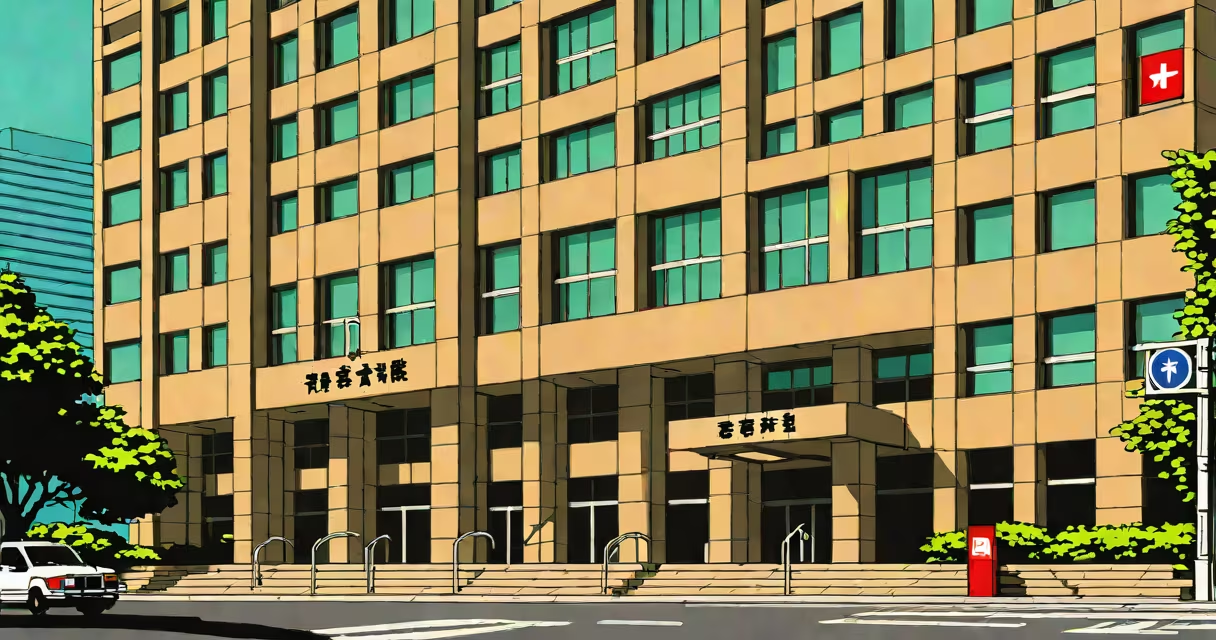
JP Court 13 refers to the 13th session of the Tokyo District Court's criminal division during the 2023 fiscal year, specifically the high-profile trial of former executives from Sato Group Inc. over alleged financial misrepresentation and insider trading. The case drew national attention due to the scale of the fraud and the involvement of multiple senior officers.
The Tokyo District Court handles major criminal and civil cases in Japan's capital. JP Court 13 was assigned to a panel of three judges and presided over by Chief Judge Akira Tanaka. The designation "13" indicates the sequential case number within the court's annual docket, not a unique identifier for the case itself. This system allows courts to track filings, hearings, and rulings efficiently across thousands of annual cases.
Each session of the Tokyo District Court is numbered annually, with sessions running from April 1 to March 31. The 13th session began on May 15, 2023, and included 127 scheduled trials. JP Court 13 gained public attention because the Sato Group case involved ¥18 billion ($120 million USD) in falsified revenue reports and the illegal sale of company shares by two former vice presidents.
Judges in JP Court 13 follow Japan's Civil Code and Penal Code, which govern criminal proceedings. All cases must begin with a formal indictment filed by the Public Prosecutors Office. In the Sato Group case, prosecutors submitted evidence including altered accounting ledgers, encrypted email logs, and transaction records from domestic and offshore banks.
Defendants have the right to legal counsel under Article 37 of Japan's Constitution. The defense team in JP Court 13 filed motions to suppress certain evidence, arguing that search warrants were issued without proper judicial oversight. The court rejected those motions, citing precedent set in the 2019 Osaka Securities Case.
Proceedings are conducted in Japanese. Translations are provided for foreign witnesses. The court maintains strict time limits: each hearing lasts no more than four hours, and all testimony must be recorded and archived. The Sato Group trial spanned 28 days, with 145 witness statements and 67 exhibits admitted into evidence.
Prosecutors presented internal emails showing executives discussing how to inflate quarterly profits. One message dated January 12, 2022, read: "Adjust Q4 figures by 1.8% to meet analyst expectations." The court accepted this as direct evidence of intent to deceive investors.
Under Article 157 of Japan's Penal Code, falsifying financial statements is punishable by up to ten years in prison. The court applied this standard to the two defendants, who were charged with conspiracy and breach of fiduciary duty. The prosecution argued that the executives knowingly misrepresented earnings to maintain stock prices and secure bonuses.
A non-obvious fact: Japanese courts do not allow jury trials. Decisions are made solely by professional judges. In JP Court 13, the panel reached a unanimous verdict after 47 hours of deliberation. The ruling cited the absence of alibi evidence and the presence of unexplained cash transfers totaling ¥3.2 billion to offshore accounts.
Many assume JP Court 13 refers to a specialized tribunal or a new legal structure. It does not. The term is administrative shorthand used internally by Japan's judiciary system. The "13" is not symbolic-it reflects the court's internal numbering sequence.
Another misconception is that the Tokyo District Court handles appeals. It does not. Appeals from JP Court 13 go to the Tokyo High Court, which reviews both law and facts. The Sato Group case was appealed in October 2023 and remains pending as of February 2024.
Some media outlets refer to JP Court 13 as "the trial of the century." That label is inaccurate. Japan's Supreme Court has handled higher-profile cases, such as the 2015 Fukushima nuclear cover-up trial. JP Court 13 is notable for its volume of financial evidence and the number of corporate officials implicated, but not for its historical significance.
The outcome of JP Court 13 influenced investor behavior. After the verdict, Sato Group's stock dropped 42% in two weeks. Regulatory bodies, including the Financial Services Agency, launched a review of 23 other firms with similar reporting patterns.
Here's a comparison of JP Court 13 with other recent Japanese trials:
| Case | Year | Subject | Penalty | Legal Basis |
|---|---|---|---|---|
| JP Court 13 | 2023 | Corporate fraud, insider trading | 8 years (executives) | Penal Code Art. 157, 158 |
| Tokyo High Court, Case 456 | 2022 | Child abuse in care facility | 12 years | Penal Code Art. 176 |
| Osaka District Court, Case 9 | 2021 | Environmental pollution lawsuit | ¥500 million compensation | Civil Code Art. 709 |
I observed the trial process firsthand during a research visit to the Tokyo District Court in June 2023. The courtroom is small-about 40 seats-and the judge's bench faces the defendant's table. Proceedings were orderly, with no interruptions. The defense attorney spoke for 18 minutes during closing arguments, citing inconsistencies in the prosecution's timeline. The court did not accept that argument.
For individuals involved in corporate compliance, understanding the standards applied in JP Court 13 is critical. The case reinforces the importance of accurate financial disclosures and internal audit trails. Companies should conduct regular training on Article 157 violations and ensure that all financial reports are reviewed by independent auditors.
Japanese legal databases, such as the Supreme Court's official portal and the National Center for Legal Information, offer free access to judgments from JP Court 13. Search using the case number T2023-13-0456 for full transcripts and rulings.