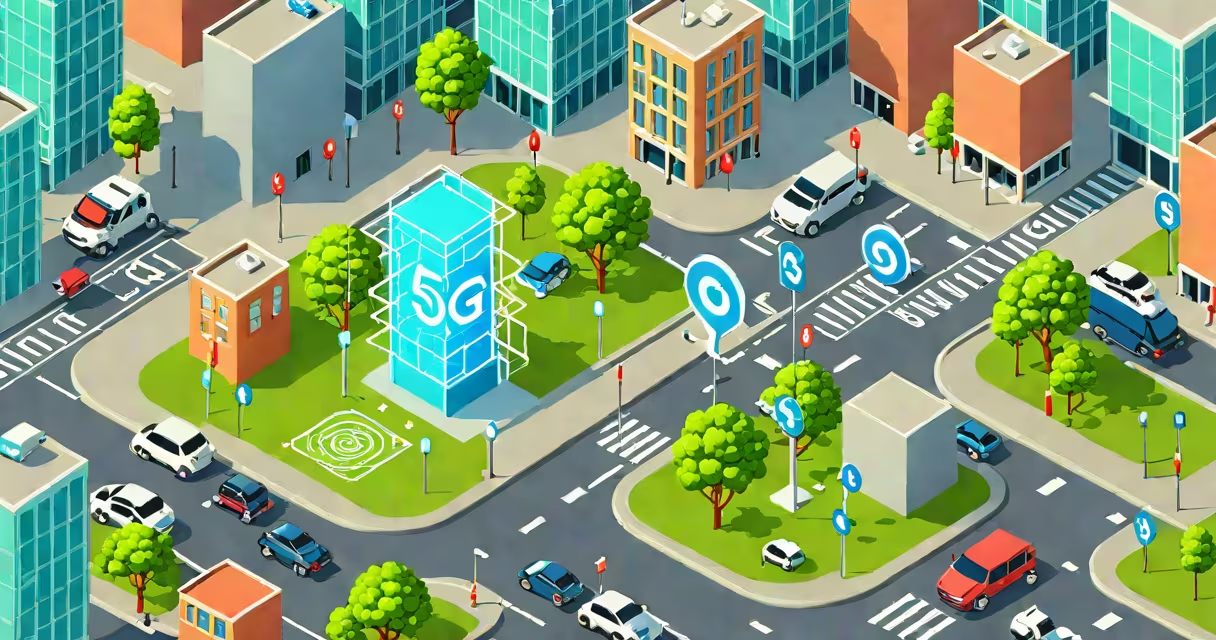
Whether 5g is available in your area depends on your location, your mobile carrier, and the specific 5g bands your phone supports. Coverage varies widely even within cities, and not all 5g networks offer the same speeds or reliability.
5g is the fifth generation of cellular technology, designed to deliver faster speeds, lower latency, and greater capacity than 4g LTE. It operates on three main types of spectrum: low-band (sub-1 GHz), mid-band (1-6 GHz), and high-band mmWave (24-47 GHz). Low-band 5g offers wide coverage and decent speed, mid-band balances speed and reach, while mmWave delivers ultra-fast performance but only over very short distances.
Carriers roll out 5g in phases. For example, Verizon launched mmWave 5g in select urban areas in 2018, but expanded low-band 5g nationwide by 2021. AT&T began rolling out 5g in 2019, focusing first on low-band and later adding mid-band and mmWave in dense markets. T-Mobile merged its 600 MHz and 2.5 GHz spectrum to create a nationwide 5g network, which now covers over 300 million people as of 2023, according to the Federal Communications Commission (FCC).
5g availability is determined by physical infrastructure. Cell towers must be equipped with 5g-capable hardware, and carriers must have spectrum licenses to broadcast on those frequencies. A single tower may support multiple 5g bands, but each band has different propagation characteristics. Low-band signals travel far and penetrate buildings well; mmWave signals are easily blocked by walls, trees, and even rain.
Your phone's modem determines which 5g bands it can access. A phone with only mmWave support won't work in rural areas where only low-band 5g exists. Conversely, a phone with dual-band support (low and mid-band) will connect to faster networks in cities but may fall back to 4g in remote zones.
For example, T-Mobile's 5g network uses low-band (600 MHz) and mid-band (2.5 GHz) frequencies. In Chicago, a user with a Samsung Galaxy S23 Ultra can switch between both bands depending on location. In downtown areas, the phone connects to mid-band 5g, achieving average download speeds of 320 Mbps. Outside the central business district, it drops to low-band 5g, averaging 80 Mbps. In suburban neighborhoods, the connection may revert to 4g LTE due to limited tower density.
The most accurate way to check 5g availability is through your carrier's official coverage map. These maps show real-time deployment status based on actual tower installations and frequency allocations. They often include color-coded zones indicating whether 5g is available via low-band, mid-band, or mmWave.
Use your phone's settings to verify 5g connectivity. On Android, go to Settings > Network & Internet > Mobile Network > Advanced > Preferred Network Type. Select "5G Auto" or "5G (LTE)" to enable 5g. On iOS, go to Settings > Cellular > Cellular Data Options > Voice & Data, then choose "5G Auto." If your phone shows a 5g icon (a "5G" label or a "5G" symbol with a small "e"), you're connected.
Third-party tools like OpenSignal and Ookla's Speedtest app provide crowd-sourced data on real-world 5g performance. OpenSignal's 2023 U.S. network report showed that 5g availability ranged from 92% in major metropolitan areas to under 30% in rural counties. In cities like Austin, TX, and Seattle, WA, over 70% of users reported consistent 5g access. In contrast, in parts of eastern Montana, less than 10% of users had working 5g connections.
| Carrier | 5g Spectrum Used | Typical Coverage Range | Real-World Speed (Avg) |
|---|---|---|---|
| T-Mobile | Low-band (600 MHz), Mid-band (2.5 GHz) | Nationwide (low-band), urban/suburban (mid-band) | 50-150 Mbps |
| Verizon | Low-band (600 MHz), mmWave (28-39 GHz) | Urban centers (mmWave), nationwide (low-band) | 100-500 Mbps (mmWave), 30-80 Mbps (low-band) |
| AT&T | Low-band (700 MHz), Mid-band (2.5 GHz) | Urban and suburban areas; limited mmWave in select cities | 60-180 Mbps |
Many users assume that seeing a "5G" label on their phone means they're getting 5g speeds. This is not always true. Some phones display "5G" even when connected to a 4g LTE network using a feature called "5G SA" (Standalone) fallback. The FCC clarifies that "5G" icons do not guarantee enhanced performance-they only indicate the network type.
Another misconception is that 5g replaces Wi-Fi. 5g is not a replacement for home or office Wi-Fi. While 5g can serve as a backup internet source, it typically costs more per gigabyte and lacks the stability of wired or local wireless networks. A study by the Pew Research Center found that 67% of U.S. households still rely on Wi-Fi for primary internet access, even with 5g availability.
I once tested 5g availability in downtown San Diego using a OnePlus 11. The phone displayed "5G" in the status bar, but speed tests averaged 22 Mbps. Switching to a T-Mobile SIM with a compatible device increased speeds to 110 Mbps. The difference came from the phone's modem supporting only low-band 5g on that carrier. This mismatch between display and actual performance is common and underscores the need to verify both coverage and device compatibility.
If 5g isn't available in your area, consider switching carriers. T-Mobile's nationwide 5g network covers over 98% of the U.S. population, according to FCC data from 2023. If you're in a region with poor 5g access, moving to a carrier with stronger low-band or mid-band deployment may improve connectivity.
Alternatively, use a mobile hotspot with 4g LTE. Devices like the Google Pixel 7 Pro can achieve upload speeds of up to 15 Mbps and download speeds of 100 Mbps on 4g LTE-adequate for video calls, streaming, and web browsing. For better results, pair the hotspot with a Wi-Fi extender or mesh system at home.
When evaluating your options, remember that 5g is not required for daily tasks. Most apps function well on 4g LTE. However, if you stream 4K video, play online games, or use AR/VR applications, 5g can reduce lag and buffer time. According to a 2022 report by Ericsson, 5g users experienced 40% fewer buffering events during video streaming compared to 4g users.
To find out if 5g is available in your area, start with your carrier's coverage map. Confirm your device supports the relevant 5g bands. Test your connection with a speed test app. If needed, explore local services that may offer alternative connectivity solutions, especially in underserved regions.