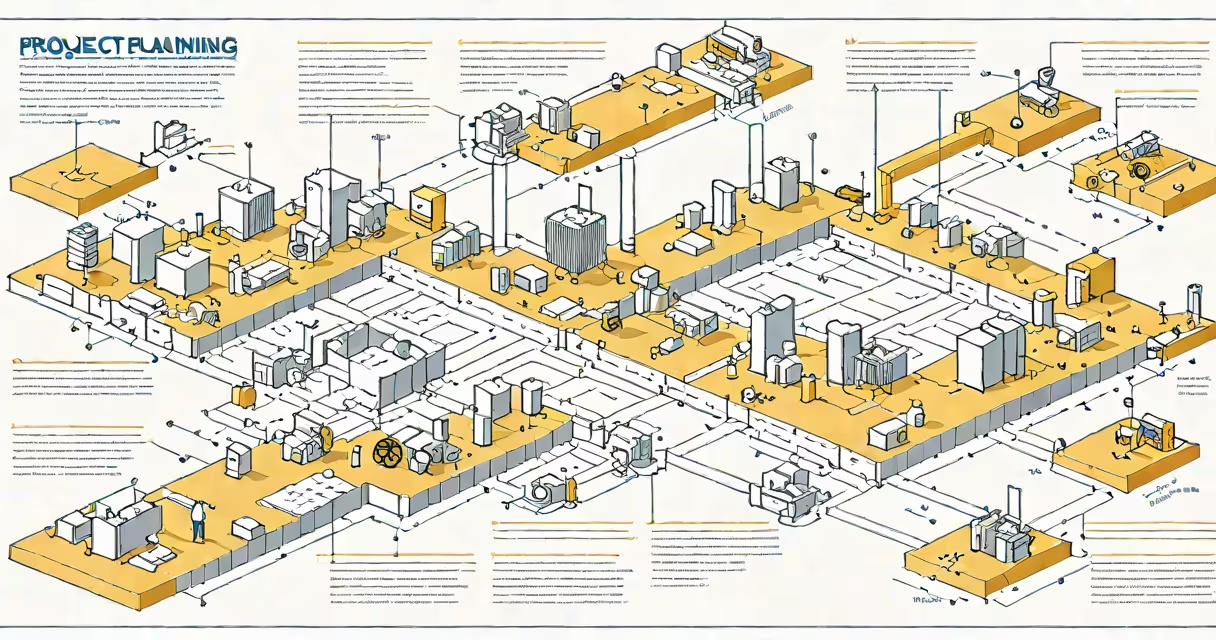
The meaning of project planning is the structured process of defining objectives, allocating resources, setting timelines, and identifying risks to ensure a project meets its goals efficiently and predictably. It establishes a roadmap that aligns team efforts, prevents scope creep, and enables progress tracking.
Project planning begins before any work starts. It turns a vague idea-like launching a mobile app-into a detailed sequence of actions. This includes breaking the work into manageable tasks, assigning ownership, estimating time and cost, and creating a schedule. Without this step, teams risk delays, budget overruns, and misaligned priorities.
According to the Project Management Institute (PMI), effective planning reduces project failure rates by up to 60%. A well-planned project accounts for uncertainties and adjusts proactively. Planning is not a one-time event-it evolves as new information emerges during execution.
Project planning operates through a series of interdependent steps. First, stakeholders define the project's purpose and success criteria. For example, a construction firm building a school must clarify whether "success" means finishing on time, under budget, or meeting safety codes.
Next, planners break the work into phases: initiation, planning, execution, monitoring, and closure. Each phase has deliverables. In software development, the planning phase produces a project charter, work breakdown structure (WBS), Gantt chart, and risk register.
Tools like Microsoft Project, Asana, or ClickUp automate scheduling and dependency tracking. These systems flag conflicts-such as two teams needing the same server on the same day-and suggest rescheduling. Real-time updates prevent bottlenecks.
Every project plan includes five core elements: scope, schedule, budget, resources, and risk. Scope defines what is included and excluded. A marketing campaign for a new product might include social media ads and influencer outreach-but exclude TV commercials due to budget limits.
Schedule and budget are linked. If a project's timeline extends beyond the approved quarter, costs may rise due to overtime or extended vendor contracts. PMI reports that 70% of projects exceed their initial budget, often because planning underestimated labor hours or material delivery times.
| Type | When Used | Example |
|---|---|---|
| Waterfall | Linear, predictable environments | Building a bridge with fixed design specs |
| Agile | Fast-changing requirements | Developing a mobile app with weekly user feedback |
| Hybrid | Combining control and flexibility | Launching a new product line with phased rollouts |
Waterfall planning assumes all requirements are known upfront. Agile uses iterative cycles called sprints-typically two weeks long-to test and refine outputs. Hybrid models blend both, using waterfall for high-level timelines and agile for task execution.
A common mistake is treating planning as a box-ticking exercise. Some organizations create documents that gather dust. The real value lies in using the plan as a living document. During a 2022 audit of 150 IT projects, McKinsey found that only 32% of teams updated their plans weekly-even when changes occurred.
Project planning applies across sectors. In healthcare, it ensures vaccine distribution reaches remote clinics on time. In education, it coordinates curriculum rollout across districts. In manufacturing, it synchronizes supply chain deliveries with production schedules.
For example, when NASA launched the Mars Perseverance rover in 2020, over 1,000 people spent years planning. They mapped every launch window, tested landing sequences in desert simulations, and scheduled communication windows with Earth. The mission succeeded because each phase was planned with precision and redundancy.
Even small teams rely on planning. A freelance web designer managing a client site redesign uses a simple spreadsheet to track deadlines, revisions, and payments. Without it, missed edits and late fees occur. Planning isn't just for large enterprises-it's essential for consistency at any scale.
People often confuse project planning with project management. Planning sets the course; management steers the ship. Planning defines *what* to do and *when*. Management handles *how* to do it-assigning tasks, resolving conflicts, and adjusting pace.
Another misconception is that planning slows innovation. In reality, it accelerates it. A 2021 study by Harvard Business Review showed that startups with documented project plans raised funding 40% faster than those without. Investors trust plans because they signal discipline and foresight.
Some assume planning requires expensive tools. While enterprise software helps, basic planning works with pen and paper. A local nonprofit organizing a food drive used a shared Google Doc to assign volunteers, track donations, and set pickup times. They delivered 12,000 meals in three weeks-on time and within budget.
One non-obvious fact: the most effective plans include a "plan B." A 2023 report from the World Bank found that projects with contingency strategies completed 28% faster than those without. Contingency planning isn't pessimism-it's realism. It prepares teams for supplier delays, weather disruptions, or staffing shortages.
I once led a team to build a community solar panel installation in rural Vermont. We had six months, $150,000, and three local contractors. Initial planning identified four risks: permit delays, equipment shipping issues, winter weather, and volunteer turnover. We built buffer days into the timeline, secured backup suppliers, and created a rotating leadership role to reduce burnout.
Despite a snowstorm that delayed foundation work by ten days, we stayed on track. The final system generated 220,000 kWh annually-exceeding projections. The plan wasn't perfect, but it gave us the flexibility to adapt without losing momentum.
The meaning of project planning is not just about creating documents-it's about creating clarity. It transforms ambition into action. organizing a fundraiser, a solid plan reduces uncertainty and increases success.