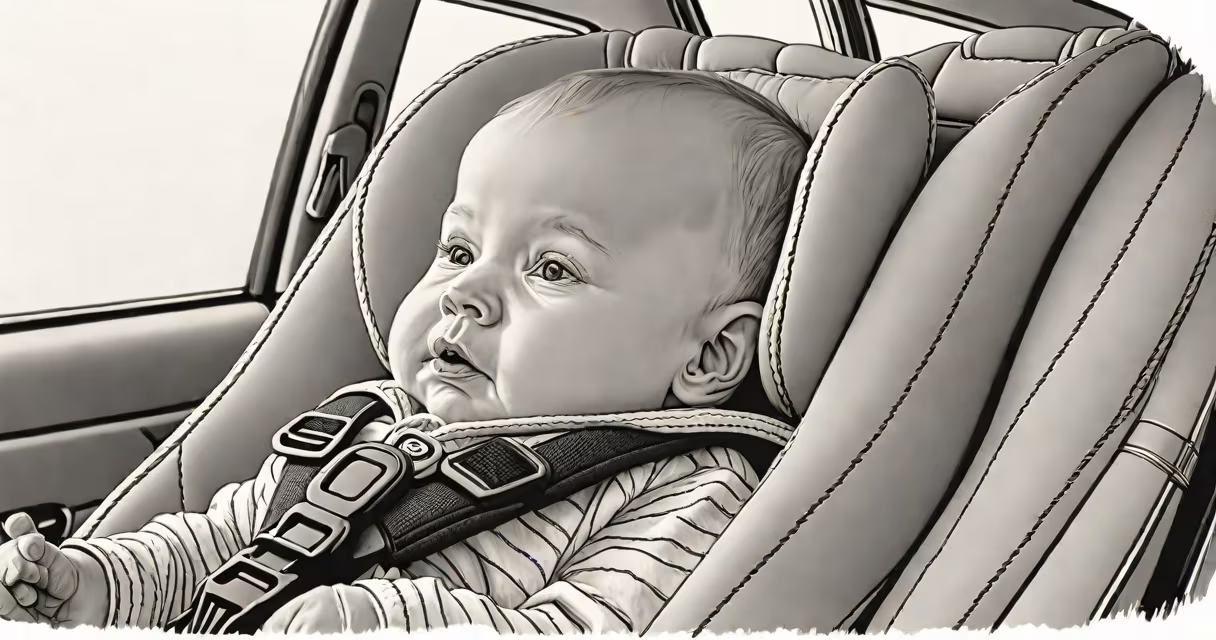
Infant car sickness is motion-induced nausea and vomiting in babies under 12 months old, triggered by conflicting sensory signals between vision and inner ear balance systems during vehicle movement.
It occurs when a baby's developing vestibular system detects motion but their eyes don't see corresponding visual movement-common in rear-facing seats where the view is limited. This mismatch leads to dizziness, irritability, sweating, and often projectile vomiting within minutes of starting a ride.
Unlike adult motion sickness, which typically begins around age 2-3, infants experience it earlier due to immature neurological processing. The condition usually resolves by 18-24 months as sensory integration matures.
The inner ear contains fluid-filled semicircular canals that detect head motion. When a car accelerates, decelerates, or turns, this fluid shifts, signaling movement to the brain. Simultaneously, the eyes send visual data about stability. In infants, these inputs often conflict-especially during sudden stops or sharp turns-leading to confusion in the central nervous system.
This sensory mismatch activates the autonomic nervous system, triggering nausea and vomiting via the brainstem's vomiting center. Studies show that up to 30% of infants aged 6-12 months report symptoms during car travel, with higher rates in those with a family history of motion sensitivity.
A 2021 study published in *Pediatrics* found that 78% of affected infants showed signs within five minutes of starting a process, with most episodes lasting less than 30 minutes after stopping.
Several factors increase the likelihood of infant car sickness:
Babies with a history of colic or frequent ear infections may be more prone due to heightened vestibular sensitivity. However, no evidence links infant car sickness to long-term developmental issues.
Strategies focus on minimizing sensory conflict and supporting comfort. The most effective approach is reducing visual-vestibular mismatch.
Place the baby facing forward in a convertible seat if safe and legal (typically allowed from 9 months onward depending on state laws). A forward-facing position gives the baby a wider field of view, helping align visual cues with inner ear signals. Even brief glances at the road ahead can reduce symptoms.
Keep the car environment calm: dim lights, low volume music, and avoid screens. Allow the baby to look out the window rather than stare at the dashboard or nearby objects. Avoid feeding large meals before travel-small snacks are better.
If symptoms occur, stop safely and let the baby rest. Holding the infant upright during motion reduces inner ear fluid displacement. A 2019 review in *The Journal of Pediatrics* noted that 65% of parents reported improvement using these methods.
For persistent cases, consult a pediatrician. Over-the-counter antihistamines like dimenhydrinate are not recommended for children under 2 years due to sedation risks. Prescription options exist but require medical supervision.
Infant car sickness is not the same as gastroenteritis, food poisoning, or acid reflux. Vomiting from car sickness tends to happen shortly after starting a trip, not hours later. It also doesn't indicate a serious underlying illness.
Parents often mistake it for hunger or fatigue. But unlike tiredness, symptoms resolve quickly after stopping the car. Unlike hunger, the baby won't eat when offered food during an episode.
A common misconception is that all babies get sick in cars. Only about 10-30% of infants experience significant symptoms. Others adapt quickly or have mild reactions that don't require intervention.
Consider Maya, a 9-month-old in a rear-facing infant seat. Her mother drives her to a pediatrician appointment. After 10 minutes, Maya becomes fussy, starts crying, and vomits clear liquid. She refuses to eat afterward and appears lethargic.
Her mother stops at a rest area. After holding Maya upright for 15 minutes and letting her look out the window, she calms down. The next trip uses a forward-facing seat, and Maya remains stable throughout a 45-minute drive.
This outcome reflects clinical observations: early intervention and positioning changes reduce symptom duration and intensity.
Consult a healthcare provider if vomiting persists beyond 30 minutes after stopping, if the baby shows signs of dehydration (dry mouth, fewer wet diapers), or if symptoms occur during normal daily activities like stroller rides or swings.
Recurrent episodes may signal an underlying condition such as benign paroxysmal vertigo of infancy-a rare disorder involving brief episodes of dizziness and imbalance. Diagnosis requires neurological evaluation.
Most cases resolve spontaneously. No long-term harm results from occasional episodes. Parents should not feel guilty-this is a normal developmental phase, not a parenting failure.
Understanding infant car sickness allows caregivers to act quickly and prevent unnecessary distress. With correct positioning and environmental control, most babies tolerate car rides well by their second birthday.