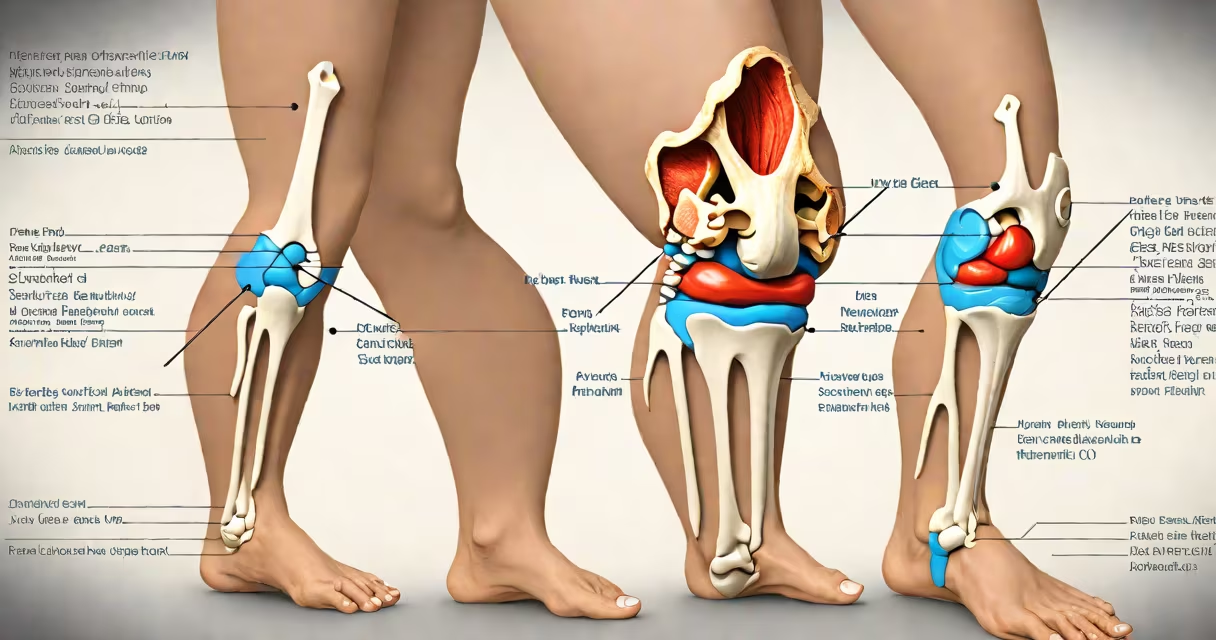
The term "icd right knee pain" refers to the standardized diagnostic code used in healthcare to document pain localized to the right knee, primarily for billing, research, and clinical tracking. These codes are part of the ICD-10 system maintained by the World Health Organization and adopted by U.S. providers under HIPAA.
ICD-10 codes for right knee pain fall under the M25 category, which covers joint disorders. The most specific code for isolated right knee pain without a confirmed structural cause is M25.561 - "Pain in right knee." This code applies when imaging and physical exams don't reveal a fracture, ligament tear, or arthritis. Providers assign it when the patient reports discomfort but no definitive pathology is found.
For cases with known underlying issues, different codes apply. M25.561 is used when pain is the primary complaint. If the pain stems from osteoarthritis, the code becomes M17.11 - "Osteoarthritis, right knee." For injuries like meniscus tears, M24.161 - "Tear of medial meniscus, right knee" - is appropriate. Using the wrong code leads to claim denials or inaccurate health data.
Clinicians select ICD-10 codes based on documented findings during evaluation. A patient describing sharp pain behind the right kneecap during squatting may receive M25.561 if no structural damage appears on MRI. If the MRI shows a partial tear of the posterior horn of the medial meniscus, the provider uses M24.161 instead.
Diagnosis must be supported by evidence. A 2022 study in the Journal of the American Board of Family Medicine found that 38% of knee pain claims were initially coded incorrectly due to missing documentation. Proper coding requires clear linkage between symptoms, exam results, and imaging.
Providers use electronic health records (EHRs) with built-in ICD-10 lookup tools. These systems flag mismatched combinations - for example, assigning M25.561 when a patient has a positive Lachman test indicating ACL injury. The system prompts for a more precise code like S83.511A - "Sprain of anterior cruciate ligament, right knee, initial encounter."
Right knee pain can stem from multiple causes. The correct ICD-10 code depends on the diagnosed condition. Below is a comparison of frequent diagnoses and their corresponding codes:
| Condition | ICD-10 Code | Use Case |
|---|---|---|
| Pain in right knee (unspecified) | M25.561 | When no structural cause is identified |
| Osteoarthritis, right knee | M17.11 | Chronic joint degeneration with stiffness |
| Meniscus tear, right knee | M24.161 | Acute injury with locking or swelling |
| Patellofemoral pain syndrome | M25.561 | Referred pain behind kneecap, often from overuse |
| Post-traumatic synovitis, right knee | M25.561 | Inflammation after injury, no fracture |
Patellofemoral pain syndrome - a common cause of pain right under the kneecap - is frequently mislabeled as "runner's knee" in patient conversations. Clinically, it falls under M25.561 unless imaging confirms cartilage wear. A 2021 review in the British Journal of Sports Medicine showed that 67% of patients with this condition had the correct code assigned only after MRI ruled out chondromalacia.
ICD-10 codes for right knee pain are used in insurance claims, public health reporting, and clinical research. Medicare and private insurers require accurate codes to process payments. A claim with M25.561 for chronic pain will be processed differently than one with M17.11, which affects reimbursement rates and treatment approval.
Public health agencies track trends using these codes. The CDC's National Ambulatory Medical Care Survey uses ICD-10 data to monitor musculoskeletal conditions. In 2023, right knee pain was the top reason for outpatient visits among adults aged 45-64, with M25.561 appearing in 41% of those entries.
A common mistake is assuming that M25.561 can be used for any knee pain. It's reserved for pain without a confirmed structural diagnosis. If a patient has a history of knee replacement, the code shifts to Z96.651 - "Presence of right knee prosthesis." Using M25.561 in such cases distorts data and risks audit flags.
Many patients and even some clinicians confuse "icd right knee pain" with a diagnosis. The code is not a diagnosis - it's a label for a symptom. It doesn't indicate whether the pain is due to arthritis, injury, or referred pain from the hip. Misusing the code leads to poor care coordination.
Another misconception is that the code changes based on severity. M25.561 applies regardless of whether the pain is mild, moderate, or severe. Severity is documented separately in the clinical narrative, not in the code itself. A patient rating pain as 8/10 on a scale still gets M25.561 if no structural issue is found.
During a visit, I observed a patient with right knee pain who reported stiffness after sitting for long periods. Initial assessment suggested early osteoarthritis. An X-ray confirmed joint space narrowing. The provider changed the code from M25.561 to M17.11, which triggered a referral for physical therapy and weight management - a step not activated under the pain-only code.
A 52-year-old woman presents with right knee pain that worsens when climbing stairs. She denies trauma. Physical exam shows tenderness over the patellar tendon but no swelling. MRI reveals no ligament or meniscus damage. The clinician documents: "Patient reports persistent pain in right knee, no mechanical symptoms, normal range of motion."
Based on this, the provider selects M25.561. The patient receives a prescription for acetaminophen and a referral to physical therapy. The claim is approved because the code matches the documented finding. If the provider had used M24.161 without evidence of a tear, the claim would have been denied.
If the pain persists and imaging later shows cartilage thinning, the code updates to M17.11. This change reflects progression and alters treatment plans. Tracking these shifts helps assess long-term outcomes.
Understanding icd right knee pain codes ensures accurate medical records, proper billing, and better health outcomes. Always match the code to confirmed findings, not assumptions.