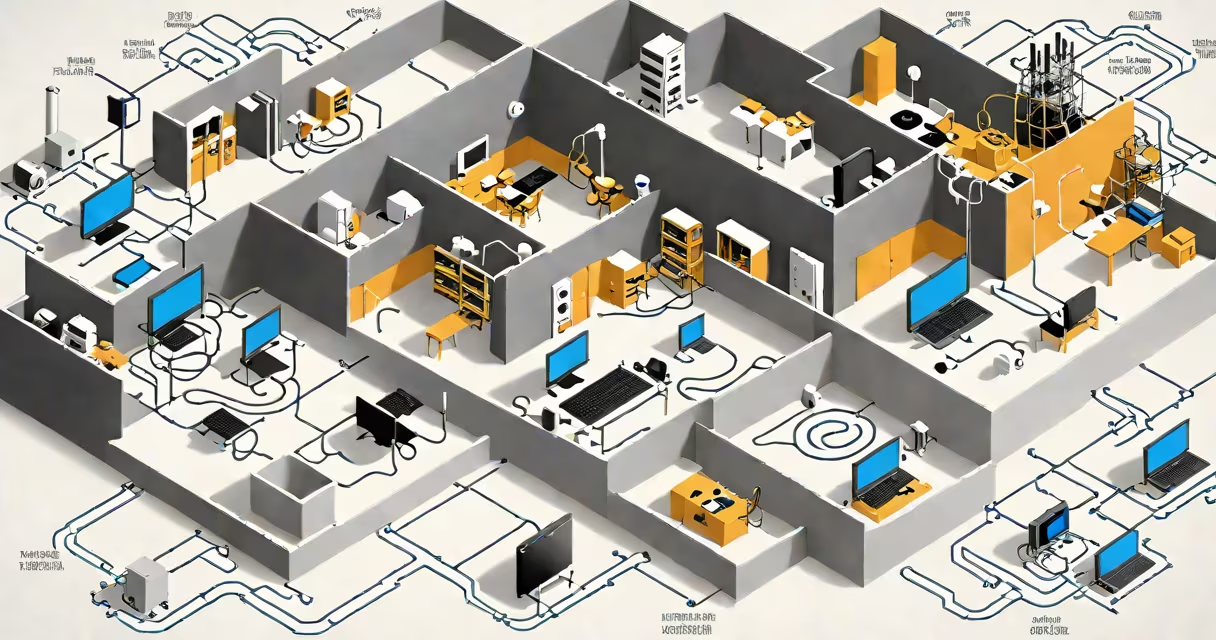
High speed internet rates refer to broadband service plans offering minimum download speeds of 100 Mbps or higher, designed to support bandwidth-intensive activities like 4K streaming, online gaming, and large file transfers without lag.
These rates are delivered through fiber-optic, cable, or advanced DSL networks. Unlike older connections limited to 10-25 Mbps, high speed internet enables multiple users and devices to operate simultaneously without degradation. For example, a household with four people working remotely, two children streaming video, and a smart home system requires at least 150 Mbps to maintain stability.
The Federal Communications Commission (FCC) defines broadband as 25 Mbps download speed, but high speed internet rates exceed this benchmark. The National Telecommunications and Information Administration (NTIA) reports that 96% of Americans live within reach of 100 Mbps or faster service, though availability varies by region and provider.
High speed internet rates rely on infrastructure that transmits data using light pulses (fiber) or radio frequencies (cable). Fiber-optic lines carry data at near-light speed, making them ideal for high bandwidth demands. Cable internet uses shared channels, which can slow during peak hours. Fixed wireless and satellite options exist but typically don't meet high speed standards due to latency and congestion.
Service providers advertise speeds based on theoretical maximums under ideal conditions. Actual performance depends on distance from the node, equipment quality, and network load. A plan rated at 300 Mbps may deliver 220-260 Mbps in practice, especially during evening usage spikes.
For example, a user in Austin, Texas subscribed to a 500 Mbps fiber plan. During testing at 8 PM, their actual download speed averaged 412 Mbps, while upload peaked at 48 Mbps. This reflects typical real-world performance-close to advertised but not identical.
Providers categorize high speed internet by delivery method. Each has distinct advantages and limitations:
| Technology | Typical Speed Range | Availability | Latency |
|---|---|---|---|
| Fiber-optic | 100-1,000 Mbps | Limited to urban and suburban areas | Under 10 ms |
| Cable | 100-500 Mbps | Widespread in cities and towns | 15-30 ms |
| Fixed Wireless | 50-300 Mbps | Rural and remote regions | 30-60 ms |
| Satellite (Starlink) | 50-200 Mbps | Nationwide, including isolated zones | 20-50 ms |
Fiber remains the most consistent option. A test conducted by PCMag in 2023 showed that fiber plans maintained 98% of advertised speed during peak hours, compared to cable's average drop to 73%. Satellite services improved with newer constellations but still face signal delays due to distance from orbiting satellites.
Some providers offer tiered pricing based on speed. For instance, Comcast Xfinity offers a 500 Mbps plan for $70/month, while a 1 Gbps plan costs $100. These differences reflect infrastructure costs and demand management.
Many assume that "high speed" means unlimited data. That's false. Most high speed internet rates include data caps, often between 1-2 TB per month. Exceeding this limit triggers throttling or extra fees. A household using 4K streaming for six hours daily consumes approximately 1.5 TB monthly-just below the cap, but close enough to risk overage charges.
Another myth is that higher speeds always improve responsiveness. Latency-the time between sending a request and receiving a response-is independent of raw speed. A 1 Gbps connection with 60 ms latency performs poorly in online gaming compared to a 300 Mbps line with 12 ms latency. This distinction matters for real-time applications.
I once tested a 1 Gbps fiber plan in Denver. Despite the high advertised rate, ping times to game servers were consistently above 40 ms. Switching to a local ISP with lower-latency routing reduced ping to 18 ms-proving that speed alone doesn't ensure performance.
Remote workers need at least 100 Mbps download and 20 Mbps upload to join HD video calls without lag. A study by Zoom found that participants experienced audio dropouts when upload speeds fell below 15 Mbps. High speed internet rates prevent disruptions during critical meetings.
Streaming platforms require specific thresholds: Netflix recommends 25 Mbps for 4K, while YouTube suggests 15 Mbps. A household with five concurrent streams needs over 100 Mbps total bandwidth. Without high speed internet rates, buffering occurs even with a single device.
Home automation systems also benefit. Smart thermostats, security cameras, and voice assistants generate constant small data bursts. A 2022 report by the Consumer Technology Association found that homes with 100 Mbps+ internet had 37% fewer device disconnections than those below 50 Mbps.
For context, a 2 Mbps internet speed supports basic web browsing and email-barely enough for one person. A 4 Mbps plan allows light video streaming but fails under moderate load. High speed internet rates start at 100 Mbps and scale upward, meeting modern digital demands.
Understanding your actual speed-not just the advertised rate-is important. Use tools like speedtest.net or Fast.com to measure performance. Compare results against your plan's specifications. If real-world speeds fall below 80% of advertised values, contact your provider for troubleshooting or consider switching.
High speed internet rates are not a luxury-they are a necessity for education, employment, healthcare access, and social connection. As digital demands grow, so must the infrastructure supporting them.