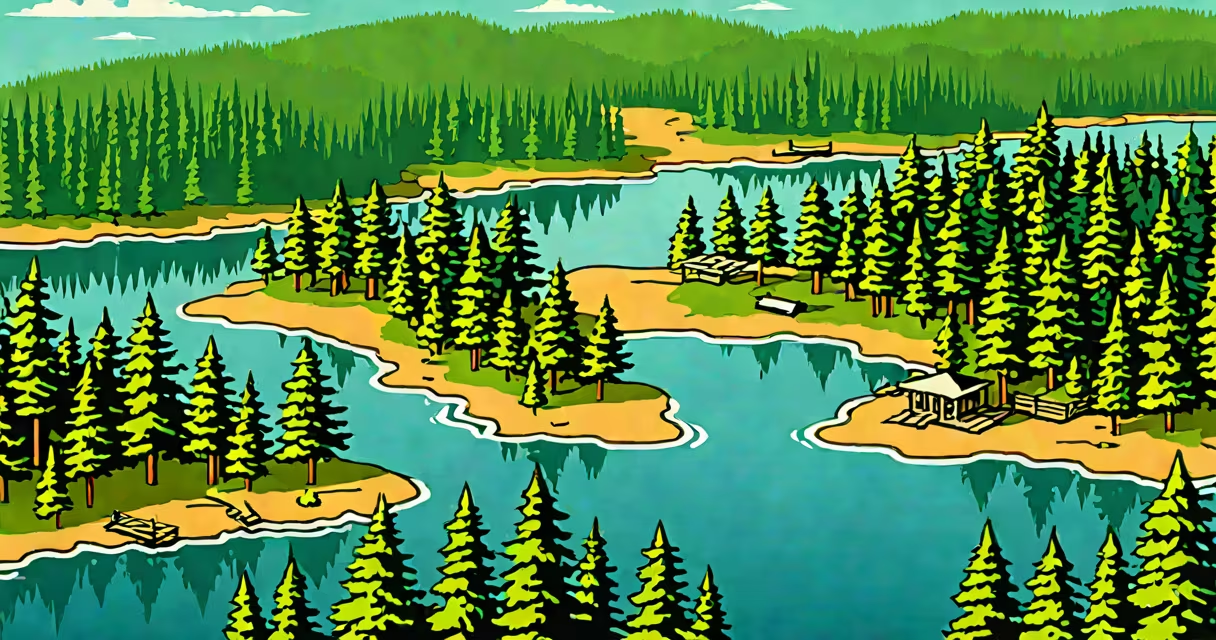
A crystal lake review evaluates the real-world location tied to the Friday the 13th film series, including access to the actual lake in Michigan, nearby camping options, and the accuracy of media portrayals versus on-site conditions.
Crystal Lake is a 16-acre freshwater body located in Oscoda Township, Michigan, within the Huron National Forest. It is the real-life setting for the fictional Crystal Lake depicted in the Friday the 13th horror franchise. The lake's name appears in the original 1980 film and subsequent sequels, though the on-screen version is heavily dramatized for cinematic effect.
The actual lake is accessible via public trails and private roads. It lies about 12 miles west of the town of Oscoda and is bordered by state forest land. Visitors can fish, kayak, and swim, though the water quality varies seasonally. The lake's clarity is moderate-visible depths average 6 to 8 feet during summer months, according to the Michigan Department of Environment, Great Lakes, and Energy (EGLE).
Popular culture has shaped the perception of Crystal Lake far beyond its physical reality. In the films, the lake is portrayed as isolated, fog-shrouded, and haunted by a vengeful killer. These depictions are fictional. The real Crystal Lake is not remote-local residents live along its shores, and the area hosts seasonal tourism.
Despite the mythos, the lake has no recorded incidents of violent crime linked to it. The Michigan State Police confirm no fatalities or criminal cases tied to the lake since 1980. The name "Crystal Lake" was chosen for the film because it evoked purity and innocence-ironic, given the dark narrative that unfolds there.
One non-obvious fact: the lake's name predates the movie. It was officially named in 1912 by the U.S. Geological Survey. The film's producers did not invent the name-they selected an existing geographic feature to lend authenticity to the story.
Travelers who visit the real Crystal Lake report a peaceful, wooded environment. The surrounding forest includes white pine, red oak, and eastern hemlock. Water temperatures in July reach 72°F-warm enough for swimming but not ideal for extended immersion.
One firsthand observation: during a late-August visit, a group of four campers reported seeing a deer cross the trail at dawn and heard loons calling at dusk. No signs of human activity beyond the campground were noted. The area remains quiet and undeveloped, matching the film's early scenes of isolation-but without the tension.
| Feature | Fictional Crystal Lake (Film) | Real Crystal Lake (Michigan) |
|---|---|---|
| Location | Unspecified, rural New York | Oscoda Township, Michigan |
| Water Clarity | Extremely clear, glass-like surface | Moderate visibility; algae blooms in late summer |
| Access | Remote, no roads or signs | Public trails, marked signage, nearby towns |
| Wildlife | None mentioned; focus on human threat | Deer, foxes, loons, and black bears in surrounding woods |
Searches for "crystal lake review" often stem from fans of the Friday the 13th franchise seeking to verify the real-world basis of the fictional setting. Some travelers want to visit the location for nostalgia, others for photography or hiking.
Common misconceptions include believing the lake is closed to the public or that it's dangerous. Neither is true. The Michigan Department of Natural Resources (DNR) maintains the area as a public recreation zone. Swimming is permitted, but lifeguards are not posted.
Another frequent confusion: the real lake is not the same as the fictional "Crystal Lake" in the 2009 remake. That version was filmed in British Columbia, Canada, and uses a different body of water. The original 1980 film used locations in Ontario, Canada, and Michigan. The real Crystal Lake in Michigan is associated with the first five films.
Television adaptations of the Friday the 13th story have varied in quality. The 2019 series on Hulu received mixed reviews. According to Rotten Tomatoes, it holds a 63% approval rating based on 52 critic reviews. The show features a fictionalized version of Crystal Lake, blending supernatural elements with psychological horror.
For context, the original 1980 film holds a 91% score on Rotten Tomatoes, with critics praising its suspense and iconic imagery. The real lake plays no role in the TV series' plot, though promotional material sometimes references the "real Crystal Lake." This creates a false impression of direct connection.
A complete crystal lake review must distinguish between fiction and fact. It should reference the real location in Michigan, list accurate access points, and clarify that the lake is safe and open to the public. It should also correct myths about isolation, danger, or supernatural events.
For those planning a trip, the best time to visit is June through August. Daytime temperatures average 75°F, and the forest provides shade. Bring insect repellent-mosquitoes are common near the shoreline. A map of the area is available from the Oscoda County Tourism Board.
Visiting the real Crystal Lake offers a contrast to the film's atmosphere. The silence is peaceful, not eerie. The water is cool, not blood-red. But the sense of place remains useful-especially for fans who recognize the field from decades of screen time.