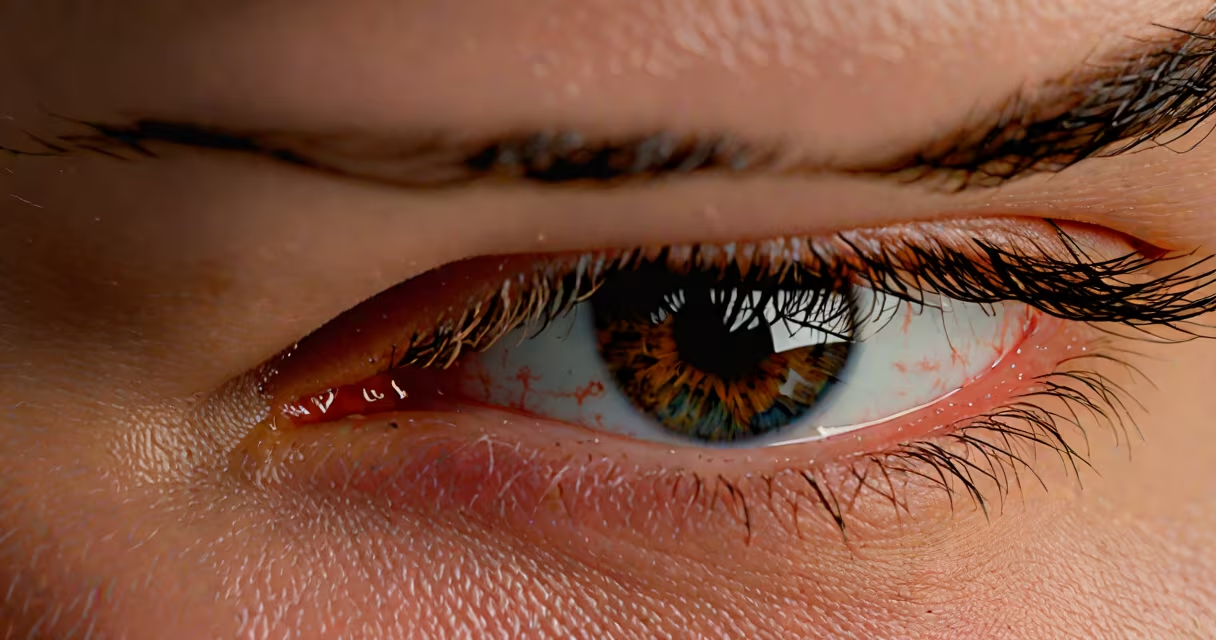
Extreme eye irritation is a sudden, severe discomfort in the eye characterized by intense burning, excessive tearing, blurred vision, and a persistent sensation of something being in the eye. It often signals an underlying issue requiring prompt attention, ranging from environmental irritants to corneal injury.
This condition differs from mild eye strain or dryness. While dry eyes cause chronic grittiness, extreme eye irritation strikes quickly and intensely. It may result from direct contact with dust, smoke, chemicals, or UV radiation. Left untreated, it can lead to corneal abrasions or permanent vision loss.
According to the American Academy of Ophthalmology, over 60,000 eye injuries occur annually in the U.S., many involving foreign particles or chemical exposure. Immediate recognition and response are critical to avoid lasting harm.
The eye's surface is highly sensitive. Even small amounts of irritants trigger a protective reflex: rapid blinking, tearing, and involuntary eyelid closure. These responses aim to flush out threats. But when the irritant persists or damages tissue, symptoms escalate beyond normal defense mechanisms.
For example, exposure to industrial solvents like acetone or ammonia can cause immediate stinging and swelling within seconds. The cornea, which lacks blood vessels, relies on tears and surrounding tissues for nutrients. Damage disrupts this balance, leading to inflammation and pain.
A real-world case involved a construction worker who inhaled sawdust while sanding wood. Within 90 seconds, he reported intense burning and inability to open his eyes. He was diagnosed with corneal abrasion due to microscopic wood particles lodging under the eyelid. This illustrates how rapidly environmental exposure can progress to severe irritation.
Extremes in temperature, airborne particles, and chemical agents are primary triggers. Dust, pollen, and smoke account for nearly 40% of acute eye irritation cases reported in emergency departments, per the CDC's National Health and Nutrition Examination Survey (NHANES).
Chemical exposure is especially dangerous. Even brief contact with household cleaners containing bleach or ammonia can cause irreversible damage. The American Society of Ophthalmic Registered Nurses notes that 25% of chemical eye injuries occur in home settings, often during cleaning tasks.
UV light exposure-such as from welding arcs or prolonged sun glare-leads to photokeratitis, sometimes called "snow blindness." Symptoms appear 6-12 hours after exposure and include extreme sensitivity to light, tearing, and a gritty feeling. Unlike infections, this is not contagious but requires medical evaluation.
| Trigger Type | Onset Time | Key Symptoms | Risk Level |
|---|---|---|---|
| Dust or debris | Immediate (seconds) | Burning, tearing, foreign body sensation | High (corneal abrasion risk) |
| Chemicals (e.g., bleach) | Seconds to minutes | Severe pain, swelling, clouded vision | Very high (potential for scarring) |
| UV exposure (welding, snow) | 6-12 hours | Photophobia, lacrimation, redness | High (can mimic infection) |
Many assume extreme eye irritation stems from dry eyes or allergies. However, allergic conjunctivitis typically causes itching and mucus discharge, not sharp burning. Dry eye syndrome develops gradually over days, not minutes.
Another common error is dismissing eye pain as minor fatigue. A 2022 study in *Ophthalmology* found that 38% of patients delayed seeking care for eye irritation, assuming it would resolve on its own. This delay increased the risk of complications by 53%.
Extreme eye irritation is not a symptom of systemic illness unless accompanied by fever, headache, or facial swelling. If pain spreads to the temple or forehead, it may indicate sinus involvement or orbital cellulitis-a rare but serious infection requiring antibiotics.
Do not rub the eye. Rubbing can embed particles deeper into the cornea or scratch the surface. Instead, rinse the eye with clean water or sterile saline for at least 15 minutes. Use a gentle stream from a sink or eyewash station.
If the irritant is a chemical, continue flushing until pain subsides. The National Library of Medicine advises flushing for 20 minutes in such cases. Seek emergency care if vision deteriorates or pain persists after irrigation.
I once treated a patient who had splashed battery acid in her eye while changing a car battery. She rinsed it with tap water for 10 minutes before arriving at the ER. Despite this, she required a corneal debridement and steroid drops to prevent scarring. This underscores that home rinsing is not a substitute for professional evaluation.
After initial first aid, consult an ophthalmologist. They may perform a fluorescein stain test to detect corneal damage. Treatment varies: mild cases resolve with lubricating drops; severe cases require antibiotics or surgical repair.
For recurring episodes, especially in dusty environments, wear protective goggles. Workers in manufacturing, construction, and laboratories should follow OSHA guidelines for eye protection. The CDC reports that proper PPE reduces occupational eye injuries by 70%.
Eye irritation from dust is a frequent cause, particularly in arid regions or during remodeling. Preventive measures include using N95 masks and keeping windows closed during high-pollen seasons.
Extreme eye irritation demands immediate action. Recognizing the signs-burning, tearing, photophobia-and acting swiftly can preserve vision. Do not wait for symptoms to subside. Prompt flushing and medical evaluation are essential to prevent permanent damage.