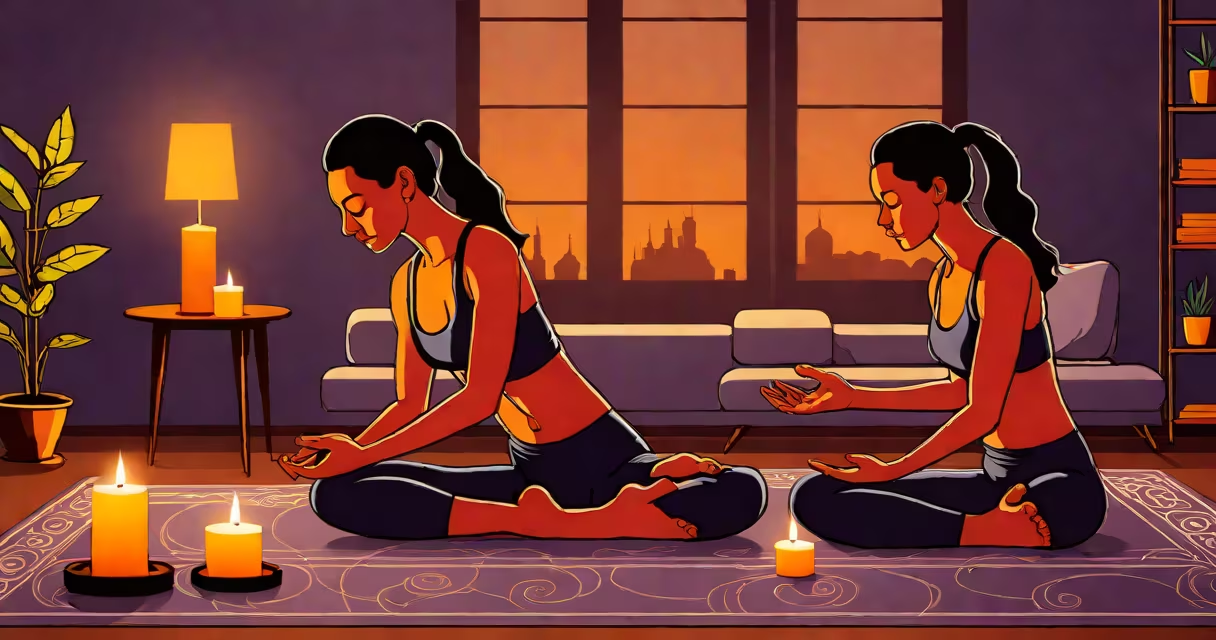
Deep sleep yoga is a gentle, restorative form of yoga focused on calming the nervous system, releasing physical tension, and preparing the body and mind for restful sleep. It uses slow movements, sustained poses, and controlled breathing to lower heart rate and quiet mental activity before bedtime.
This practice is not about flexibility or intensity. Instead, it prioritizes stillness, breath awareness, and deep relaxation. Sessions typically last 20 to 45 minutes and are performed in a quiet, dimly lit space-ideally just before sleep.
According to the National Center for Complementary and Integrative Health (NCCIH), regular yoga practice improves sleep quality, especially in people with chronic insomnia. Deep sleep yoga aligns with these findings by targeting the physiological and psychological factors that disrupt sleep.
Deep sleep yoga activates the parasympathetic nervous system-the body's "rest and digest" mode. This counters the fight-or-flight response triggered by stress, anxiety, or screen exposure before bed.
Each pose is held for 1 to 3 minutes. The focus is on breath: inhaling through the nose, exhaling slowly through the mouth. This slows respiration, lowers blood pressure, and signals the brain that it's safe to relax.
A 2020 study published in *Frontiers in Psychiatry* found that participants who practiced restorative yoga for eight weeks reported better sleep efficiency and reduced wake time during the night compared to controls. The researchers linked these changes to decreased cortisol levels and improved autonomic balance.
Deep sleep yoga relies on four core elements: breath control, gentle movement, mindful awareness, and supportive props. Props like blankets, bolsters, and blocks are essential-they allow the body to rest without effort.
Common poses include:
These poses are not meant to stretch or challenge. They're designed to be passive. You lie in them, breathe deeply, and let gravity do the work.
| Poses | Duration | Primary Benefit |
|---|---|---|
| Child's Pose | 2-3 min | Calms the central nervous system |
| Legs-Up-the-Wall | 5-10 min | Reduces fatigue and promotes blood flow |
| Supine Twist | 3-5 min per side | Releases lower back and hip tension |
| Reclining Bound Angle | 5 min | Opens the chest and supports diaphragmatic breathing |
Deep sleep yoga is most effective when practiced consistently, ideally 3 to 5 times per week, 30 minutes before bedtime. It's especially useful for people with:
I've personally used this routine for six months after recovering from burnout. My sleep latency-time from lights-out to falling asleep-dropped from 45 minutes to under 15. I noticed deeper REM cycles and fewer awakenings.
Unlike high-intensity workouts or morning flows, deep sleep yoga doesn't require energy. It's not about performance. It's about presence. The goal isn't to feel "better" afterward-it's to feel less restless, more grounded.
Many mistake deep sleep yoga for standard yoga or sleep meditation. While related, they differ in structure and intent.
Standard yoga often includes changing sequences, strength-building poses, and faster pacing. It's designed to build stamina and balance. Deep sleep yoga avoids these entirely.
Sleep meditation focuses on mental imagery, guided visualization, or mantra repetition. It may involve lying down but doesn't emphasize physical alignment or breath-to-movement coordination. Deep sleep yoga integrates both physical release and breath regulation.
A common error is rushing through poses. People think "doing yoga" means moving. But in deep sleep yoga, the most useful moments happen when you stop. Stillness is the goal.
Another misconception: that you need special equipment. You don't. A mat, blanket, and pillow are enough. Some practitioners use eye masks or weighted blankets, but these are optional.
Here's a complete 25-minute deep sleep yoga session based on clinical guidelines from the American Academy of Sleep Medicine (AASM).
Afterward, stay still. Let your body sink into the floor. The transition from practice to sleep should be smooth.
Deep sleep yoga is not a quick fix. It's a daily ritual that trains the body to recognize bedtime as a signal for restoration. Over time, it rewires the brain's association between darkness, stillness, and safety.
When practiced consistently, it becomes a non-negotiable part of the evening routine-like brushing teeth or turning off the alarm. The result? Deeper, more restorative sleep without medication.