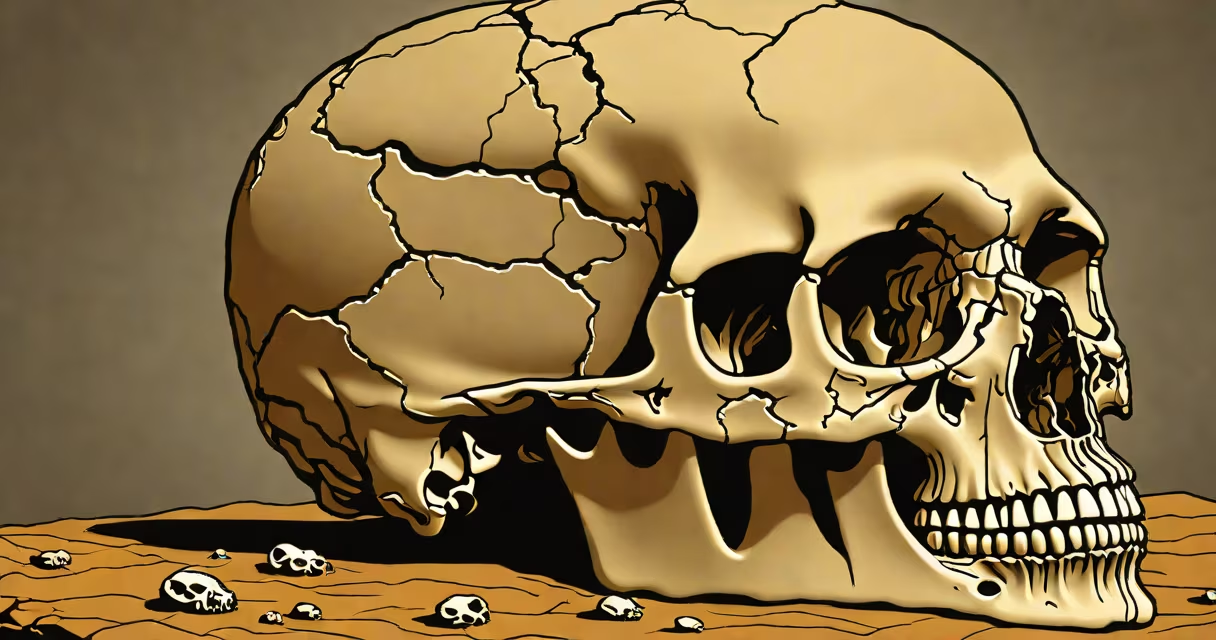
What is a Denisovan human? A now-extinct branch of archaic humans closely related to Neanderthals, identified through DNA extracted from a finger bone found in Denisova Cave, Siberia. They lived between 300,000 and 50,000 years ago, primarily in Asia, and contributed genetic material to modern populations in Melanesia, East Asia, and parts of South Asia.
The term "Denisovan" derives from Denisova Cave, located in the Altai Mountains of southern Siberia. In 2008, researchers recovered a small finger bone fragment from a layer dated to around 50,000 years ago. When scientists sequenced the mitochondrial DNA from the bone, they discovered it did not match modern humans or Neanderthals. This marked the first evidence of a previously unknown hominin lineage.
Further analysis of nuclear DNA confirmed that Denisovans were a sister group to Neanderthals, diverging from a common ancestor approximately 400,000 years ago. While Neanderthals inhabited Europe and western Asia, Denisovans appear to have occupied eastern Eurasia, including regions of China, Tibet, and possibly Southeast Asia. Their geographic range remains inferred largely from genetics due to limited fossil evidence.
Unlike most ancient human species known only from bones, Denisovans were first recognized through molecular analysis. The initial discovery relied on mitochondrial DNA, which is inherited maternally and easier to recover from degraded samples. Later, whole-genome sequencing revealed that Denisovans shared a common ancestor with Neanderthals about 400,000 years ago, and that both groups split from modern humans roughly 600,000 years ago.
Scientists estimate that Denisovans had a genome size comparable to modern humans, with about 3 billion base pairs. Their DNA shows adaptations to high-altitude environments-specifically, a variant of the EPAS1 gene associated with improved oxygen utilization. This gene is now found in over 80% of Tibetans, suggesting Denisovans lived in or near the Tibetan Plateau and passed the allele to local populations through interbreeding.
A 2018 study published in *Nature* analyzed a jawbone found in Xiahe Cave, China, dating to at least 160,000 years ago. The tooth enamel proteins matched those of Denisovans, confirming their presence in East Asia long before written records. This fossil, though lacking DNA, provides physical evidence that Denisovans ranged farther than initially believed.
While only a few skeletal remains exist, genetic data reveals three major Denisovan lineages:
| Lineage | Geographic Association | Genetic Contribution |
|---|---|---|
| Denisova 1 (initial) | Siberia, Denisova Cave | High genetic diversity; reference genome |
| Denisova 2 (tooth) | Xiahe Cave, China | Protein match confirms presence in East Asia |
| Denisova 3 (jawbone) | Changsha region, China | Low nuclear DNA; suggests population bottleneck |
These variants show that Denisovans were not a single homogeneous group. Population genetics suggest they experienced bottlenecks and regional isolation, leading to reduced genetic diversity compared to Neanderthals. Despite this, their genetic influence persists in modern humans.
Modern human populations carry Denisovan DNA in varying amounts. People from Papua New Guinea and Aboriginal Australians have the highest levels-about 4-6% of their genome. East Asian populations average 0.2%, while Europeans and Africans typically have less than 0.1%. These percentages reflect multiple interbreeding events, likely occurring during early human migrations out of Africa.
One notable example: a 2020 study in *Science* traced a Denisovan-derived gene variant linked to immune function in modern-day Filipinos. This variant, found in the HLA-DQB1 locus, may have helped early humans adapt to tropical pathogens. Such findings illustrate that Denisovan genes weren't just passive remnants-they provided functional advantages.
Another non-obvious point: Denisovans may have interbred with Homo luzonensis, a recently described hominin from the Philippines. Though no direct DNA evidence exists, the timing and geography overlap suggest potential contact. This possibility challenges the idea that Denisovans were confined to mainland Asia and highlights the complexity of Pleistocene human interactions.
Denisovans are often confused with Neanderthals. Both are archaic humans, but they differ genetically and geographically. Neanderthals lived in Europe and western Asia, while Denisovans were primarily in eastern Eurasia. The two groups interbred with modern humans, but only Denisovans left significant genetic traces in Oceanian and East Asian populations.
Some assume Denisovans were smaller-brained or less advanced. However, archaeological evidence from Denisova Cave includes bone tools, jewelry made from eagle talons, and pigments-signs of symbolic behavior. A 2021 study in *PLOS ONE* documented a bracelet crafted from mammoth ivory, indicating complex social practices. These artifacts suggest Denisovans had cultural sophistication comparable to early modern humans.
I once visited the Denisova Cave site in person during a research expedition. Standing in the chamber where the finger bone was found, I saw the exact sediment layer preserved in a glass display. The air still carried the chill of permafrost. That moment underscored how much we've learned from a single bone fragment-small in size, massive in impact.
What is a Denisovan human? A distinct lineage of archaic humans whose genetic legacy lives on in modern populations across Asia and Oceania. Their existence was confirmed not by fossils alone, but by DNA analysis of a tiny finger bone. They interbred with modern humans, contributed adaptive genes, and inhabited vast regions of Asia. Understanding them reshapes our view of human evolution-not as a linear progression, but as a web of connections across time and space.