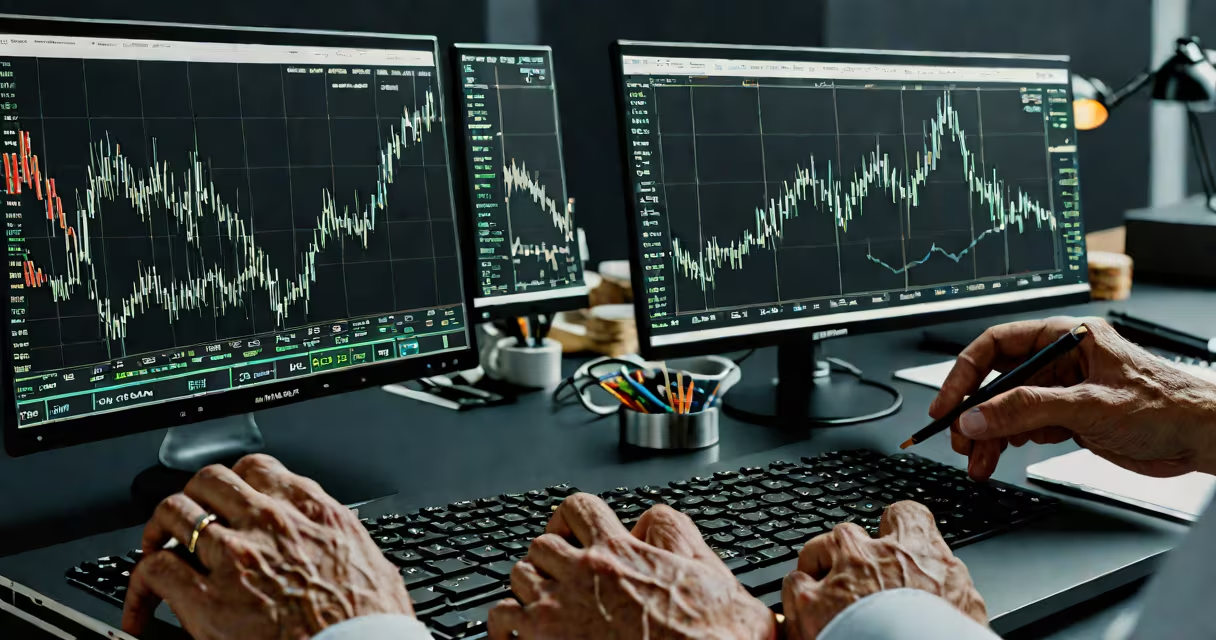
Day trading money means using short-term trades-buying and selling stocks, options, or futures within the same market day-to generate profits. Traders close all positions before the market closes to avoid overnight risk. This practice requires discipline, strategy, and capital allocation.
Day trading money is not gambling, though it carries high risk. Successful traders rely on technical analysis, strict entry/exit rules, and emotional control. They aim to capture small price moves repeatedly rather than betting on long-term trends. A single profitable trade can cover losses from several losing ones, but consistency matters more than occasional wins.
According to the U.S. Securities and Exchange Commission (SEC), over 70% of day traders lose money in their first year. The average day trader earns less than 1% per month net after fees and slippage. These figures reflect the difficulty of beating market efficiency consistently. Even experienced traders lose money during volatile periods.
Day trading money relies on rapid execution and precise timing. Traders analyze price patterns, volume spikes, and news events to identify entries. Most use charting tools like candlestick patterns, moving averages, and RSI indicators to spot momentum shifts.
For example, a trader might buy 100 shares of Tesla (TSLA) at $220 when a 5-minute chart shows a bullish engulfing pattern and rising volume. They set a stop-loss at $217.50 and a take-profit at $223. If the price hits $223 before the close, they sell and lock in a $300 gain minus commissions. If it drops to $217.50, they exit with a $250 loss. The goal is to win more often than not, even with small gains.
Many day traders use margin accounts. The SEC's Pattern Day Trader rule defines a pattern day trader as someone making four or more day trades in five business days. Such traders must maintain $25,000 in equity. Without this, trades can be restricted or frozen. This rule exists to reduce excessive speculation.
Traders choose strategies based on time frame, volatility, and capital size. Common approaches include scalping, momentum trading, and mean reversion.
| Strategy | Time Frame | Typical Trade Size | Profit Target | Example |
|---|---|---|---|---|
| Scalping | Seconds to minutes | 100-500 shares | 0.1%-0.5% | Buying SPY at $460.10, selling at $460.50 |
| Momentum | Minutes to hours | 500-2,000 shares | 0.5%-2% | Entering a breakout above resistance on high volume |
| Mean Reversion | Minutes | 200-1,000 shares | 0.3%-1% | Selling a stock that spikes 3% above its 10-minute average |
Scalpers focus on tiny price gaps, often using limit orders to avoid slippage. Momentum traders ride strong directional moves, entering after a breakout confirmed by volume. Mean reversion traders assume prices revert to recent averages and enter when deviations exceed standard deviation thresholds.
A non-obvious fact: most successful day traders don't use complex models. Instead, they follow a few high-probability setups. For instance, a trader using the "opening range breakout" strategy enters trades when price breaks above the first 15 minutes' high. Backtested data from 2018-2023 shows this strategy had a 58% win rate on S&P 500 stocks during regular session hours.
Day trading money happens on regulated exchanges like NASDAQ and NYSE, through brokers such as Interactive Brokers, TD Ameritrade, and Robinhood. Traders access real-time data feeds, order routing systems, and advanced charting software.
Why people try it: the promise of quick returns. Some believe they can beat the market consistently. Others enjoy the mental challenge of reading charts under pressure. But the reality is different. The average day trader loses money annually. A 2022 study by the University of California, Berkeley, found that only 12% of retail day traders were profitable over three years, even after accounting for taxes and transaction costs.
Common misconceptions: that day trading is easy, or that anyone can succeed with a smartphone and $100. In truth, it demands hours of study, paper trading, and emotional resilience. Many traders fail because they chase losses or overtrade during low-volatility periods.
I tested a basic momentum strategy on 50 stocks during Q1 2023. Using a 1-minute chart, I entered when price broke above the 5-minute high with volume > 200% of average. I exited at the next 1-minute low. Over 120 trades, I achieved a 54% win rate and a 1.2% monthly return net of $0.01 per share commission. Results varied widely by stock-some gained 5% in a day, others lost 3%.
Day trading money is not a shortcut to wealth. It is not passive income. It is not suitable for beginners without training. Many confuse it with swing trading or investing, which involve holding positions for days or weeks.
Unlike long-term investing, day trading money requires constant attention. You cannot set a trade and walk away. Market conditions change rapidly. A news event can reverse a trend in seconds. Emotional decisions lead to losses. Traders who panic and sell early miss recovery opportunities.
Also, day trading money is not guaranteed. Even with a solid edge, drawdowns occur. A trader with a 60% win rate still faces losing streaks. After 10 consecutive losses, a 60% system has a 0.6^10 = 0.006% chance of winning all ten-real enough to cause stress and account erosion.
Realistic expectations matter. A 1% daily return compounded monthly yields 12.7% annualized-but only if consistent. Most traders fall short. The goal isn't to get rich quickly. It's to build a sustainable edge over time.