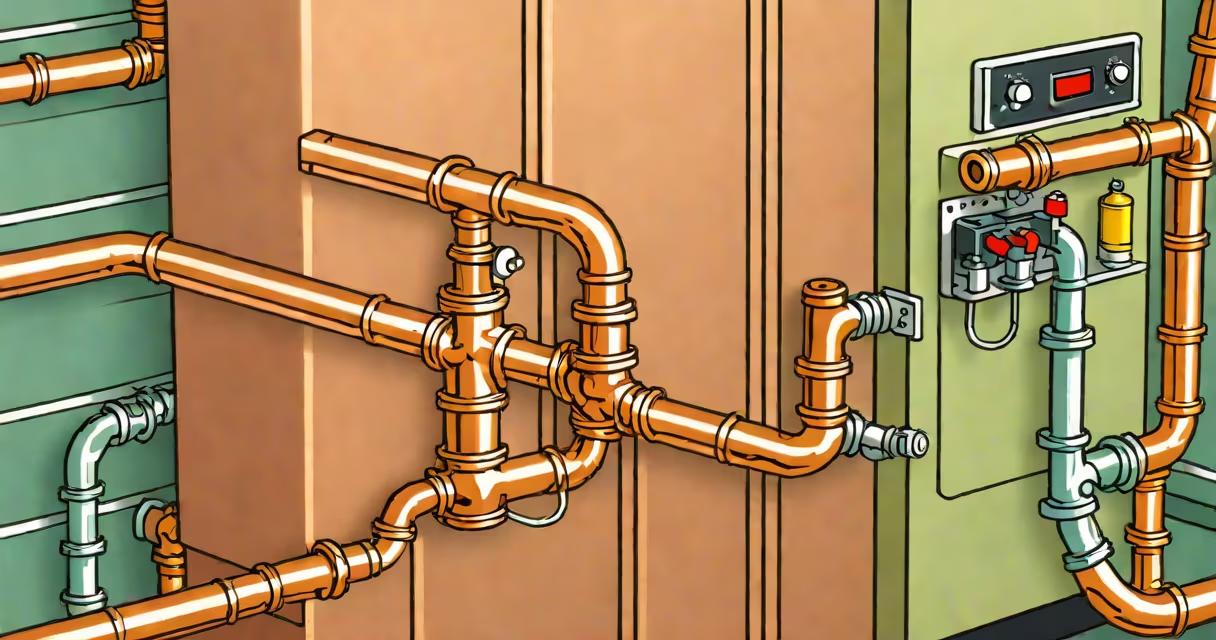
A refrigerant leak typically shows as oily residue on metal components, frost or ice on refrigerant lines, or a sudden drop in cooling performance. These signs indicate a loss of refrigerant charge, which compromises system efficiency and risks equipment failure.
Refrigerants are pressurized gases used in air conditioning and refrigeration systems to absorb heat. When a leak develops, the refrigerant escapes through tiny cracks, loose fittings, or worn seals. Because refrigerants are colorless and odorless under normal conditions, leaks aren't visible until they leave behind physical traces.
The most common visual clue is a greasy or oily film on copper tubing, joints, or compressor connections. This residue forms because refrigerants are mixed with lubricating oil in the system. As the refrigerant escapes, the oil remains behind, creating a sticky, dark smear. Over time, this oil builds up and becomes noticeable, especially around service ports or valve connections.
Visual cues are not the only indicators. A system with a refrigerant leak often exhibits performance issues. Cooling capacity drops, leading to longer run times and higher energy bills. In residential AC units, rooms may fail to reach set temperatures even after extended operation.
Frost formation on indoor evaporator coils or outdoor condenser lines is another red flag. When refrigerant pressure drops due to leakage, the temperature inside the coil falls below freezing. Moisture in the air then freezes on the surface, forming ice. This ice insulates the coil, reducing heat transfer and worsening inefficiency.
Some systems have electronic leak detectors that sound alarms or trigger error codes. Modern HVAC units with microprocessor controls may display fault codes such as "Low Charge" or "Evaporator Freeze." These alerts are direct indicators of refrigerant loss and require immediate attention.
Common refrigerants include R-410A, R-22, and R-134a. Each has different properties, but all behave similarly when leaking. R-410A, used in newer AC systems, operates at high pressure and can cause rapid oil migration. Leaks in R-410A systems often show as dark, thick oil stains on copper lines near bends or connections.
R-22, phased out in new installations since 2020 due to ozone-depleting potential, still exists in older systems. Its lower operating pressure means leaks develop more slowly. Oil residue may appear lighter and less concentrated than with R-410A. However, the risk of system damage increases over time due to inadequate lubrication.
Table: Refrigerant Types and Typical Leak Indicators
| Refrigerant Type | Typical Pressure | Oil Residue Appearance | Leak Detection Difficulty |
|---|---|---|---|
| R-410A | High (300-500 psi) | Dark, thick, sticky | Moderate (fast oil buildup) |
| R-22 | Medium (200-300 psi) | Light yellow, thin | Slow (oil spreads gradually) |
| R-134a | Low (150-250 psi) | Clear to pale yellow, viscous | Hard (minimal visible residue) |
One non-obvious fact: refrigerant leaks don't always produce visible oil. In low-pressure systems like R-134a, oil may remain dissolved in the refrigerant and not separate until the system is depressurized. This makes visual inspection unreliable without specialized tools.
Most leaks happen at connection points-joints, valves, service ports, or soldered seams. Vibration from compressors causes fatigue over time, cracking solder joints or loosening fittings. Corrosion from moisture ingress accelerates metal degradation, especially in older systems.
Manufacturing defects also contribute. A poorly brazed joint or a microscopic crack in copper tubing can allow slow seepage. According to the Air Conditioning Contractors of America (ACCA), 60% of refrigerant leaks originate in the outdoor condenser unit's refrigerant lines or at the compressor connection.
I once inspected a 2015 split-system AC where the indoor unit failed to cool. After checking the thermostat and blower motor, I noticed frost on the evaporator coil. Upon disassembly, I found a small hole in the copper line near the expansion valve. The area was coated in dark, semi-solid oil. A UV dye injection confirmed the leak source. Replacing the damaged section restored cooling within 90 minutes.
People often mistake water dripping from an AC drain pan for a refrigerant leak. That's normal condensation. Water is clear and flows freely. Refrigerant oil is sticky, doesn't drip easily, and leaves a residue that persists after wiping.
Another confusion: mist or fog near the unit. Some assume this indicates refrigerant release. But refrigerant vapor is invisible. What's seen is usually condensed moisture from cold surfaces, not escaping gas.
Some believe refrigerant smells. It does not. Pure refrigerants are odorless. Any smell suggests contamination-such as oil breakdown products or refrigerant mixed with air. But the scent isn't from the refrigerant itself.
Start with a visual inspection. Turn off the system and wait 15 minutes for the lines to stabilize. Check all accessible copper tubes, especially near bends, connectors, and the compressor. Look for dark, greasy smears. Wipe the area with a clean rag-if the cloth picks up a slick, oily film, suspect a leak.
Check for frost. Run the system for 15 minutes. Inspect the indoor evaporator coil and outdoor condenser lines. Ice forming in areas not designed to freeze indicates low refrigerant pressure.
Ignoring a refrigerant leak leads to increased wear on the compressor. Low charge forces the compressor to work harder, raising internal temperatures. The U.S. Department of Energy reports that a 15% refrigerant loss reduces system efficiency by 20% and increases failure risk by 35%.
Environmental impact is also significant. R-410A has a global warming potential (GWP) of 2088. Even small leaks contribute to greenhouse gas emissions. The EPA mandates proper recovery and recycling of refrigerants during repairs to minimize environmental harm.
Repairing a leak promptly prevents further damage. A small hole in a copper line can grow over time due to vibration and corrosion. Replacing a section costs $150-$300. Ignoring it may lead to a full system replacement, costing $3,000-$6,000.
Understanding what a refrigerant leak looks like helps prevent costly failures. Visible oil, frost, and performance decline are clear signals. Addressing them early saves money, extends equipment life, and reduces environmental impact. Always consult a licensed technician for diagnosis and repair.