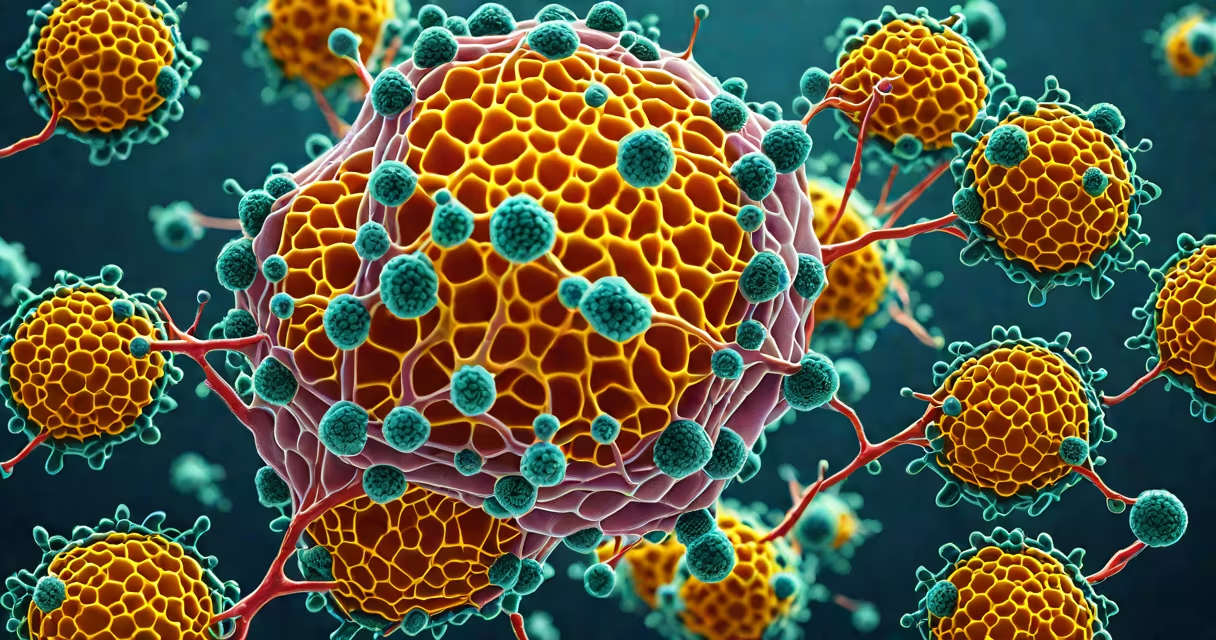
The cytoplasm is the gel-like substance within a cell that houses organelles, facilitates chemical reactions, and enables molecular transport. It serves as the primary site for metabolic activity and structural support in eukaryotic and prokaryotic cells alike.
Cytoplasm function in cells begins with its physical structure. Composed mainly of water, ions, enzymes, and dissolved nutrients, it forms a semi-fluid matrix that fills the space between the plasma membrane and the nuclear envelope. This environment allows molecules to diffuse freely while maintaining spatial organization for cellular processes. The cytoplasm contains both soluble components-known as the cytosol-and suspended structures such as mitochondria, ribosomes, and vesicles. These elements work together to sustain life at the microscopic level.
Within this matrix, biochemical pathways occur continuously. Glycolysis-the breakdown of glucose into pyruvate-takes place entirely in the cytosol. This process generates ATP and intermediates used in further energy production. Other critical functions include protein synthesis, where ribosomes attached to the rough endoplasmic reticulum translate mRNA into polypeptide chains. Vesicles formed in the Golgi apparatus travel through the cytoplasm to deliver materials to specific destinations, such as the plasma membrane or lysosomes.
The cytoplasm is not a uniform soup. Its functionality arises from distinct regions and specialized structures. The cytoskeleton-a network of protein filaments including actin, microtubules, and intermediate filaments-provides internal scaffolding. These fibers maintain cell shape, anchor organelles, and enable intracellular transport via motor proteins like kinesin and dynein.
Organelles suspended in the cytoplasm perform highly specific tasks. Mitochondria generate most of the cell's ATP through oxidative phosphorylation. Lysosomes break down waste materials using hydrolytic enzymes. Peroxisomes detoxify harmful substances like hydrogen peroxide. All these organelles rely on the cytoplasm for nutrient delivery, waste removal, and signal transmission.
| Component | Function in Cytoplasm | Example in Human Cells |
|---|---|---|
| Cytosol | Site of glycolysis and ion regulation | Glucose metabolism in liver hepatocytes |
| Actin filaments | Cell motility and cytokinesis | Contraction during muscle cell division |
| Mitochondria | ATP production via electron transport chain | Energy supply in heart muscle cells |
| Vesicles | Transport of lipids and proteins | Insulin secretion from pancreatic beta cells |
Dysfunction in cytoplasmic processes underlies many diseases. Mutations affecting cytoskeletal proteins lead to muscular dystrophies and neurodegenerative disorders. Impaired vesicular transport disrupts hormone release and neurotransmitter signaling. In cancer, altered cytoplasmic pH and disrupted organelle positioning contribute to uncontrolled proliferation.
A notable example is Charcot-Marie-Tooth disease, caused by mutations in genes encoding peripheral nerve cytoskeletal proteins. These defects impair axonal transport, leading to progressive muscle weakness and sensory loss. Research from the National Institute of Neurological Disorders and Stroke confirms that disruptions in cytoplasmic infrastructure precede clinical symptoms in early-stage cases.
Another non-obvious fact: the cytoplasm is not passive. It exhibits viscoelastic properties-behaving like both a liquid and a solid depending on applied force. This behavior influences how organelles move and how signals propagate. Studies using optical tweezers show that cytoplasmic resistance increases under mechanical stress, suggesting a role in cellular protection during environmental changes.
Many assume the cytoplasm is merely a container for organelles. This view overlooks its active role in regulating homeostasis. The cytoplasm maintains ion gradients essential for nerve impulse transmission and enzyme activity. Sodium-potassium pumps embedded in membranes regulate potassium levels in the cytosol, ensuring proper cellular signaling.
Some confuse cytoplasm with cytosol. While often used interchangeably, they differ: cytoplasm includes all contents within the plasma membrane-organelles, cytosol, and suspended particles-while cytosol refers strictly to the aqueous phase. A single human liver cell contains approximately 15 million protein molecules dispersed in its cytosol, contributing to its functional complexity.
Another misconception is that the cytoplasm remains static. In reality, it undergoes constant remodeling. During mitosis, the cytoplasm reorganizes to form the contractile ring that pinches the dividing cell. Fluorescence microscopy reveals changing movement of vesicles along microtubule tracks, with speeds reaching up to 1 micrometer per second in neuronal axons.
Consider insulin production in pancreatic beta cells. After gene transcription, mRNA moves into the cytoplasm and binds to ribosomes on the rough endoplasmic reticulum. As the ribosome translates the sequence, a polypeptide chain emerges into the lumen of the ER. This chain folds into proinsulin, which is then packaged into vesicles.
These vesicles travel through the cytoplasm along microtubules powered by kinesin motors. Upon reaching the plasma membrane, they fuse and release proinsulin into the bloodstream. Within minutes, enzymes cleave it into active insulin and C-peptide. Without functional cytoplasmic transport, this entire process fails-leading to hyperglycemia and diabetes.
This example illustrates how cytoplasm function in cells integrates multiple systems: translation, vesicle trafficking, and exocytosis. Disruption at any step compromises systemic health.