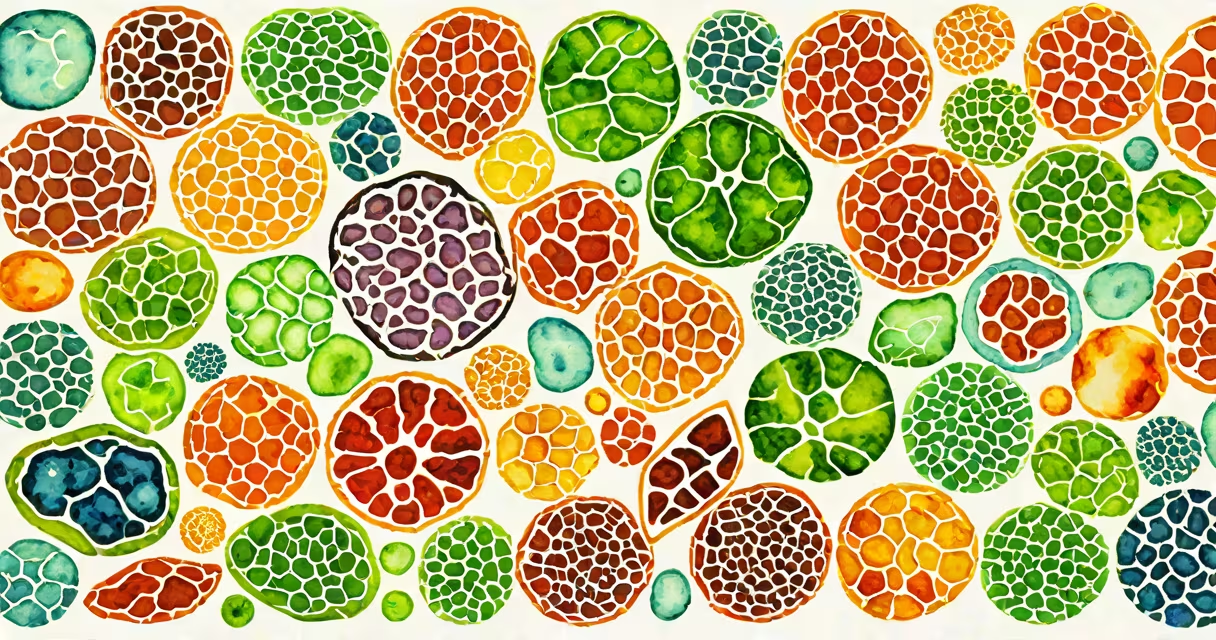
Cell theory states that all living organisms are composed of cells, cells are the fundamental units of life, and new cells arise only from pre-existing cells. This principle forms the foundation of modern biology and explains the structure and function of all known life.
The theory emerged from observations made with early microscopes in the 17th century. Robert Hooke first described cells in cork in 1665, coining the term "cell" due to their resemblance to monks' cells. Later, Matthias Schleiden and Theodor Schwann proposed in 1838-1839 that plants and animals are made of cells, respectively. Rudolf Virchow completed the triad in 1855 by asserting that all cells come from existing cells-a concept he called "omnis cellula e cellula."
Modern cell theory expands on these original principles. While the core tenets remain unchanged, advances in microscopy and molecular biology have revealed the complexity within cells. For example, electron microscopes show organelles like mitochondria and ribosomes, which perform specialized functions. Prokaryotic cells (like bacteria) lack a nucleus, while eukaryotic cells (found in plants, animals, fungi) have membrane-bound nuclei and organelles.
Every organism, from single-celled amoebas to complex humans, consists of one or more cells. These cells carry out essential processes such as metabolism, growth, reproduction, and response to stimuli. The cell membrane regulates what enters and exits, while DNA in the nucleus directs protein synthesis and cellular activities.
For example, human muscle cells contain thousands of mitochondria-organelles responsible for producing ATP, the energy currency of the cell. Without this internal organization, coordinated movement would be impossible. Similarly, plant cells have chloroplasts that convert sunlight into chemical energy through photosynthesis. These specialized structures demonstrate how cell theory accounts for both diversity and unity in life.
Cell division via mitosis helps each daughter cell inherits identical genetic material. This process maintains continuity across generations and supports tissue repair. A wound on the skin heals because skin cells divide to replace damaged ones-proof that new cells originate from old ones, fulfilling Virchow's principle.
Cells fall into two broad categories based on structural complexity:
| Type | Key Features | Examples |
|---|---|---|
| Prokaryotic | No nucleus; circular DNA; simple organelles | Bacteria, archaea |
| Eukaryotic | Nucleus present; membrane-bound organelles; larger size | Animals, plants, fungi, protists |
Prokaryotes are typically 0.5-5 micrometers in diameter. Their DNA floats freely in the cytoplasm. In contrast, eukaryotic cells average 10-30 micrometers and house DNA in a protected nucleus. This structural difference influences how cells regulate gene expression and respond to environmental changes.
Some cells specialize further. Neurons transmit electrical signals across long distances; red blood cells carry oxygen using hemoglobin; sperm cells move toward eggs using flagella. Despite these differences, all share the same core features: plasma membrane, cytoplasm, genetic material, and ribosomes.
People often confuse cell theory with evolution or the germ theory of disease. While related, they are distinct. Evolution explains how species change over time; germ theory identifies microbes as causes of illness. Cell theory focuses solely on the cellular basis of life.
A common error is assuming that all cells are visible under a light microscope. Most cells are too small-typically 10-20 micrometers-to be seen without magnification. Electron microscopes can resolve details down to 0.1 nanometers, revealing internal structures invisible to optical tools.
Another misconception is that viruses are cells. They are not. Viruses lack cellular structure-they have no cytoplasm, organelles, or ability to reproduce independently. They hijack host cells to replicate, which underscores why cell theory applies only to living entities with cellular organization.
Cell theory underpins medical diagnostics and treatments. Cancer arises when cells lose control over division-mutations disrupt normal regulation, leading to uncontrolled growth. Chemotherapy targets rapidly dividing cells, exploiting a trait rooted in cell theory.
Consider a biopsy from a patient with suspected colon cancer. A pathologist examines tissue samples under a microscope. If cells show abnormal shapes, irregular nuclei, and high rates of mitosis, the diagnosis confirms malignancy. This relies entirely on understanding what healthy cells look like and how they behave-core aspects of cell theory.
In agriculture, scientists use cell theory to develop genetically modified crops. By inserting genes into plant cells, researchers create varieties resistant to pests or drought. For example, Bt corn contains a bacterial gene that produces a toxin harmful to certain insects. The success of this method depends on precise manipulation of plant cells, guided by cell theory principles.
I once observed a classroom experiment where students cultured yeast in sugar water. After 24 hours, bubbles formed-evidence of fermentation. The instructor asked, "Where did the gas come from?" Students identified cellular respiration in yeast cells, linking observable phenomena to internal metabolic processes. That moment demonstrated how cell theory connects microscopic events to macroscopic outcomes.
The National Institutes of Health (NIH) states that "all biological systems-from single-celled organisms to multicellular beings-are built upon the cell as the fundamental unit of life." This aligns with the consensus in textbooks like *Molecular Biology of the Cell* by Alberts et al., which emphasizes that cell theory remains central to biological research.
According to the American Society for Microbiology, "The discovery of cells was key in shifting biology from descriptive anatomy to mechanistic understanding." This shift enabled the development of microbiology, genetics, and biotechnology-all fields grounded in cell theory.
Even in space exploration, cell theory guides the search for extraterrestrial life. NASA defines life as "a self-sustaining system capable of Darwinian evolution," which implies cellular organization. Any potential alien life form would likely meet the criteria of being composed of cells.
Understanding cell theory summary allows accurate interpretation of biological phenomena across disciplines. From diagnosing disease to engineering new materials, the principles established in the 19th century continue to inform science today.