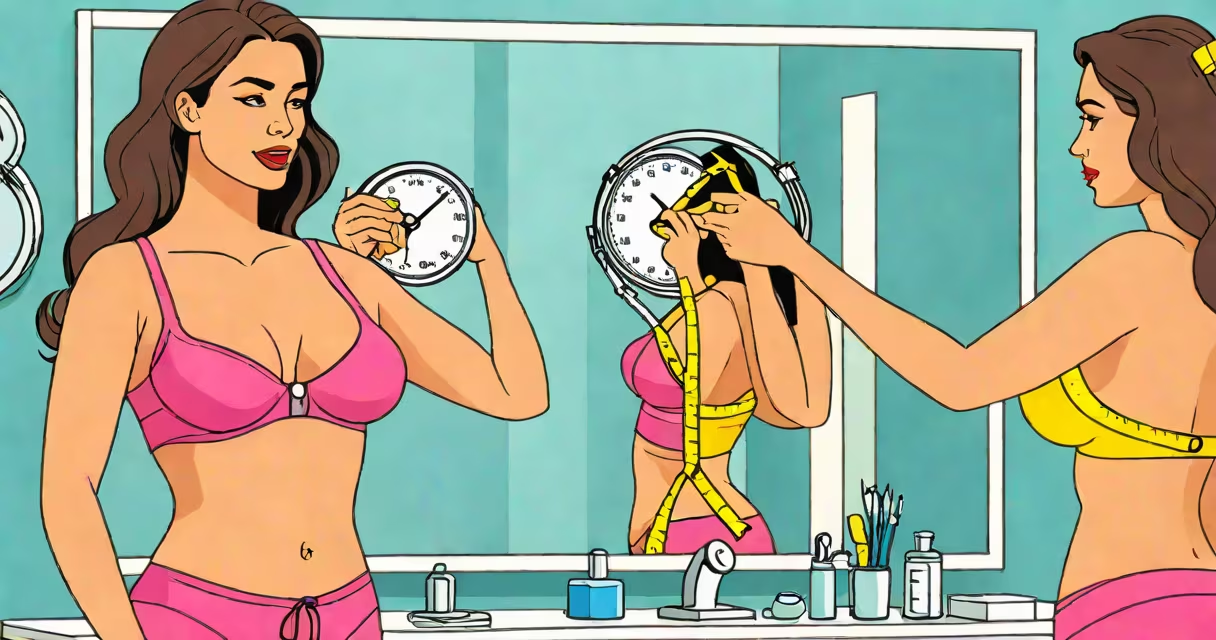
To check the size of a bra, measure the band snugly around the ribcage just below the bust and the bust at its fullest point. Subtract the band measurement from the bust measurement to determine the cup size. The result corresponds to a letter (A=1 inch, B=2 inches, etc.). A correct bra size combines both band and cup measurements.
Bra sizing is not standardized across brands. A 34B in one brand may fit like a 36A in another. Measuring accurately avoids buying a bra that's too tight or too loose. The process requires a flexible tape measure, a mirror, and consistent posture.
Many people assume their bra size is based on clothing sizes (e.g., "I wear a medium"), but bra size is independent. A woman who wears a size 10 dress may have a 34D bra size. Misfitting bras contribute to discomfort, poor posture, and long-term shoulder strain.
Bra size consists of two parts: the band size and the cup size. The band size is the measurement around the torso, just under the bust. The cup size reflects the difference between the bust and band measurements.
For example, if the band measures 32 inches and the bust measures 37 inches, the difference is 5 inches. That corresponds to a cup size of E (or DD in some systems). The full size is then 32E.
Some brands use different cup size scales. The UK system uses letters A through J, while the US system extends to DD, DDD, and beyond. A 34DD in the US system equals a 34F in the UK system. Always consult the brand's size chart when shopping.
Begin by wearing a non-padded bra or none at all. Stand upright with arms relaxed at your sides. Wrap a soft tape measure around the ribcage, just below the bust, ensuring it's level and not digging into the skin.
Take the measurement at the front, side, and back. The band size is the smallest number that fits snugly without lifting. For example, if the measurement is 33.5 inches, round up to 34 inches. This is the band size.
Next, measure the bust at its fullest point-typically the nipple line. Keep the tape parallel to the floor. If the bust measures 39 inches, subtract the band size (34): 39 - 34 = 5. That's a cup size of E.
The resulting size is 34E. If the difference were 3 inches, it would be a C cup. A 1-inch difference is an A cup. A 0-inch difference is an AA cup. These values are standard across most major brands.
Measuring while lying down or slouching creates inaccurate results. The tape must be horizontal and parallel to the floor. If the tape sags or pulls tight, the measurement is off.
Overestimating the bust size is common. Many women measure around the fullest part of the breast, including the armpit area. The correct spot is the front center, at the nipple line. Measure only the front and side, not the entire circumference.
Another error is choosing a band size that's too small. A band that digs in or rides up indicates it's too tight. A band that moves freely suggests it's too loose. The band should stay flat and secure during movement.
Cup sizes increase by 1 inch per letter. A 34B has a 1-inch difference, 34C has 2 inches, 34D has 3 inches, and so on. Some brands include extended sizes like DD, DDD, or F, G, H.
Band sizes range from 28 to 48 inches in most standard ranges. Larger bands often come with matching cup sizes. For example, a 36DDD is a larger version of a 34DD. The cup size remains proportional to the band.
| Bust (inches) | Band (inches) | Difference | Cup Size | Full Size |
|---|---|---|---|---|
| 36 | 32 | 4 | D | 32D |
| 39 | 34 | 5 | E | 34E |
| 42 | 36 | 6 | F | 36F |
One non-obvious fact: cup size is not proportional to volume. A 34D and a 38D have the same cup volume but different band sizes. The 38D covers more surface area and may feel looser despite the same cup size.
I measured my own size recently after years of wearing ill-fitting bras. My band was 34 inches, bust 39 inches-difference of 5 inches. I'd assumed I was a 34C. The correct size was 34E. After switching, I noticed immediate relief in shoulder tension and improved posture.
Bra size changes with weight fluctuations, pregnancy, menopause, and aging. A woman's size can shift by one band and one cup size after childbirth. Regular rechecks-every 6 to 12 months-are recommended.
Weight gain or loss affects both band and cup size. A 10-pound gain may require a larger band and deeper cup. Weight loss can make the band too large and the cups too roomy.
Brands like Calvin Klein, Victoria's Secret, and Maidenform provide detailed size charts online. Always refer to the specific brand's chart rather than assuming universal sizing. A 35 size bra from one brand may differ from a 35 size bra from another.
If you're unsure, try on multiple sizes. A well-fitted bra should have the band snug but not tight, the cups fully enclosing the breast tissue without spilling over, and the straps resting lightly on the shoulders.
Accurate bra sizing prevents long-term discomfort and supports proper breast health. A properly fitted bra reduces strain on ligaments and improves confidence in daily wear.