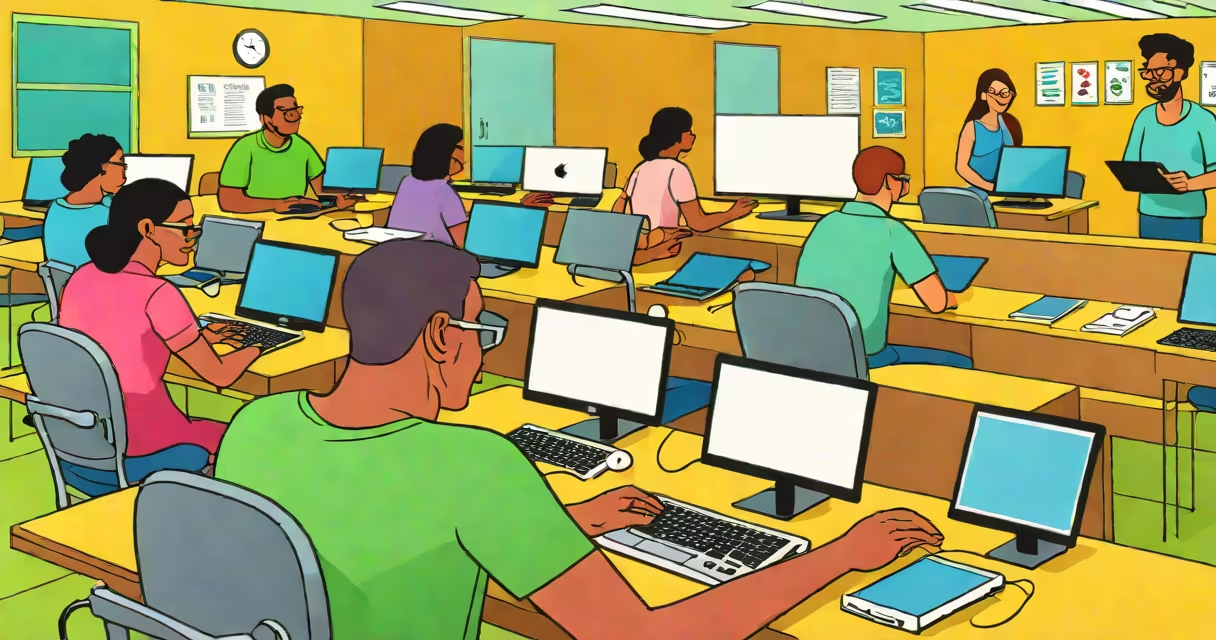
Basic computer classes for adults are structured learning programs designed to teach fundamental digital skills such as using a mouse and keyboard, going through operating systems, sending emails, browsing the web, and managing files. These courses are tailored for individuals with little or no prior experience, often offered through libraries, community centers, senior organizations, and adult education providers.
Participants learn practical tools needed for daily life-managing bank accounts online, applying for jobs, accessing healthcare portals, and staying connected with family via video calls or messaging apps. Classes typically run 6 to 12 weeks, meet once or twice weekly, and require no prior technical knowledge.
According to the National Digital Inclusion Alliance, nearly 30% of U.S. adults lack basic digital literacy skills. Basic computer classes for adults close this gap by providing hands-on instruction in a low-pressure environment. Many programs are free or low-cost, especially those funded by local governments or nonprofits.
Courses follow a step-by-step curriculum focused on real-world applications. Instructors begin with physical components-turning on a computer, using a mouse, typing-and progress to software like Microsoft Windows or macOS, web browsers, and productivity tools such as Word and Excel.
Each session builds on the last. A typical week might include:
Classes emphasize repetition and practice. Learners complete guided exercises during class time and receive homework assignments to reinforce concepts. Instructors provide individual support, correcting mistakes in real time and adapting pace based on group progress.
Core topics in basic computer classes for adults cover foundational digital competencies. These are standardized across reputable programs, including those offered by the American Library Association and the U.S. Department of Labor's Employment and Training Administration.
| Topic | Key Skills Taught | Real-World Use Case |
|---|---|---|
| Hardware Basics | Identifying ports, turning on/off devices, connecting peripherals | Setting up a home printer or external hard drive |
| Operating System Navigation | Using taskbars, minimizing windows, managing folders | Organizing photos into labeled folders |
| Internet & Email | Searching safely, recognizing phishing attempts, composing messages | Applying for a job online using a resume attachment |
| Productivity Software | Creating documents, formatting text, saving files | Writing a letter to a doctor's office requesting records |
Many programs also include modules on cybersecurity basics-how to avoid scams, update passwords regularly, and recognize suspicious links. This is critical: a 2023 Federal Trade Commission report found that adults aged 60+ were the fastest-growing group targeted by online fraud.
Some assume basic computer classes for adults are only for older people. While many participants are over 55, the programs serve anyone who lacks confidence or experience with technology. A 2022 Pew Research Center survey showed that 41% of adults aged 18-49 still struggle with basic digital tasks like updating software or troubleshooting a frozen screen.
A less obvious but important distinction: not all "computer classes" are equal. Some community centers offer informal drop-in sessions with no structure or assessment. True basic computer classes for adults have a defined syllabus, consistent attendance tracking, and a final evaluation to confirm skill acquisition.
Most public libraries offer free basic computer classes for adults. For example, the New York Public Library runs a "Digital Learn" program with 12-week courses taught by trained volunteers. Registration is online or in person, and materials are provided at no cost.
Community colleges often host adult education divisions with affordable or subsidized courses. The Los Angeles Community College District offers a "Computer Essentials" course for $45, covering everything from startup procedures to cloud storage options.
Online platforms like Coursera and edX partner with universities to deliver free introductory courses. "Computing Fundamentals" from the University of London, available through Coursera, includes video lessons, quizzes, and peer-reviewed assignments. Completion certificates are issued upon passing the final exam.
I attended a six-week basic computer class at my local library in 2021. The room held 12 students, mostly retirees. We started with turning on the computer and progressed to sending our first email with an attachment. By week four, one participant successfully applied for a prescription refill online-a milestone she had avoided for years due to fear of making a mistake. Her relief was visible. That moment confirmed the real value of these classes: not just learning, but gaining autonomy.
Beyond mastering software, participants report increased confidence, reduced isolation, and improved access to services. A 2021 study published in the Journal of Adult Education found that 78% of adult learners in basic computer classes reported feeling more capable in managing personal affairs after completing the course.
These classes also build social connection. Group settings allow participants to share problems, celebrate small wins, and build mutual support networks. One student in my class started a WhatsApp group with classmates to exchange tips and troubleshoot issues between sessions.
For caregivers, these classes reduce stress. Knowing a loved one can independently check their medication schedule or contact a doctor reduces anxiety and increases independence. As one instructor noted, "Teaching someone to use a computer isn't just about the clicks-it's about restoring dignity."
Basic computer classes for adults are not a one-size-fits-all solution. They vary by location, provider, and format. But their purpose remains clear: to equip adults with the tools to participate fully in a digital society. Whether it's applying for a job, managing finances, or staying in touch with grandchildren, these classes deliver tangible results.