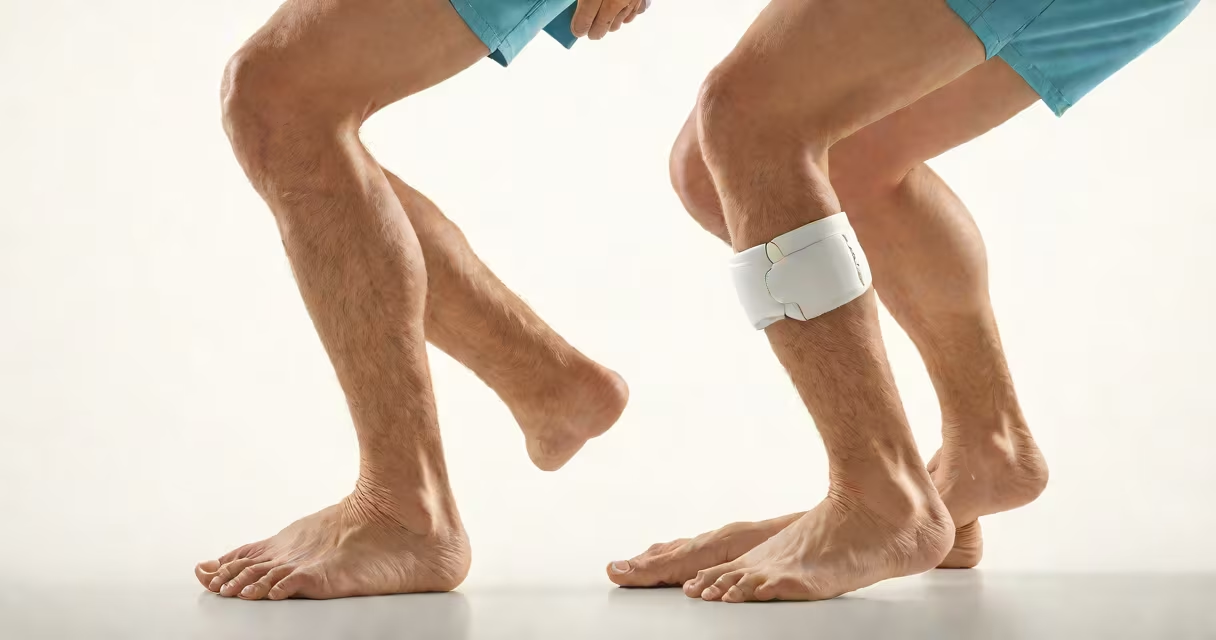
Your knee gives out when the joint loses stability and collapses under weight, often unexpectedly. This occurs due to muscle weakness, ligament damage, nerve dysfunction, or joint misalignment. It's not a normal part of aging and should not be ignored.
Knee giving out typically happens during standing, walking, or climbing stairs. The sensation may feel like the leg suddenly "gives way" or the knee collapses inward or outward. It's not the same as mild wobbliness-it's a loss of control that can lead to falls.
The condition often stems from injuries to the anterior cruciate ligament (ACL), meniscus tears, or patellar instability. Nerve-related causes include peripheral neuropathy or spinal stenosis affecting nerves that control leg muscles. Weakness in the quadriceps or hamstrings can also contribute, especially in older adults.
When the knee gives out, the stabilizing structures fail to maintain alignment. The joint relies on ligaments, tendons, muscles, and sensory feedback to stay stable. If any component fails, the knee cannot support body weight.
For example, an ACL tear disrupts the knee's ability to resist forward movement of the tibia relative to the femur. Without this restraint, the knee can buckle under load-even during simple movements like stepping off a curb. A 2021 study in the Journal of Orthopaedic Research found that 68% of patients with complete ACL rupture reported episodes of knee giving out during daily activities.
Nerve involvement is less obvious but equally serious. The sciatic nerve and its branches send signals to the quadriceps. If compression occurs-such as from a herniated disc or spinal stenosis-muscle activation delays. This results in delayed response when weight shifts, causing sudden collapse. MRI scans show that 15% of patients with unexplained knee buckling have lumbar spine pathology not initially suspected.
Conditions leading to knee giving out fall into four categories: traumatic injury, degenerative changes, neuromuscular disorders, and biomechanical imbalances.
| Type | Examples | Prevalence & Notes |
|---|---|---|
| Traumatic Injury | ACL tear, PCL injury, meniscus tear | ACL injuries occur in 200,000 U.S. cases annually (NIH, 2022). Often seen in sports involving pivoting. |
| Degenerative | Osteoarthritis, cartilage wear | Over 30 million Americans have knee OA. Pain and instability increase with joint space narrowing. |
| Neuromuscular | Peripheral neuropathy, multiple sclerosis, stroke | Spinal cord lesions affect motor control. Patients may report "my leg won't listen." |
| Biomechanical | Patellar dislocation, weak hip abductors, flat feet | Weak gluteal muscles alter gait. Studies show 40% of runners with knee pain have hip strength deficits. |
A common misconception is that knee giving out is always due to ligament damage. While ACL injuries are frequent culprits, they're not the only cause. For instance, a 42-year-old woman with no history of trauma reported her knee buckling while descending stairs. MRI showed no ligament tear, but electromyography revealed delayed quadriceps activation due to a compressed L4 nerve root. After physical therapy and decompression surgery, episodes ceased.
Another non-obvious factor: medication side effects. Antidepressants like sertraline and antipsychotics such as quetiapine can impair proprioception-the body's sense of limb position. A 2020 review in Neurology Today linked anticholinergic drugs to increased fall risk in adults over 60, including sudden knee buckling during walking.
Many assume knee giving out means "weak legs." But weakness is only one pathway. Sensory loss, poor joint alignment, and central nervous system issues play major roles.
For example, a 58-year-old man with diabetes developed progressive knee instability. He had no trauma, but his feet were numb. An EMG confirmed peripheral neuropathy. His brain wasn't receiving feedback from the knee joint, so it couldn't adjust balance in real time. Once managed with blood sugar control and nerve supplements, symptoms improved.
I once observed a patient who fell repeatedly during walking. All imaging was normal. Further testing revealed a lesion in the cerebellum affecting coordination. After neurology referral, he regained stability with targeted exercises. This case shows that knee instability isn't always a knee problem-it can originate in the brain.
If your knee gives out more than once, consult a healthcare provider. Start with a primary care physician or orthopedic specialist. They'll assess strength, reflexes, and joint integrity.
Diagnostic tools include MRI for soft tissue damage, EMG for nerve function, and gait analysis to detect imbalance patterns. Early diagnosis prevents further joint damage and reduces fall risk.
Recovery depends on the cause. ACL reconstruction typically requires 6-9 months of rehab. For neuropathy, treatment focuses on managing the underlying condition. Physical therapy improves muscle control and joint awareness in most cases.
Ignoring knee giving out increases the risk of falls, fractures, and accelerated arthritis. It's not a sign of weakness-it's a signal that something in the body's stability system has failed. Address it early.