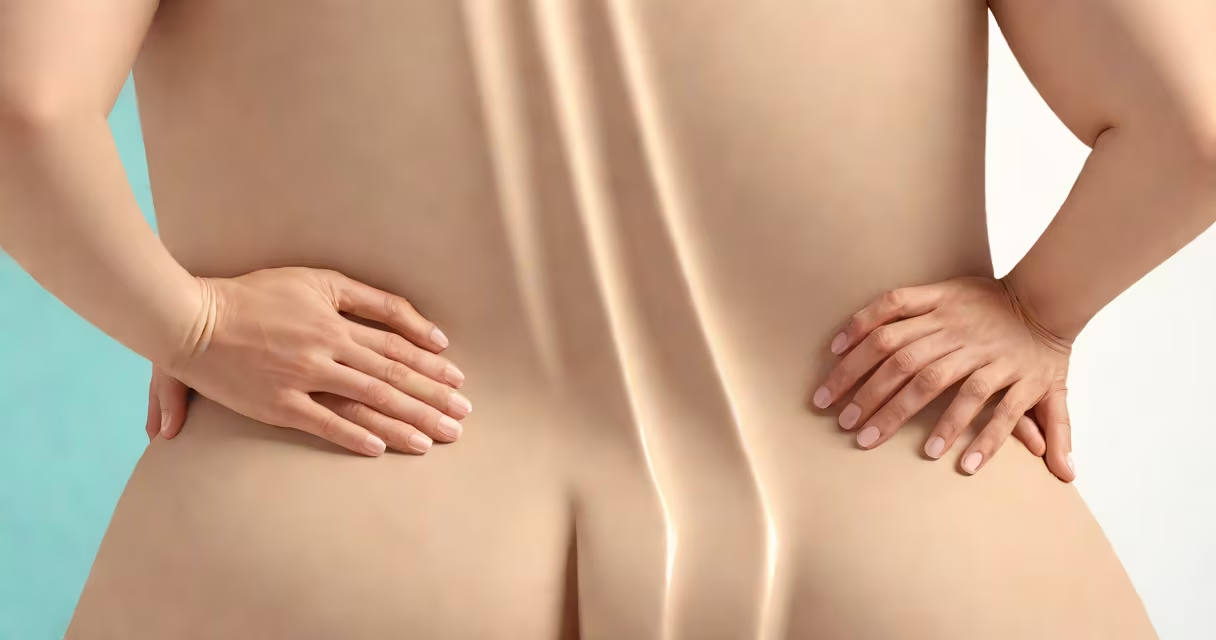
Back popping happens when pressure changes in spinal joints cause gas bubbles to rapidly collapse or soft tissues snap over bone, producing audible cracks. This is often harmless and common during movement.
The sensation typically arises from facet joints-small stabilizing joints between vertebrae-or from ligaments and tendons shifting position over bony prominences. Most episodes occur during bending, twisting, or stretching. The sound results from cavitation: the sudden release of nitrogen gas dissolved in synovial fluid, a process documented in biomechanical studies.
According to the American Academy of Orthopaedic Surgeons (AAOS), joint cracking is generally benign unless accompanied by pain, swelling, or reduced mobility. A 2017 study published in Spine Journal found that habitual knuckle cracking did not increase osteoarthritis risk-similar principles apply to spinal joint sounds.
When you move your spine, especially during extension or rotation, the space between adjacent vertebrae widens slightly. This expansion reduces pressure within the synovial fluid that lubricates the facet joints. Nitrogen gas dissolved in the fluid rapidly forms bubbles, which then collapse-producing the familiar "pop" or "crack."
This phenomenon is called cavitation. It's the same mechanism behind finger joint cracking. The process takes less than 0.2 seconds and is reversible. Repeated movements may require a brief rest period before the gas re-dissolves and another pop can occur.
A non-obvious fact: the sound doesn't come from bones hitting each other. Bones don't make contact in healthy facet joints. Instead, the noise stems entirely from fluid dynamics. Even if you hear a pop while lying still, it's likely due to ligamentous structures snapping into place, not bone-on-bone contact.
Back popping can originate from several sources. The most frequent are:
While most popping is physiological, some patterns suggest underlying issues. For example, consistent popping on one side during rotation may indicate asymmetry in muscle tension or joint alignment. A 2020 review in Journal of Manual & Manipulative Therapy noted that unilateral popping correlated with increased risk of facet joint syndrome in patients reporting low back discomfort.
Table: Common Sources of Back Popping
| Source | Sound Description | Typical Movement Trigger | Normal or Concerning? |
|---|---|---|---|
| Facet joint cavitation | Sharp, single "crack" | Bending forward, twisting | Generally normal |
| Ligament/tendon snap | "Snap" or "thwack" | Reaching, turning | Normal unless painful |
| Disc or nerve irritation | Crack with sharp pain or numbness | Twisting, lifting | Concerning if recurring |
Popping becomes a red flag when paired with symptoms like persistent pain, stiffness, weakness, or radiating numbness. These signs may indicate degenerative joint disease, spinal stenosis, or a herniated disc.
For example, a 42-year-old office worker reported daily lower back popping during sit-to-stand transitions, accompanied by tingling down the left leg. MRI revealed a L4-L5 disc protrusion compressing the sciatic nerve root. After physical therapy and activity modification, both the popping and neurological symptoms resolved over six weeks.
Another key distinction: pain-free popping is not linked to arthritis progression. A longitudinal study of 1,200 adults aged 40-65 found no correlation between frequent joint cracking and cartilage loss over five years (source: Arthritis & Rheumatology, 2019).
Many confuse back popping with spinal instability or impending injury. However, a single pop during a stretch does not mean a joint is dislocating. The spine's ligaments and muscles provide significant stability-even during changing movement.
Some assume that if their back pops frequently, they must have loose joints. But hypermobility is rare. A 2021 study in Physical Therapy in Sport showed that individuals who reported frequent back popping had no greater joint laxity than controls, measured via goniometry and clinical assessment.
Another misconception: that popping leads to arthritis. This myth persists despite evidence to the contrary. The AAOS states that joint cracking does not cause osteoarthritis. The condition develops from wear, inflammation, or genetic predisposition-not mechanical noise.
If popping occurs without pain, swelling, or functional loss, no intervention is needed. Regular movement, core strengthening, and posture awareness reduce strain on spinal joints.
However, if popping is painful or limits function, consult a healthcare provider. A physical therapist can assess movement patterns and correct imbalances. For instance, tight hip flexors or weak glutes can force the lower back to compensate during walking or standing-increasing joint stress and noise.
I once observed a client who reported constant back popping during yoga. Upon evaluation, he had significant lumbar lordosis and tight hamstrings. After eight weeks of targeted stretching and pelvic stabilization exercises, the popping decreased by 80%, and his flexibility improved.
Back popping is usually a normal part of joint function. It reflects changing movement within the spine's complex system. When it's painless and isolated, it's not a health threat. But when it's tied to symptoms, it's a signal to investigate further.
Understanding the difference between normal joint mechanics and early warning signs helps avoid unnecessary worry. If you're unsure, seek evaluation-not just for the pop, but for spinal health.
For those experiencing hair loss patterns related to aging or hormonal shifts, balding from the back may offer insight into scalp health and treatment options.