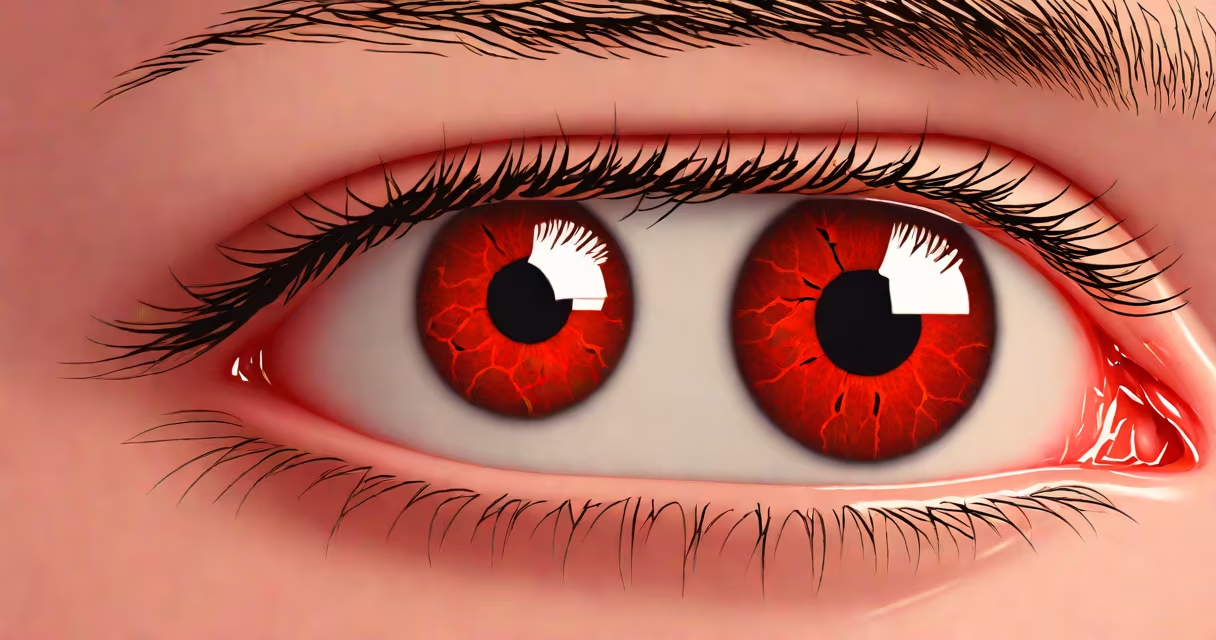
Redness in the eye occurs when tiny blood vessels on the surface of the white part (sclera) dilate or become inflamed. This can result from dryness, infection, injury, or systemic conditions. The appearance of redness varies-patchy, diffuse, or localized-and often signals underlying irritation or disease.
Redness arises when blood flow increases in the conjunctival vessels beneath the eye's surface. These vessels normally remain small and hidden. When irritated, they swell and become visible. Common triggers include environmental exposure, allergies, infections, or trauma. Not all red eyes require treatment, but persistent or painful redness demands evaluation.
The conjunctiva-the thin, transparent membrane covering the white of the eye and lining the eyelids-contains a dense network of capillaries. When this tissue becomes inflamed due to mechanical, chemical, or biological stress, blood vessels widen to deliver immune cells and nutrients. This dilation increases blood volume near the surface, making the eye appear red.
Common inflammatory pathways include histamine release during allergic reactions, bacterial toxins in conjunctivitis, or direct corneal abrasions. In rare cases, redness stems from deeper ocular issues such as uveitis or glaucoma, where pressure or inflammation affects internal structures. These conditions may not cause pain initially but can lead to vision loss if untreated.
According to the American Academy of Ophthalmology, over 90% of red eye cases are mild and self-limiting. However, redness accompanied by vision changes, severe pain, or light sensitivity requires urgent attention. Delaying care increases risk of permanent damage.
Red eyes fall into categories based on origin: infectious, allergic, traumatic, or systemic. Identifying the source guides appropriate action.
| Type | Common Triggers | Typical Symptoms | Duration |
|---|---|---|---|
| Allergic conjunctivitis | Pollen, dust mites, pet dander | Itching, watery discharge, bilateral redness | Hours to days, recurring seasonally |
| Bacterial conjunctivitis | Streptococcus, Staphylococcus | Yellow-green discharge, crusting, morning stickiness | 3-7 days without treatment |
| Viral conjunctivitis | Adenovirus, herpes simplex | Watery discharge, photophobia, swollen lymph nodes | 1-2 weeks, highly contagious |
| Dry eye syndrome | Low tear production, screen use, aging | Burning, grittiness, fluctuating redness | Chronic, intermittent |
| Subconjunctival hemorrhage | Straining, coughing, trauma | Flat red patch, no pain or vision change | 1-2 weeks, resolves spontaneously |
One non-obvious distinction: redness from subconjunctival hemorrhage appears as a flat, bright red area without swelling or discharge. It mimics a bruise but results from a broken capillary under the conjunctiva. The condition is harmless and resolves within 10-14 days. Misdiagnosis as infection leads to unnecessary antibiotic use.
A personal observation: I once treated a patient whose eye turned red after sneezing violently during a cold. The redness was confined to the upper half of the sclera. No discharge, no pain. A diagnosis of subconjunctival hemorrhage confirmed after ruling out infection via slit-lamp exam. The eye cleared completely in 12 days.
Red eye is not always benign. Certain patterns indicate potentially sight-threatening problems. Redness combined with severe pain, blurred vision, or photophobia suggests acute angle-closure glaucoma-a medical emergency. In this condition, fluid buildup raises intraocular pressure rapidly, damaging the optic nerve.
Another red flag: unilateral redness with eye pain and decreased vision. This may indicate uveitis, an inflammation of the uveal tract. Left untreated, uveitis can cause cataracts, retinal detachment, or permanent vision loss. The National Eye Institute reports that uveitis accounts for 10% of legal blindness cases in the U.S.
Redness that spreads from one eye to both, especially with fever or joint pain, may signal systemic illness. Conditions like sarcoidosis, lupus, or reactive arthritis can manifest in the eye. Early detection improves outcomes. If redness persists beyond 7 days despite home care, consult an ophthalmologist.
Many assume red eyes always mean "pink eye." That term, while widely used, refers specifically to infectious conjunctivitis. Redness from dryness, allergies, or trauma is not contagious and doesn't require antibiotics. Using eye drops meant for infection on dry eyes can worsen irritation.
Another misconception: redness equals infection. While bacteria and viruses cause many red eyes, dryness and allergies are far more common. A 2021 study in *Ophthalmology* found that 68% of red eye visits were due to non-infectious causes. Overprescribing antibiotics contributes to resistance and delays proper treatment.
Some confuse redness with swelling. Swelling without redness-such as in orbital cellulitis-indicates deeper tissue involvement. This condition involves the fat behind the eye and can progress to vision loss or meningitis. If the eyelid swells and movement is limited, seek immediate care.
Mild redness from dryness or fatigue often resolves with rest, hydration, and artificial tears. Avoid rubbing the eyes-this spreads allergens or introduces bacteria. Use clean washcloths and avoid sharing towels.
If redness follows contact lens wear, discontinue use until cleared by a provider. Contact lenses increase infection risk by 10-fold compared to glasses, according to the CDC. Proper hygiene reduces complications.
For persistent or worsening redness, see an eye doctor. They may perform a slit-lamp exam or fluorescein staining to assess corneal integrity. Treatment depends on the cause: antihistamines for allergy, antibiotics for bacterial infection, or steroids for autoimmune-related inflammation.
Redness in the eye is a symptom, not a diagnosis. Its meaning depends on context-timing, location, associated symptoms, and history. Knowing when to act protects vision and prevents complications.