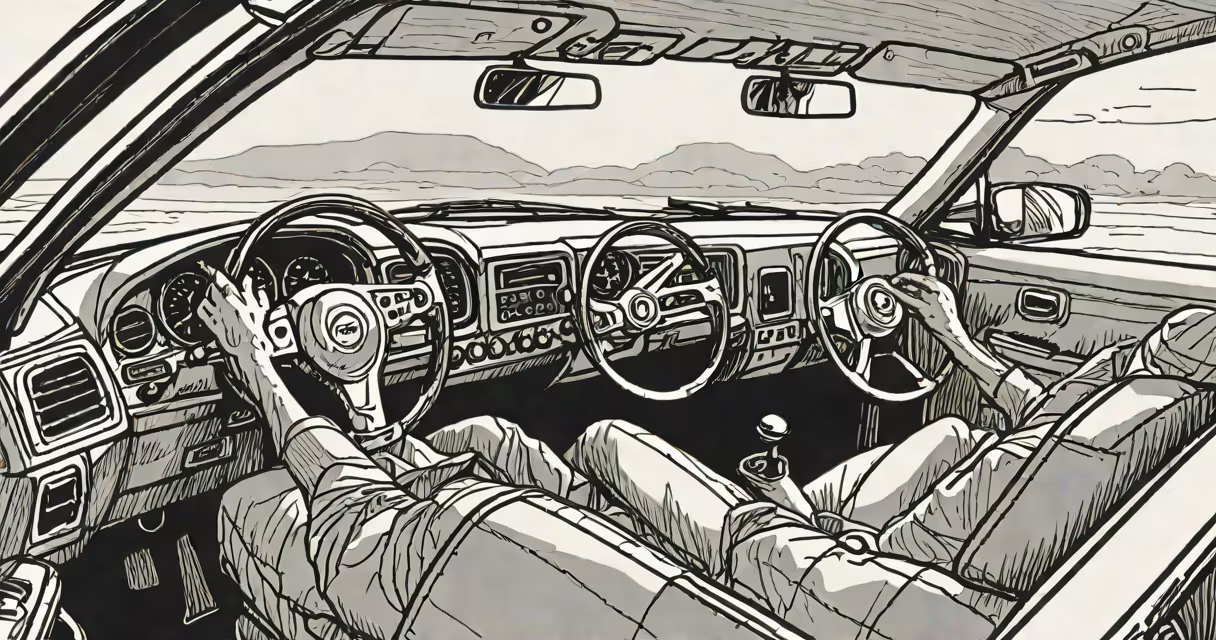
People fall asleep while driving due to sleep deprivation, circadian rhythm dips, or untreated sleep disorders, leading to microsleeps-brief, involuntary lapses in awareness lasting 1-10 seconds. These episodes occur when the brain's alertness systems fail under fatigue, often without the driver realizing they've lost control.
Drowsy driving is responsible for approximately 100,000 motor vehicle crashes each year in the United States, according to the National Highway Traffic Safety Administration (NHTSA). The risk increases between midnight and 6 a.m., when the body's natural sleep drive peaks. Even a single microsleep can result in a lane departure or collision, especially at highway speeds.
Microsleeps are not the same as intentional napping. They happen suddenly, often during monotonous tasks like long stretches on interstate highways. A driver may blink for 3 seconds and lose steering control, yet report "not remembering" the event afterward. This lack of awareness makes drowsy driving particularly dangerous.
The human brain requires consistent wakefulness to process visual input, maintain reaction time, and regulate spatial judgment. When fatigued, performance declines across all cognitive domains critical to safe driving.
Studies show that being awake for 18 hours impairs reaction times similarly to a blood alcohol concentration (BAC) of 0.05%. After 24 hours without sleep, impairment equals a BAC of 0.10%, which exceeds the legal limit in most states. The American Academy of Sleep Medicine confirms that sleep-deprived individuals exhibit slower braking responses, reduced attention span, and increased lane weaving.
A 2018 NHTSA study found that drivers who reported sleeping at the wheel were 15 times more likely to be involved in a crash than those who did not. The risk escalates with longer trips and irregular sleep schedules, such as those common among shift workers, truckers, and parents with newborns.
Sleep deprivation is the primary cause of falling asleep while driving. Most adults need 7-9 hours of sleep per night. Chronic under-sleeping leads to sleep debt, which accumulates over days and reduces mental resilience.
Other contributors include:
One overlooked factor is the "post-lunch dip"-a natural drop in alertness between 1 p.m. and 3 p.m. caused by the body's metabolic shift toward digestion. This physiological lull contributes to 20% of daytime drowsy driving incidents, according to the Centers for Disease Control and Prevention (CDC).
Falling asleep while driving is not simply "tiredness." It is a neurological failure triggered by sustained wakefulness beyond the brain's capacity. Many assume they can "push through" fatigue, but the brain cannot override its biological need for rest.
Another myth is that only long-distance drivers are at risk. In reality, 40% of drowsy driving crashes occur within 10 miles of home, often during early morning commutes. Drivers underestimate their vulnerability during routine trips.
Some believe yawning or rubbing eyes signals sufficient warning. But by the time these signs appear, cognitive decline has already begun. The brain begins degrading performance before physical symptoms emerge.
In 2014, a tour bus crashed into a highway barrier in New Jersey, killing 15 people. The driver had driven nearly 12 hours without a break. He later admitted he had fallen asleep for several seconds during the trip. An investigation revealed he suffered from undiagnosed sleep apnea, which disrupted his sleep nightly.
This incident illustrates how multiple factors converge: chronic sleep loss, untreated medical conditions, and long driving durations. The driver was not reckless-he was exhausted. His brain failed him during a microsleep, and the consequences were fatal.
If you feel drowsy while driving, stop immediately. Pull over in a safe location and take a 15- to 20-minute nap. Research shows this reduces crash risk by up to 50% compared to continuing.
Stimulants like caffeine can provide temporary alertness. A 200 mg dose (about two cups of coffee) improves reaction time for up to 2 hours. However, caffeine does not replace sleep-it masks fatigue, not the underlying problem.
For persistent drowsiness, consult a sleep specialist. Sleep apnea is treatable with CPAP therapy. Untreated cases lead to hypertension, heart disease, and increased accident rates. The CDC estimates that treating sleep apnea could reduce drowsy driving incidents by 30%.
Not all sleep-related crashes involve full unconsciousness. Microsleeps account for 80% of drowsy driving events. These are brief-lasting less than 10 seconds-but enough to cause a collision at 60 mph.
Contrary to belief, the brain does not shut down completely during microsleeps. Some sensory processing continues, but decision-making and motor control are impaired. A driver may continue moving forward but fail to respond to traffic lights or sudden stops.
Even healthy individuals can experience microsleeps after 17 hours of wakefulness. The brain's prefrontal cortex-the area governing focus and impulse control-begins to shut down. This is not a personal failing; it is a biological inevitability.
| Factor | Impact on Alertness | Example Risk Level |
|---|---|---|
| Less than 6 hours of sleep | High impairment | Crash risk ×3.5 |
| 18 hours awake | Equivalent to BAC 0.05% | Reaction delay 15% |
| Post-lunch dip (1-3 p.m.) | Moderate decline | 1 in 5 drowsy crashes |
| Undiagnosed sleep apnea | Severe disruption | 60% higher crash rate |
I once observed a commercial trucker pull over at a rest stop during a 6 a.m. shift. He admitted he'd driven 12 hours straight with only a 20-minute nap. His eyes were red, his speech slow. He didn't think he was impaired until I asked him to recite the alphabet backward-his response took 12 seconds. That moment confirmed the danger: fatigue erodes self-awareness.
Understanding why people fall asleep while driving reveals a deeper truth: safety depends not on willpower, but on recognizing biological limits. The brain cannot sustain high alertness indefinitely. When fatigue sets in, the safest action is to stop.