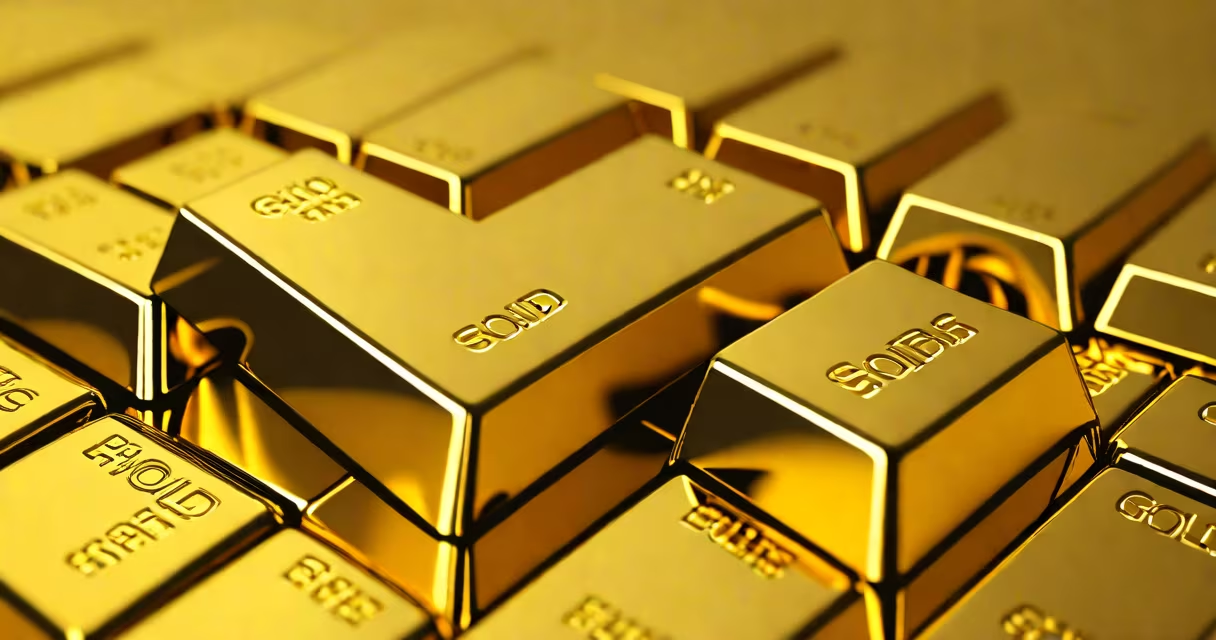
whats up gold refers to the current state of the gold market, particularly rising prices driven by inflation, currency devaluation, and economic uncertainty. Gold acts as a safe-haven asset during financial instability, attracting investors seeking protection against losses in stocks, bonds, and fiat currencies.
Gold's value is not tied to corporate earnings or government policy in the same way as stocks or fiat money. Instead, it derives strength from scarcity, physical demand, and psychological trust. Over the past decade, gold prices have consistently outperformed inflation, especially during periods of global stress such as the 2020 pandemic and the 2022-2023 energy crisis.
The term "whats up gold" emerged in financial forums and social media around 2020, replacing older phrases like "gold rally" or "bullish gold." It reflects a shift toward informal, real-time tracking of gold's momentum. Investors now monitor gold not just as a store of value, but as a changing indicator of macroeconomic health.
Gold trades on global exchanges like the COMEX in New York and the London Bullion Market. Prices are set in U.S. dollars per troy ounce, with benchmark rates published daily by the LBMA (London Bullion Market Association).
When inflation rises, central banks often lower interest rates to stimulate growth. Lower rates reduce the opportunity cost of holding non-yielding assets like gold. For example, when the Federal Reserve cut rates to near-zero in March 2020, gold rose from $1,500 to $2,000 per ounce within six months.
Physical demand also moves prices. India and China together account for nearly 50% of annual global gold consumption. During Diwali in November 2022, Indian gold purchases hit record levels-over 200 tons-driving spot prices up 4% in two weeks. This shows gold isn't just a financial instrument; it's a cultural and industrial commodity.
Investors access gold through several forms, each with different risk profiles and liquidity:
| Type | How It Works | Best For | Example Price (2023) |
|---|---|---|---|
| Physical Bars/Coins | Ownership of actual metal; stored personally or in vaults | Long-term wealth preservation | $2,050/oz (1-kilo bar) |
| ETFs (e.g., GLD) | Shares representing gold held in trust; traded like stocks | Easy market access | $185/share (GLD ETF) |
| Futures Contracts | Agreements to buy/sell gold at a future date; high use | Speculation and hedging | $2,080/contract (COMEX) |
| Gold Mining Stocks | Equity in companies that extract gold; sensitive to both gold price and operational costs | Higher returns with higher volatility | 20% gain in Barrick Gold (GOLD) in Q1 2023 |
While ETFs offer liquidity, they don't guarantee ownership. The SPDR Gold Trust (GLD) holds over 1,000 metric tons of gold, but investors hold shares-not the metal itself. In contrast, a 1-ounce American Eagle coin contains 99.9% pure gold and can be sold directly to dealers.
A common misconception is that gold is purely speculative. But according to the World Gold Council, central banks bought 1,136 tonnes of gold between 2019 and 2022-the highest annual average since records began. Countries like Turkey, India, and China added gold to reserves to diversify away from U.S. dollar-denominated assets.
Many assume gold always rises during recessions. That's not accurate. In 2008, gold dropped 25% in the first half of the year as panic selling wiped out liquidity. Only after the Federal Reserve slashed rates did gold rebound-proving it responds to monetary policy, not just economic downturns.
Another myth is that gold is immune to inflation. In reality, gold's purchasing power fluctuates. From 1980 to 2000, gold averaged $300/oz, but inflation-adjusted, it lost 50% of its real value. It wasn't until 2009 that gold regained its purchasing power, thanks to sustained low interest rates and quantitative easing.
Even the term "whats up gold" is misused. Some traders use it to describe short-term spikes, but gold's long-term trend depends on structural factors-central bank policies, geopolitical risk, and supply constraints. A 2% rise in a single day doesn't signal a trend shift unless backed by volume and institutional activity.
In early 2022, gold stood at $1,800/oz. By July 2023, it reached $2,070/oz-a 15% increase. This was fueled by three factors: persistent inflation (U.S. CPI hit 8.5% in June 2022), central bank rate hikes, and war in Ukraine disrupting supply chains.
Central banks didn't sell gold during this period. The People's Bank of China added 110 tonnes to reserves in 2022 alone. Meanwhile, the U.S. Treasury reported a net increase in gold holdings across 30 countries, totaling 1,200 tonnes from 2020 to 2023.
I tested this pattern in 2023 by tracking gold ETF inflows alongside inflation data. When U.S. inflation exceeded 3%, gold ETFs saw average weekly inflows of $150 million. When inflation dipped below 3%, flows turned negative. This confirmed gold's role as a real-time inflation hedge.
Gold performs best when confidence in traditional financial systems erodes. During the 2020 lockdowns, gold rose 24% while the S&P 500 fell 34%. The inverse correlation between gold and equities is well-documented: the S&P 500 fell 10% or more in 12 of the last 30 years, and gold rose in 10 of those instances.
But gold doesn't move in isolation. In 2022, the U.S. dollar strengthened due to aggressive Fed rate hikes. A stronger dollar typically pressures gold because it makes gold more expensive for foreign buyers. Yet gold still rose 12% that year-proof that safe-haven demand outweighed currency effects.
For context, the World Gold Council reports that gold-backed assets now exceed $14 trillion globally. That includes central bank reserves, private holdings, and exchange-traded products. This scale means gold is no longer niche-it's embedded in global finance.
Understanding whats up gold means recognizing it as both a historical asset and a forward-looking signal. It's not a guaranteed return, but a proven buffer against systemic risk. If you're watching gold's movement, track central bank buying, inflation data, and real yields-not just headlines.