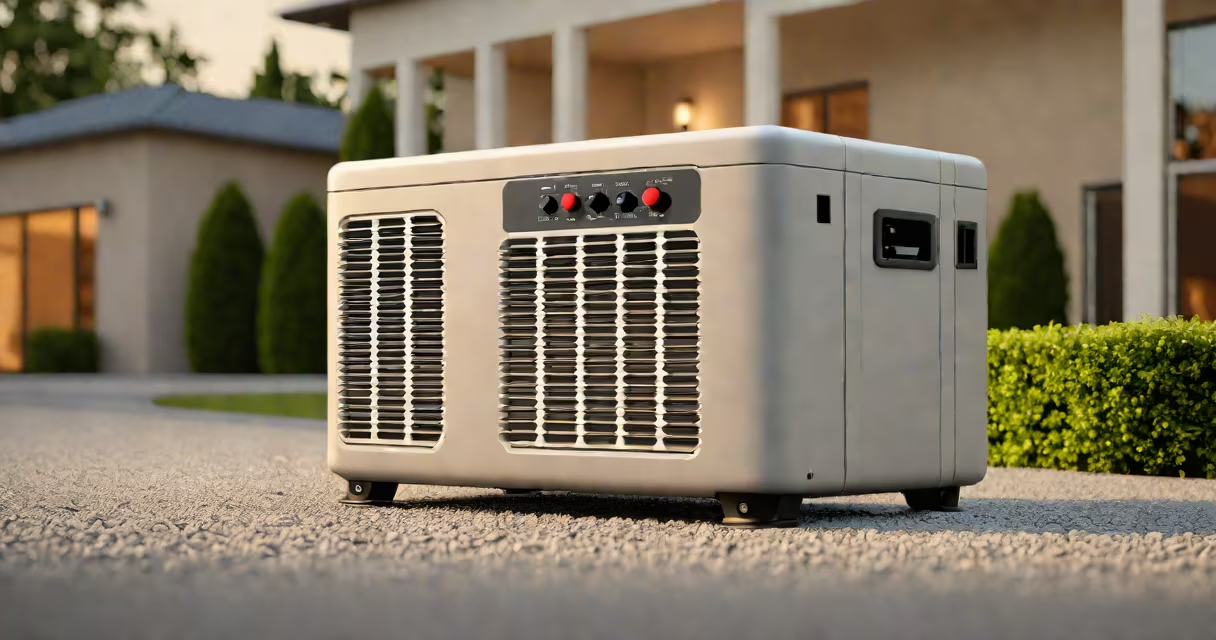
A house generator must supply enough continuous wattage-typically between 5,000 and 20,000 watts-to run critical systems like HVAC, refrigeration, lighting, and electronics during a power outage. The correct type depends on runtime needs, fuel source, and whether the system operates automatically.
Generators for homes fall into three primary categories: portable, standby, and inverter models. Each serves different purposes based on power demand, installation complexity, and operational duration. Choosing the right one ensures reliability during extended outages and avoids overloading circuits.
Portable generators are manually operated and fueled by gasoline or propane. They typically range from 1,500 to 10,000 watts and are ideal for short-term use. Standby generators are permanently installed, connect to natural gas or liquid propane lines, and start automatically during outages. These units range from 10,000 to 50,000 watts and can power entire homes. Inverter generators produce clean, stable electricity suitable for sensitive electronics and are often used in RVs or outdoor events-but they're limited in capacity for whole-home use.
When utility power fails, a generator activates either manually (portable) or automatically (standby). The engine burns fuel to spin a rotor inside a stator, producing alternating current (AC). This AC is regulated through voltage regulators and circuit breakers before being sent to a distribution panel.
For a house, the generator must match the home's peak load-the combined wattage of all devices turned on simultaneously. A typical U.S. home uses around 1,500-3,000 watts under normal conditions, but peak loads can exceed 10,000 watts during startup of air conditioners or electric water heaters. A generator rated below this threshold risks tripping breakers or damaging equipment.
Standby systems integrate with a transfer switch that isolates the home's electrical panel from the grid and routes power from the generator. This process takes less than 10 seconds. Portable units require manual connection via heavy-duty extension cords and must be placed outdoors due to carbon monoxide emissions.
The table below compares the most common generator types used in homes.
| Type | Power Output | Fuel Source | Runtime | Installation | Best For |
|---|---|---|---|---|---|
| Portable | 1,500-10,000 watts | Gasoline, propane | 8-24 hours (varies) | None (manual) | Short-term outages, camping, tools |
| Standby | 10,000-50,000 watts | Natural gas, LP | Days (continuous) | Permanent, professional | Whole-home backup, automatic operation |
| Inverter | 1,000-6,000 watts | Gasoline, propane | 8-12 hours | None (portable) | Delicate electronics, RVs, outdoor work |
Standby generators are the only option capable of powering a whole house continuously. They connect directly to a home's electrical service panel and switch smoothly during outages. According to the U.S. Department of Energy, standby systems reduce downtime risk by 98% compared to portable units during storms.
Portable generators are cost-effective for occasional use. A 5,000-watt model costs $800-$1,500 and runs on standard gasoline. However, they cannot safely power large appliances like central air conditioning unless properly sized and monitored.
Inverter generators produce cleaner power than conventional models. Their internal electronics regulate voltage and frequency, making them safe for laptops, medical devices, and audio gear. But their maximum output rarely exceeds 6,000 watts-insufficient for whole-home backup.
Many homeowners assume any generator above 5,000 watts will power their entire house. This is incorrect. A 7,500-watt generator may run a fridge, lights, and a TV-but not a furnace, AC unit, and well pump simultaneously. Overloading causes tripped breakers or damage to the generator.
Another error is placing a portable generator indoors or under a covered porch. Carbon monoxide (CO) from exhaust can accumulate rapidly in enclosed spaces. The CDC reports over 400 annual CO poisonings linked to portable generators, with 60% occurring in garages or porches.
A lesser-known fact: standby generators don't just start automatically-they also monitor fuel levels and perform self-diagnostics. Modern units include remote monitoring via smartphone apps. A 2022 study by the National Fire Protection Association found that 83% of standby generator failures were due to poor maintenance, not design flaws.
Consider a homeowner in Ohio with a 2,500-square-foot home using:
Peak startup load totals 55,500 watts. A generator must handle this surge. A 20,000-watt standby unit with 15,000-watt surge capacity would meet the minimum requirement. The homeowner chose a 22,000-watt model with natural gas, allowing room for future additions like a home office server.
They installed it with a licensed electrician and a transfer switch. During a winter storm, the system activated within 8 seconds. All systems ran normally for 72 hours until power returned.
For smaller homes or partial backup, a 7,500-watt portable generator with a dual fuel tank (gasoline/propane) can support essential loads. But it requires manual setup and refueling every 8 hours.
If you live in a region prone to long outages-like Florida during hurricane season or the Northeast during winter storms-a standby generator is the most reliable choice. These systems are designed for continuous operation and integrate with home automation systems.
For seasonal cabins or weekend retreats, a portable generator is sufficient. A 5,000-watt model powers a small kitchen, lights, and a space heater. But it cannot sustain high-demand appliances.
As a personal note, I once used a 3,000-watt portable generator to power a refrigerator and a few lights during a snowstorm. It ran for 12 hours on a single tank. But when I tried to turn on the space heater, the breaker tripped. I learned that peak load matters more than average usage.
Understanding the difference between running watts and surge watts prevents costly mistakes. Always size your generator to handle startup surges, not just continuous draw.
The right generator for your home balances power needs, budget, and safety. A 10,000-watt standby generator with natural gas can reliably power a medium-sized home. A 5,000-watt portable unit suffices for emergencies. Knowing which type of generator can power a house ensures preparedness, safety, and peace of mind.