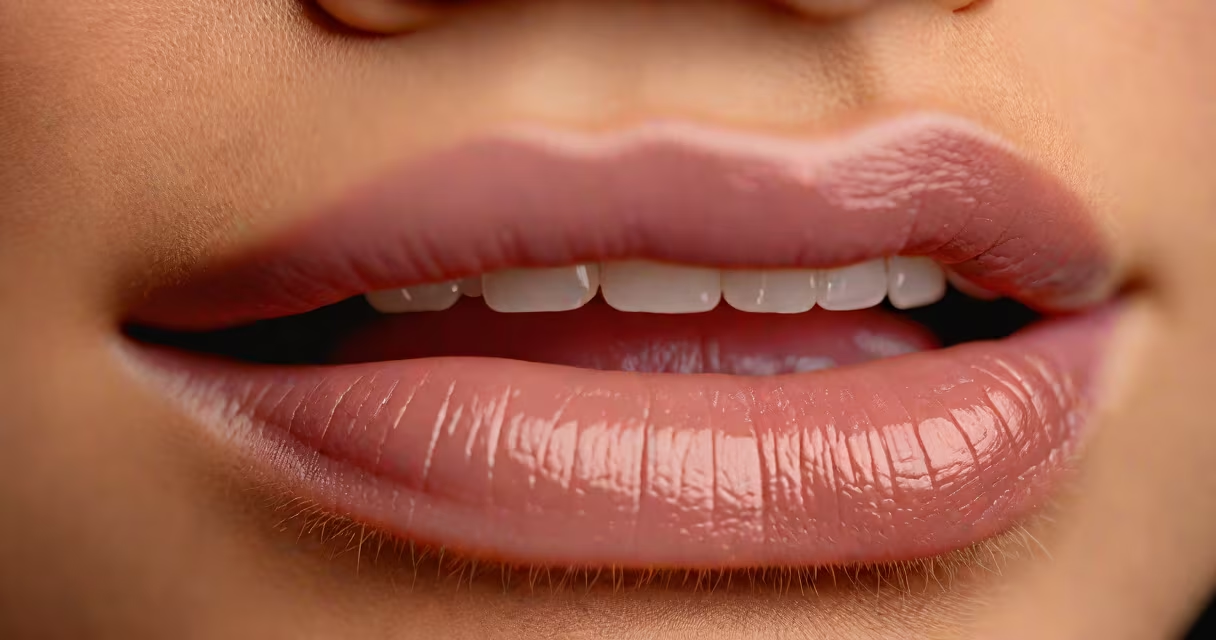
A speech sound is a discrete acoustic unit produced by the human vocal tract during spoken language, such as the /k/ in "cat" or the /z/ in "buzz." These units are the building blocks of words and are distinguishable by their unique pitch, duration, and articulatory configuration.
Speech sounds are not random noises-they are systematically organized within languages. Each language contains a finite set of speech sounds, known as phonemes, which serve to differentiate meanings. For example, changing the initial sound in "pat" from /p/ to /b/ creates "bat," a different word with a different meaning. This contrast demonstrates how speech sounds carry linguistic significance.
According to the American Speech-Language-Hearing Association (ASHA), speech sounds are formed through coordinated movements of the vocal apparatus-including the lungs, larynx, mouth, and nasal cavity-producing audible patterns that listeners interpret as meaningful language. Without accurate production and perception of these sounds, effective verbal communication breaks down.
Speech sounds originate in the lungs, where air is expelled to power vocalization. As air passes through the larynx, the vocal folds may vibrate (voicing) or remain still. This vibration creates the fundamental frequency of the voice, which is then shaped by the articulators-the tongue, teeth, lips, jaw, and soft palate.
For example, the /s/ sound in "sip" is created by directing airflow through a narrow channel between the tongue and the alveolar ridge (just behind the upper teeth). The resulting turbulence produces a high-frequency hissing noise. In contrast, the /m/ sound in "mom" involves closing the lips while lowering the velum (soft palate), allowing air to exit through the nose.
Articulatory phonetics-the study of how sounds are physically produced-classifies speech sounds based on place of articulation (where in the mouth they occur), manner of articulation (how the airflow is obstructed), and voicing (whether the vocal cords vibrate). These categories allow precise description of each sound's physical characteristics.
Speech sounds fall into two primary categories: consonants and vowels. Consonants involve partial or complete obstruction of airflow, while vowels are produced with an open vocal tract and minimal obstruction.
| Type | Examples | Articulation Feature |
|---|---|---|
| Stop (Plosive) | /p/, /t/, /k/ | Complete closure, then sudden release of air |
| Fricative | /f/, /s/, /ʃ/ (sh) | Narrow constriction causing turbulent airflow |
| Nasal | /m/, /n/, /ŋ/ (ng) | Air flows through the nose while the mouth is closed |
| Vowel | /i/ (as in "see"), /ɑ/ (as in "father") | Open vocal tract; no obstruction |
Each language uses a subset of the approximately 100 possible human speech sounds. English, for instance, uses around 44 distinct phonemes. Some sounds, like the /θ/ in "think" (interdental fricative), are rare cross-linguistically and may be challenging for non-native speakers to produce accurately.
Accurate perception and production of speech sounds are essential for understanding spoken language. Mishearing or mispronouncing a single sound can lead to confusion. For example, confusing /l/ and /r/-common among Japanese speakers learning English-can turn "light" into "right," altering meaning entirely.
Research from the National Institute on Deafness and Other Communication Disorders (NIDCD) shows that children who struggle with speech sound development often face later reading and academic challenges. A 2021 NIDCD study found that 15% of preschoolers exhibit persistent speech sound errors beyond age 5, which correlate with lower literacy outcomes.
Even adults can experience difficulties. After a stroke, some individuals develop aphasia, which may impair their ability to recognize or produce specific speech sounds. Speech-language pathologists use standardized assessments like the Goldman-Fristoe Test of Articulation to identify and treat such issues.
People often confuse speech sounds with letters. The letter "c" represents multiple sounds (/k/ in "cat" or /s/ in "city"), showing that written symbols don't map one-to-one onto spoken sounds. Similarly, the same sound can be spelled differently-/b/ appears in "bat," "sit," and "umbrella."
Another misconception is that all speech sounds are audible. Some, like the glottal stop /ʔ/ in "uh-oh" or the silent "e" in "cake," are either inaudible or functionally redundant. Yet they play roles in prosody and syllabic structure. The glottal stop in "button" (often pronounced "but'n") contributes to rhythm and regional accent variation.
Non-native speakers frequently misapply stress patterns tied to speech sounds. In English, stress shifts meaning: "record" (noun) vs. "record" (verb). Stress placement affects how sounds are emphasized and perceived, influencing comprehension.
The /θ/ (voiceless) and /ð/ (voiced) sounds are among the most difficult for learners of English. They are produced by placing the tip of the tongue between the upper and lower teeth, creating a friction-based sound.
Consider the phrase "Think of the difference." The /θ/ in "think" and "difference" requires precise tongue positioning. Many learners substitute /f/ or /s/, saying "fink of the diffrance." This substitution alters intelligibility. A speech therapist might use visual feedback tools or mirror exercises to correct the placement.
Even native speakers vary. In some dialects, such as African American Vernacular English (AAVE), the /θ/ and /ð/ sounds are often replaced with /f/ and /v/. This is not a deficit-it reflects systematic variation within a language community. Understanding this helps avoid stigmatizing dialect differences as errors.
In my work as a speech-language pathology assistant, I observed a 6-year-old boy consistently substituting /w/ for /r/-saying "wabbit" instead of "rabbit." His parents reported he had difficulty being understood in school. An assessment revealed he was missing the /r/ phoneme entirely, despite normal hearing and cognitive development.
We introduced tactile cues-placing a finger on the back of the tongue to feel the upward movement required for /r/. Over six weeks of targeted practice, including repetition drills and audio modeling, he began producing /r/ correctly in isolation and then in words. By month eight, his intelligibility improved, and teachers noted better classroom participation.
For deeper study, consult the International Phonetic Alphabet (IPA) chart published by the International Phonetic Association. It provides standardized symbols for representing all human speech sounds. The IPA is used in dictionaries, linguistic research, and speech therapy tools.
Speech sounds are not just mechanical outputs-they are carriers of identity, culture, and meaning. Recognizing their role in daily interaction strengthens both personal communication and professional practice.