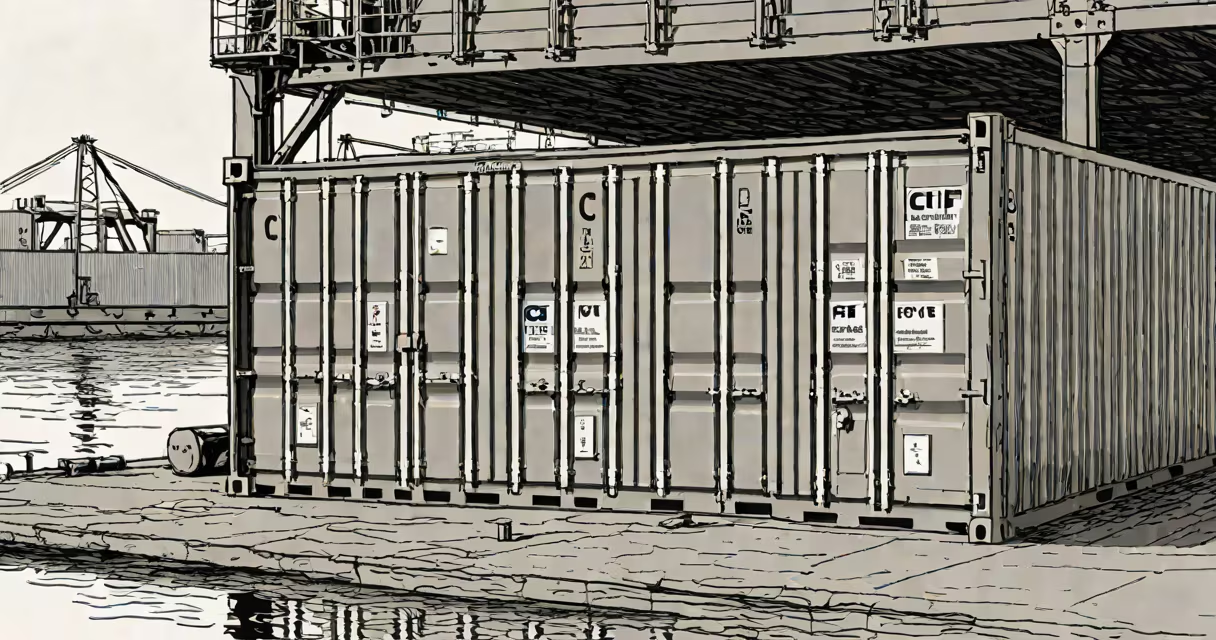
CIF stands for Cost, Insurance, and Freight-a shipping term under Incoterms® that defines the seller's responsibility to deliver goods to a named port of destination, covering the cost of shipping, insurance, and freight charges. The buyer assumes risk once the goods are loaded onto the vessel.
CIF is used in international trade to clarify who pays for what during shipment. Under this term, the seller arranges and pays for ocean freight and marine insurance to the destination port. The buyer takes over financial and legal responsibility when the goods are loaded onto the ship, even though they don't physically receive them until arrival.
The term applies only to sea or inland waterway transport. It does not cover air freight or land-only shipments. For example, if a manufacturer in Shenzhen ships electronics to Rotterdam using CIF, they pay for the vessel, insurance, and customs clearance at the port of entry-but the buyer handles unloading and domestic transport.
Under CIF, the seller must complete several steps before transferring risk. They arrange and pay for a contract with a carrier to move the goods via sea or river. They also purchase marine cargo insurance, typically covering 110% of the invoice value to protect against loss or damage during transit.
The seller provides the buyer with essential documents: a bill of lading, commercial invoice, packing list, and insurance certificate. These are required for customs clearance and payment processing. Once the goods are loaded onto the vessel, the risk shifts to the buyer-even if the cargo is damaged en route.
For instance, a U.S. retailer buying 500 units of a smartphone model from a supplier in Vietnam under CIF terms must expect delivery at the port of Los Angeles. The Vietnamese supplier arranges the shipping, buys insurance, and covers freight costs. The U.S. buyer pays import duties, unloads the containers, and handles distribution within the country.
CIF includes three core elements: cost (of goods), insurance (marine coverage), and freight (transport to destination port). All three are paid by the seller. The buyer is responsible for everything after the goods are loaded.
While CIF reduces upfront risk for the buyer, it increases their exposure to delays, customs issues, and port congestion. Buyers must ensure they have funds available for import fees, taxes, and local handling. Failure to do so can result in storage penalties or seizure of goods.
According to the International Chamber of Commerce (ICC), which publishes Incoterms®, CIF is one of 11 standardized trade terms. It was updated in 2020 to clarify that the seller must provide proof of insurance and document delivery status. This prevents disputes over whether obligations were met.
CIF is often mistaken for FOB (Free On Board), where the risk transfers at the loading port, not the destination. With FOB, the buyer arranges and pays for shipping and insurance. CIF shifts those costs to the seller.
Another error is assuming CIF includes customs clearance or duties. It does not. The buyer must handle import formalities, including paying VAT, tariffs, and local taxes. A shipment valued at $50,000 shipped under CIF to Germany may incur €4,500 in import duties-paid by the buyer.
Some buyers think CIF guarantees on-time delivery. It does not. Delays due to weather, strikes, or port congestion are the buyer's problem. The ICC notes that while sellers must act in good faith, they are not liable for delays beyond their control.
Understanding how CIF differs from similar terms helps avoid costly mistakes in contracts.
| Term | Seller Pays For | Risk Transfer Point | Best For |
|---|---|---|---|
| CIF | Freight, insurance, port charges | When goods are loaded on the vessel | Buyers wanting low initial risk |
| FOB | Transport to port, loading only | When goods are loaded on the vessel | Buyers with logistics teams |
| DAP | Transport to named destination | When goods arrive at the specified location | Buyers needing door-to-door delivery |
| EXW | None (buyer picks up at seller's facility) | At seller's premises | Buyers with full supply chain control |
For example, a European fashion brand sourcing silk scarves from India might choose DAP Delhi because they want the supplier to deliver the goods to their warehouse. Using CIF would require the brand to manage unloading and customs at the Indian port-an added layer of complexity.
In 2022, a Colombian coffee exporter sold 10 metric tons of specialty beans to a roaster in Seattle under CIF terms. The contract specified "CIF Seattle."
The exporter arranged a 40-foot container shipment via Maersk Line, paying $4,200 for ocean freight and $1,800 for marine insurance. The total value of the goods was $25,000. The exporter issued a commercial invoice, bill of lading, and insurance policy-all sent electronically to the buyer.
Once the container was loaded at the port of Buenaventura, risk transferred to the U.S. buyer. The roaster paid $3,200 in U.S. import duties and $1,100 in port handling fees upon arrival. The shipment arrived 12 days late due to a strike in Seattle, but the buyer had no claim against the seller-the delay wasn't covered under CIF.
This example shows that CIF doesn't guarantee delivery timelines or protect against logistical disruptions. The buyer still bears the cost of delays, even if the seller fulfilled all contractual obligations.
Under CIF, the seller must obtain insurance that covers the full value of the goods plus 10%. But the policy must name the buyer as the beneficiary. If the insurance is issued in the seller's name only, the buyer cannot file a claim if the cargo is lost.
Many small exporters overlook this requirement. A 2021 ICC audit found that 37% of CIF shipments from Southeast Asia failed to meet this clause, leading to disputes and delayed payments. Always verify that the insurance certificate lists the buyer as the insured party.
I once reviewed a CIF agreement between a U.S. importer and a Thai electronics supplier. The contract stated "CIF Miami," but the insurance policy listed only the seller as the insured. When a storm damaged 40% of the shipment during transit, the buyer attempted to claim under the policy.
The insurer denied the claim because the buyer wasn't named on the certificate. The court ruled in favor of the insurer. The buyer had to absorb the loss despite the CIF term. This case highlights that compliance isn't just about paying for insurance-it's about proper documentation.
What is mean CIF? It's a standardized shipping term that places the burden of freight, insurance, and port costs on the seller. The buyer assumes risk and responsibility once the goods are loaded. It's widely used in global trade but requires careful attention to documentation and contract details.
Always confirm that the insurance policy names the buyer as the beneficiary. Verify that the seller provides a clean bill of lading and commercial invoice. Understand that CIF does not include customs duties, import fees, or unloading costs.