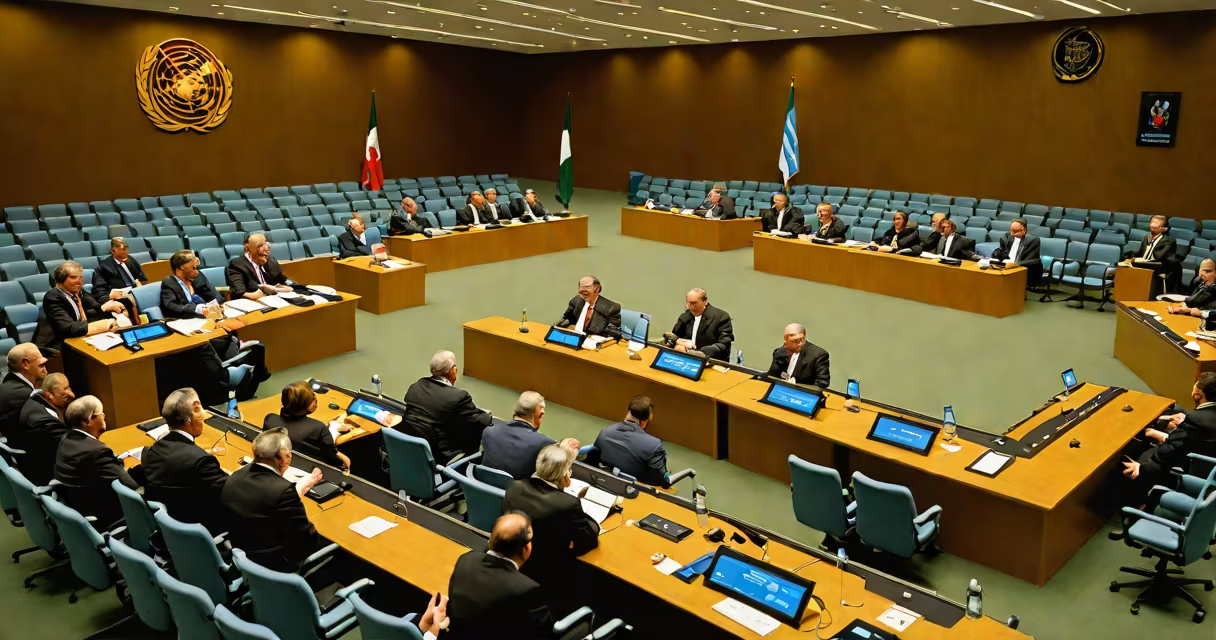
International diplomacy is the structured process by which states, international organizations, and non-state actors conduct negotiations, manage disputes, and build cooperation across national borders. It operates through formal channels such as embassies, treaties, and multilateral forums like the United Nations.
This system relies on established norms, communication protocols, and institutional frameworks to prevent conflict and advance shared interests. Unlike informal exchanges, diplomacy requires trained professionals who understand legal, cultural, and strategic contexts. The goal is not dominance but consensus-building among sovereign entities.
For example, during the 2015 Paris Climate Agreement, diplomats from 196 countries negotiated binding emissions targets over two weeks. The outcome was a legally recognized structure that binds signatories to reduce greenhouse gas emissions-a result achieved not through force, but through sustained diplomatic engagement.
Diplomacy functions through a network of accredited representatives, including ambassadors, envoys, and consular officers stationed in foreign capitals. These individuals serve as official points of contact between governments and are bound by the Vienna Convention on Diplomatic Relations (1961), which grants them immunity and sets standards for conduct.
Negotiations follow structured procedures. A country may issue a formal proposal through its embassy, which then enters a cycle of backchannel discussions, drafting, revisions, and ratification. The process often involves multiple stakeholders: domestic political bodies, military advisors, economic analysts, and legal teams.
When tensions escalate, diplomacy provides a mechanism to de-escalate. In 2013, the U.S. and Russia coordinated through diplomatic channels to dismantle Syria's chemical weapons stockpile after a sarin attack. The operation involved technical experts, intelligence sharing, and direct talks that prevented military intervention.
States remain the primary actors in international diplomacy. However, their actions are shaped by intergovernmental organizations (IGOs) such as the United Nations, World Trade Organization, and African Union. These bodies provide platforms for dialogue and enforce agreements through monitoring and sanctions.
Non-governmental organizations (NGOs) and multinational corporations also influence diplomatic outcomes. For instance, environmental NGOs helped draft the Montreal Protocol on Substances that Deplete the Ozone Layer by supplying scientific data and lobbying member states. Their input contributed to the treaty's success in phasing out ozone-depleting chemicals globally.
| Actor Type | Role in Diplomacy | Example |
|---|---|---|
| State Governments | Lead bilateral and multilateral talks | U.S.-China trade negotiations (2020) |
| Intergovernmental Organizations | Help coordination and compliance | UN Security Council resolutions on Ukraine |
| NGOs and Think Tanks | Provide research, advocacy, and norm-setting | Human Rights Watch influencing ICC investigations |
Private sector entities increasingly participate in climate and trade diplomacy. The 2023 COP28 summit included corporate pledges on renewable energy investment, reflecting how business leaders now engage in high-level negotiations traditionally reserved for states.
Diplomacy is not synonymous with soft power or public relations. While soft power-such as cultural exports or educational exchanges-can support diplomatic goals, it does not replace formal negotiation. A country may have widespread appeal but still fail to secure agreements without institutionalized dialogue.
Another misconception is that diplomacy is purely peaceful. In reality, it often occurs alongside military readiness. During the Cold War, arms control talks between the U.S. and USSR were conducted simultaneously with nuclear deterrence strategies. Diplomacy did not eliminate threats-it managed them.
A lesser-known fact: most diplomatic communications are encrypted and stored under strict confidentiality. The U.S. Department of State's Diplomatic Security Service monitors breaches of sensitive information. In 2016, a leak of classified cables from the State Department led to reforms in digital handling protocols, underscoring that trust in diplomatic channels depends on security.
The 2015 Joint Complete Plan of Action (JCPOA) illustrates how international diplomacy resolves complex security issues. After years of stalled talks, the P5+1 group-comprising the U.S., UK, France, Russia, China, and Germany-negotiated with Iran over its nuclear program.
Each side presented demands: Iran sought lifting of sanctions; Western powers insisted on limits on uranium enrichment and intrusive inspections. Over 18 months, negotiators drafted 159 pages of technical language, including verification mechanisms and dispute resolution clauses.
The agreement entered into force in January 2016 after ratification by the UN Security Council and domestic legislatures. By 2018, Iran had reduced its enriched uranium stockpile to below 3.67%, and inspectors verified compliance for over two years. This outcome resulted from sustained diplomatic pressure, not coercion.
However, the deal collapsed in 2018 when the U.S. withdrew unilaterally. This demonstrated a critical limitation: even well-crafted diplomatic agreements depend on continued commitment. When one party withdraws, the entire structure risks unraveling.
International diplomacy prevents war, enables trade, coordinates responses to pandemics, and addresses climate change. Without it, global crises would lack coordinated solutions. The World Health Organization's pandemic response during the 2020-2022 period relied on diplomatic coordination to distribute vaccines equitably.
Research from the Center for Strategic and International Studies (CSIS) shows that diplomatic interventions reduce the likelihood of armed conflict by 40% compared to unilateral actions. The study analyzed 120 crisis events between 1990 and 2020, finding that mediation efforts led to peaceful settlements in 68% of cases.
Understanding what is international diplomacy reveals its role not as passive dialogue, but as a changing, rule-based system essential to global stability. Its effectiveness lies in consistency, credibility, and institutional memory-qualities that endure beyond individual leaders or elections.