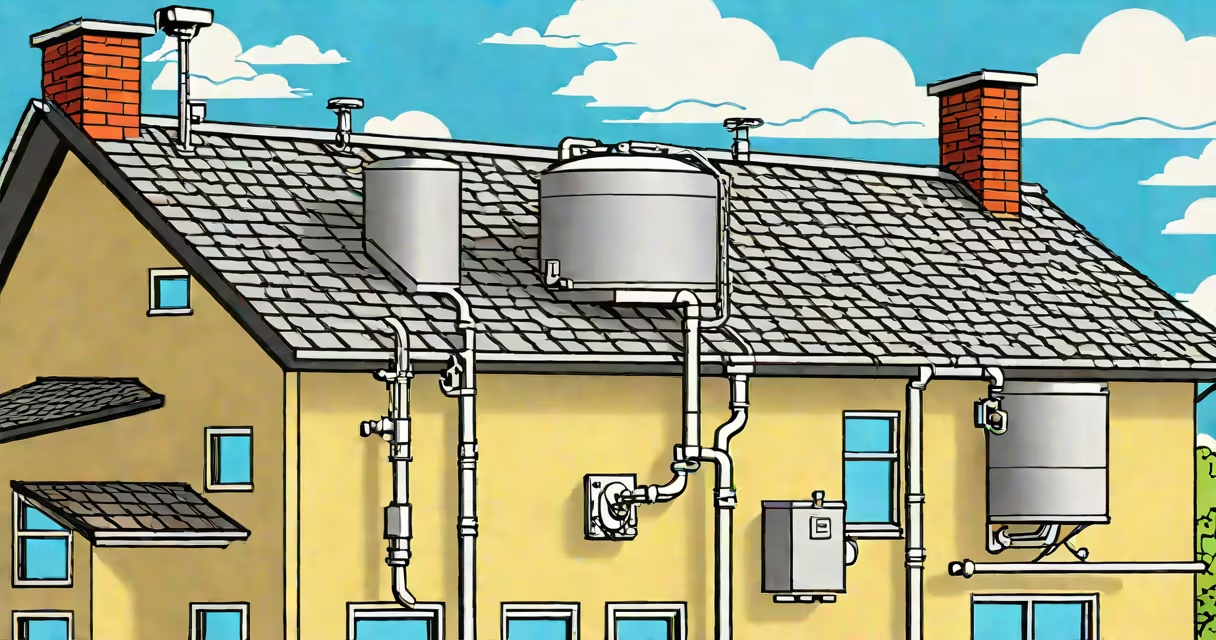
A rainwater collection system gathers and stores precipitation from rooftops or surfaces for later use in irrigation, toilet flushing, laundry, or even indoor plumbing after treatment. It reduces reliance on municipal water supplies and supports drought resilience.
These systems work by channeling rainwater through gutters and downspouts into a storage container. A first-flush diverter removes initial debris and contaminants from the roof. Water then passes through a filter before entering a tank. From there, it's distributed via gravity or pumps to points of use.
The simplest version uses a barrel connected to a downspout. More advanced setups include automated controls, UV sterilization, and overflow management. Systems can serve homes, farms, schools, or urban green spaces.
When rain falls on a roof, it flows into gutters and downspouts. A pipe directs it into a storage tank. Most systems include a first-flush device that diverts the first few gallons-contaminated by dust, bird droppings, and pollen-away from the main reservoir.
After diversion, water enters a filter, often a mesh or sediment trap, to remove leaves and grit. The filtered water moves into a storage tank made of plastic, metal, or concrete. Tanks can be above ground or buried underground to save space and reduce evaporation.
Water is released via gravity or a pump. For irrigation, a simple hose connection suffices. For indoor use, additional filtration and disinfection-like UV light or chlorination-are required to meet health codes.
Systems vary by scale, materials, and complexity. The most common types are:
| Type | Use Case | Typical Capacity | Key Features |
|---|---|---|---|
| Barrel System | Small gardens, backyard use | 50-100 gallons | Low cost, manual filling, basic filter |
| Underground Tank | Residential or commercial landscaping | 500-5,000 gallons | Durable, hidden, high capacity, frost-resistant |
| Modular System | Urban homes, limited space | 100-2,000 gallons | Stackable units, flexible installation, modular expansion |
| Full-Service System | Indoor plumbing, potable use | 1,000-10,000+ gallons | Multi-stage filtration, UV sterilization, pressure pumps |
Components include inlet screens, overflow outlets, outlet valves, and level indicators. Some systems integrate with smart sensors that track fill levels and send alerts via mobile app.
For example, a homeowner in Austin, Texas, installed a 1,200-gallon underground tank connected to a 2,000 sq ft roof. During the rainy season, they collected 15,000 gallons annually-enough to irrigate their lawn and garden without using city water.
Rainwater collection systems are widespread in arid regions and areas with seasonal droughts. California, Australia, and parts of sub-Saharan Africa rely on them for domestic and agricultural needs.
In urban settings, cities like Portland, Oregon, offer rebates for installing rain barrels. The city's "RainWise" program provides up to $75 per barrel to residents who install them. Since 2013, over 12,000 barrels have been deployed, reducing stormwater runoff by an estimated 1.2 million gallons annually.
Commercial buildings use large-scale systems to meet sustainability goals. The Bullitt Center in Seattle-a net-zero energy building-collects rainwater from its 50,000 sq ft roof. The system stores 56,000 gallons and supplies all non-potable water needs, including toilet flushing and cleaning.
Many governments now require rainwater harvesting in new construction. India's National Building Code mandates rainwater harvesting in all new buildings in water-stressed zones. In Chennai, this rule reduced groundwater depletion by 28% between 2015 and 2020, according to a study by the Central Ground Water Board.
One myth is that rainwater is always safe to drink. It is not. Even clean-looking rainwater can carry bacteria, heavy metals, or pesticides from air pollution or roofing materials. The Environmental Protection Agency (EPA) states that untreated rainwater should not be consumed without proper testing and treatment.
Another misconception is that systems are expensive. While full indoor-use systems can cost $5,000-$10,000, a basic barrel setup costs under $100. A 50-gallon barrel with a spigot and screen costs $65. Installation takes less than a day with basic tools.
Some assume rainwater systems are only for rural areas. Urban homes benefit too. In New York City, a pilot project in Brooklyn installed 150 rain barrels on apartment rooftops. Over one year, they diverted 1.8 million gallons from storm drains during heavy rains-reducing localized flooding.
I once helped install a rainwater system at a community garden in Denver. We used a 300-gallon food-grade drum, a 10-micron filter, and a timer-controlled drip line. The garden produced 30% more vegetables during dry spells because water was available when needed. The system paid for itself in two years through reduced water bills.
A rainwater collection system is not the same as a greywater system. Greywater comes from sinks, showers, and washing machines-used water containing soap and organic waste. It requires different treatment and cannot be mixed with rainwater due to contamination risks.
It's also not a substitute for municipal water in all cases. Rainwater lacks minerals and may corrode pipes. It should not be used for drinking unless treated to potable standards. The World Health Organization (WHO) recommends boiling, filtering, and chlorinating rainwater before consumption.
Finally, it's not a maintenance-free solution. Tanks need periodic cleaning. Filters require replacement every 6-12 months. Insects and algae can grow in stagnant water. Regular inspection prevents clogs and contamination.
Understanding what a rainwater collection system is-and what it isn't-helps avoid costly mistakes. Proper design, material selection, and ongoing care ensure long-term function and environmental benefit.