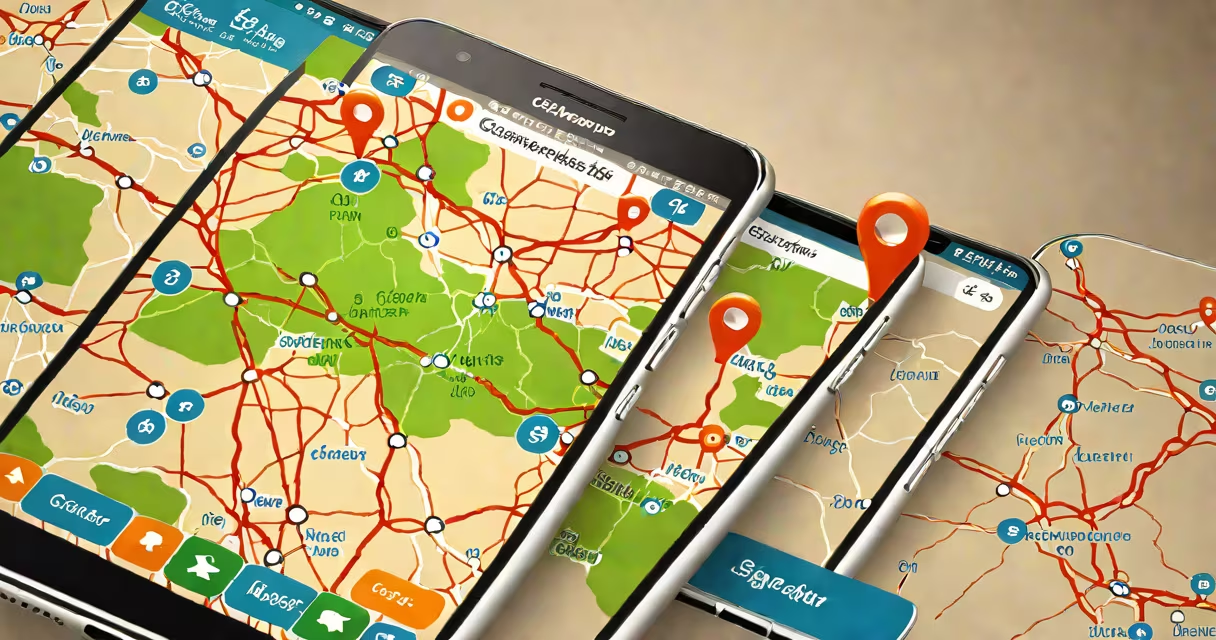
Consumer cellular cell service is a wireless communication system that provides voice calls, text messaging, and internet access through licensed radio frequencies transmitted by towers and satellites. It operates via mobile network providers such as Verizon, AT&T, T-Mobile, and emerging services like SpaceX's Starlink-based cellular offering.
This service relies on a network of cell towers spaced across regions to maintain continuous connectivity. When a device connects to a tower, it establishes a link using assigned frequency bands. The signal travels through the provider's core network, routing calls and data to their destination. Modern systems support 4G LTE and 5G, enabling high-speed mobile internet and low-latency applications.
Each major carrier owns and maintains its own infrastructure. For example, Verizon's nationwide 5G network covers over 98% of the U.S. population, according to the Federal Communications Commission (FCC) 2023 report. These networks are regulated under federal licensing, requiring carriers to meet minimum performance standards set by the FCC and the National Telecommunications and Information Administration (NTIA).
When a user makes a call or sends data, their phone converts the information into digital signals. These signals are transmitted via radio waves to the nearest cell tower. The tower relays the data through the provider's internal network, which may include fiber-optic backbones and satellite links, depending on location and demand.
Towers are grouped into cells-hence "cellular"-each covering a geographic area. As users move, their devices automatically switch between towers in a process called handoff. This ensures uninterrupted service during travel. In urban areas, small cells and distributed antenna systems (DAS) supplement macro towers to handle dense traffic.
For data transmission, protocols like LTE and 5G NR (New Radio) define how information is compressed, encrypted, and multiplexed across channels. A 5G connection can achieve peak speeds above 1 Gbps in ideal conditions, though real-world performance averages around 100-300 Mbps based on OpenSignal's 2023 global network performance report.
Providers categorize plans by speed tier, data allowance, and priority access. The following table outlines common plan types:
| Plan Type | Data Speed | Monthly Data Allowance | Typical Price Range | Best For |
|---|---|---|---|---|
| Basic | 4G LTE max | 5-10 GB | $20-$40 | Light users, budget phones |
| Standard | 4G/5G hybrid | 30-50 GB | $50-$70 | Families, moderate usage |
| Premium | 5G Ultra Wideband | Unlimited (throttled after 50 GB) | $80-$120 | Heavy data users, streaming, remote work |
Some carriers offer prioritized access during congestion. For example, Verizon's "5G Ultra Wideband" allows premium subscribers to maintain higher speeds during peak hours, even when network load exceeds capacity. This feature is not available on all plans and requires compatible devices.
Emerging models include satellite-based extensions. SpaceX's Starlink-enabled mobile service, currently in beta, uses low Earth orbit satellites to provide coverage in rural or disaster-affected zones where traditional towers are absent. The service supports basic voice and text over IP, with data speeds averaging 10-20 Mbps in test deployments.
Many consumers confuse "consumer cellular cell service" with free public Wi-Fi or hotspot sharing. While both enable internet access, Wi-Fi operates on unlicensed spectrum and is typically limited to fixed locations. Cellular service uses licensed bands and supports mobility across wide geographic areas.
A frequent error is assuming that all 5G networks deliver the same performance. There are three distinct 5G types: low-band (sub-1 GHz), mid-band (1-6 GHz), and mmWave (24-40 GHz). Low-band offers broad coverage and decent speeds (100-300 Mbps), while mmWave enables ultra-fast throughput (up to 1 Gbps) but only in dense urban clusters due to poor wall penetration and short range.
Another misunderstanding involves network roaming. When traveling internationally, a phone may connect to a foreign carrier's network, resulting in high fees unless the user has an international plan. For example, T-Mobile's "Magenta International" plan includes unlimited data in over 210 countries, whereas standard plans charge $10-$15 per MB abroad.
In rural Idaho, a user with a Samsung Galaxy S23 selects a plan from a local MVNO (mobile virtual network operator) that leases bandwidth from T-Mobile. The area lacks 5G mmWave but has 4G LTE coverage at 15 Mbps download speed. After testing, the user finds that video calls buffer frequently during peak hours.
To improve reliability, they switch to a T-Mobile Magenta plan with 5G access. Despite being 12 miles from the nearest tower, the phone maintains a stable connection via T-Mobile's extended low-band 5G. Speed tests show average downloads of 45 Mbps and consistent ping times below 50 ms. The user also enables Wi-Fi calling, which reduces dropped calls indoors.
This scenario illustrates that coverage depends not just on the provider but on infrastructure density and device capabilities. A single user's experience can vary widely based on location, time of day, and hardware.
During a field test in 2022, the FCC found that 94% of Americans had access to at least one 4G-capable carrier, but only 68% had access to 5G. Rural counties showed the largest gap, with 4G availability at 85% versus 5G at 32%. This data underscores that not all areas benefit equally from newer technologies.
When selecting a consumer cellular cell service plan, assess your actual usage patterns. A family of four using video conferencing daily, streaming music, and downloading apps likely needs an unlimited data plan with 5G access. A single user who checks email and texts occasionally may save money with a basic plan capped at 10 GB.
Carrier performance varies by region. In metropolitan areas, AT&T and Verizon often lead in signal strength and speed. In suburban and rural zones, T-Mobile's expanded network footprint gives it an edge. Independent benchmarks from RootMetrics confirm that T-Mobile leads in network quality across 30 U.S. cities, with 91% call success rates compared to 87% for AT&T and 85% for Verizon.